THE ADVENTURE COLLECTIVE® · Independent discovery and booking for outdoor travel
Experience Khajuraho’s UNESCO-listed temples in two days—walk the western group’s grand towers and the quieter eastern sanctuaries. This short itinerary balances history, sculpture, and practical tips for making the most of your visit.
Experience Khajuraho’s UNESCO-listed temples in two days—walk the western group’s grand towers and the quieter eastern sanctuaries. This short itinerary balances history, sculpture, and practical tips for making the most of your visit.
You step off the train into a dry, bright plain where sandstone towers rise like carved puzzles against the sky. Dust drifts along the road and the temples’ spires cut sharp silhouettes; peacocks call from scrub and the wind nudges at the temple steps as if urging you inside.
Verified experiences and guided adventures in the surrounding area.
Operated by Padma Holidays · Khajuraho, Madhya Pradesh
You step off the train into a dry, bright plain where sandstone towers rise like carved puzzles against the sky. Dust drifts along the road and the temples’ spires cut sharp silhouettes; peacocks call from scrub and the wind nudges at the temple steps as if urging you inside.
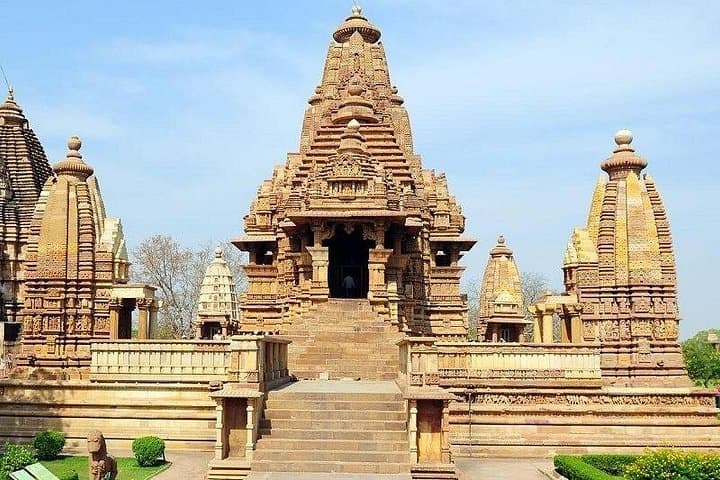
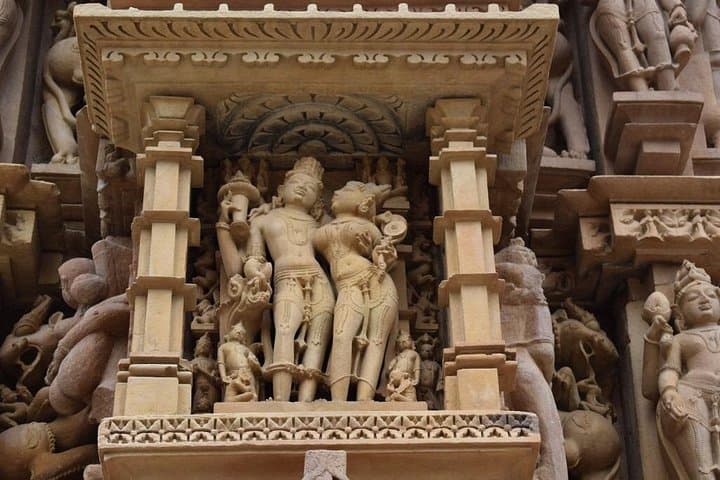
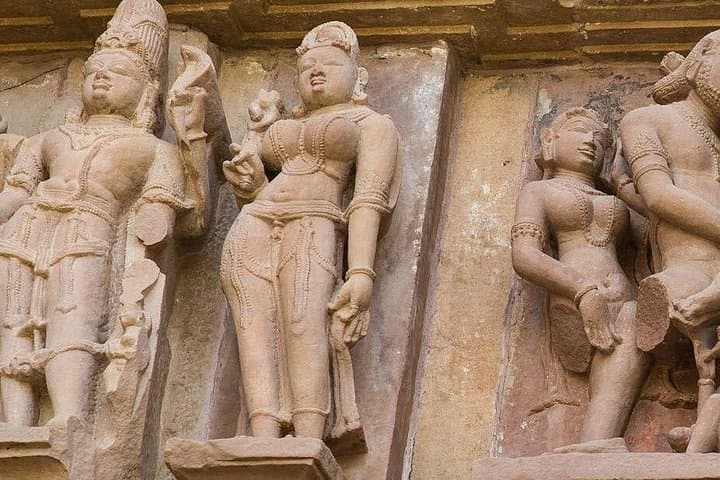
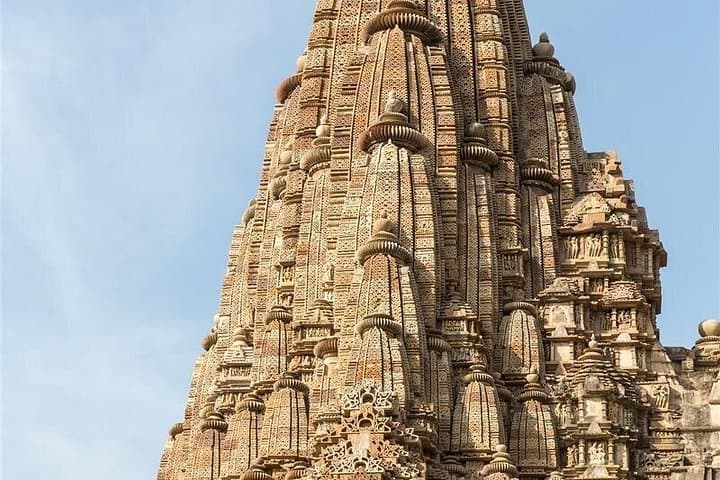
Built by the Chandela kings between roughly 950–1050 CE, Khajuraho’s clustered groups of Hindu and Jain temples map a period of confident stonecraft. The western group centers on Kandariya Mahadeva’s soaring shikhara and the dense frieze work; the eastern group hosts quieter sanctuaries such as Chitragupta and Laxman. Geologically the stone is local sandstone—soft enough for detailed bas-relief, durable enough to survive centuries of sun and monsoon.
Culturally, Khajuraho was as much a courtly showcase as a devotional complex; its sculptures celebrate divinity, court life, and human experience. Local markets hum in the evening with spice stalls and carved wood; the nightly light-and-sound show offers a concise primer on discovery and rediscovery.
Practical guidance: plan two days—arrive from Jhansi or a short flight to Khajuraho—allow 3–4 hours for the western group and 1–2 hours for the eastern group. Expect compact walking on stone and packed-earth paths, uneven steps, and limited shade. Bring a refillable water bottle, wear modest, breathable clothing (shoulders and knees covered at active shrines), and aim for early morning or late afternoon light for photography. Respect signage: many sanctuaries restrict flash and touching sculptures. Trained guides enhance interpretation and are worth hiring for context and to skip lines included with many packages.
Plan 3–4 hours for the western group (Kandariya Mahadeva and nearby temples) and 1–2 hours for the eastern group; add time for the museum and market.
Cover shoulders and knees in active sanctuaries; flash photography may be restricted in some interiors—follow signage and guide directions.
October to March offers cooler temperatures and clearer skies; summer is hot and may be uncomfortable mid-day.
Many temple platforms and steps are uneven; access to some sanctuaries is limited—contact operators ahead for specifics and assistance options.
Padma Holidays operates guided outdoor trips and adventures with an emphasis on safety, stewardship, and memorable experiences.
You step off the train into a dry, bright plain where sandstone towers rise like carved puzzles against the sky. Dust drifts along the road and the temples’ spires cut sharp silhouettes; peacocks call from scrub and the wind nudges at the temple steps as if urging you inside.
You step off the train into a dry, bright plain where sandstone towers rise like carved puzzles against the sky. Dust drifts along the road and the temples’ spires cut sharp silhouettes; peacocks call from scrub and the wind nudges at the temple steps as if urging you inside.
Built by the Chandela kings between roughly 950–1050 CE, Khajuraho’s clustered groups of Hindu and Jain temples map a period of confident stonecraft. The western group centers on Kandariya Mahadeva’s soaring shikhara and the dense frieze work; the eastern group hosts quieter sanctuaries such as Chitragupta and Laxman. Geologically the stone is local sandstone—soft enough for detailed bas-relief, durable enough to survive centuries of sun and monsoon.
Culturally, Khajuraho was as much a courtly showcase as a devotional complex; its sculptures celebrate divinity, court life, and human experience. Local markets hum in the evening with spice stalls and carved wood; the nightly light-and-sound show offers a concise primer on discovery and rediscovery.
Practical guidance: plan two days—arrive from Jhansi or a short flight to Khajuraho—allow 3–4 hours for the western group and 1–2 hours for the eastern group. Expect compact walking on stone and packed-earth paths, uneven steps, and limited shade. Bring a refillable water bottle, wear modest, breathable clothing (shoulders and knees covered at active shrines), and aim for early morning or late afternoon light for photography. Respect signage: many sanctuaries restrict flash and touching sculptures. Trained guides enhance interpretation and are worth hiring for context and to skip lines included with many packages.
