THE ADVENTURE COLLECTIVE® · Independent discovery and booking for outdoor travel

A full-day trek from Bangkok into Khao Yai National Park to visit Haew Narok and Haew Suwat waterfalls, wildlife-rich reservoirs, and panoramic viewpoints. Expect jungle trails, river-carved cliffs, and the best waterfall flow during the rainy season (June–October).
A full-day trek from Bangkok into Khao Yai National Park to visit Haew Narok and Haew Suwat waterfalls, wildlife-rich reservoirs, and panoramic viewpoints. Expect jungle trails, river-carved cliffs, and the best waterfall flow during the rainy season (June–October).
You step off the minivan into humid forest air—leaves clack overhead and the park’s mountain spine looms beyond the road. The trail to Haew Narok begins as a ribbon of packed earth and roots, then tightens into jungle that seems to breathe. Haew Narok answers with a thunderous drop; water once carved the cliff into a ragged mouth that dares you to approach the viewpoint. Later, Haew Suwat offers a quieter stage: broad slabs and shade where the film crowd once gathered, now claimed by birds and moss.
Verified experiences and guided adventures in the surrounding area.
Operated by Planet Blue Co., lLtd. · Pak Chong, Nakhon Ratchasima
You step off the minivan into humid forest air—leaves clack overhead and the park’s mountain spine looms beyond the road. The trail to Haew Narok begins as a ribbon of packed earth and roots, then tightens into jungle that seems to breathe. Haew Narok answers with a thunderous drop; water once carved the cliff into a ragged mouth that dares you to approach the viewpoint. Later, Haew Suwat offers a quieter stage: broad slabs and shade where the film crowd once gathered, now claimed by birds and moss.
Khao Yai sits on the northern edge of Thailand’s Gulf watershed and is part of the Dong Phayayen–Khao Yai Forest Complex, a UNESCO World Heritage area. Geologically, the park is a mix of sandstone ridges and fertile valleys that funnel monsoon flows into the waterfalls. Culturally, the park has been a seasonal destination for Bangkok residents since the 1960s, when Thailand established it as one of its first national parks.
On a practical note, this is a full-day outing from Bangkok (approximately 11–12 hours including transit). Trails to viewpoints are short but can be steep and slippery after rain—expect a 1 km approach to Haew Narok with some stair sections. The operator provides raincoats and anti-leech socks in the wet season; swimming is prohibited. Pack water, sun protection, sturdy shoes, and a light rain shell. Time your visit for the rainy months (June–October) for full flows; in the dry season some cascades may be thin or dry. Keep your distance from wildlife, stick to marked routes, and plan for early pickup to avoid Bangkok traffic and catch the best light at KM 30 viewpoint.
The rainy season, June–October, produces the heaviest water flow; outside those months some falls may be reduced or dry.
No—swimming is prohibited at these sites for safety and conservation reasons.
Yes, the tour includes free pickup and drop-off from many central Bangkok neighborhoods; confirm your exact pickup time with the operator after booking.
The walk to viewpoints is short but includes steep or uneven sections; it’s family-friendly for children who can manage stairs but not wheelchair accessible.
Planet Blue Co., lLtd. operates guided outdoor trips and adventures with an emphasis on safety, stewardship, and memorable experiences.


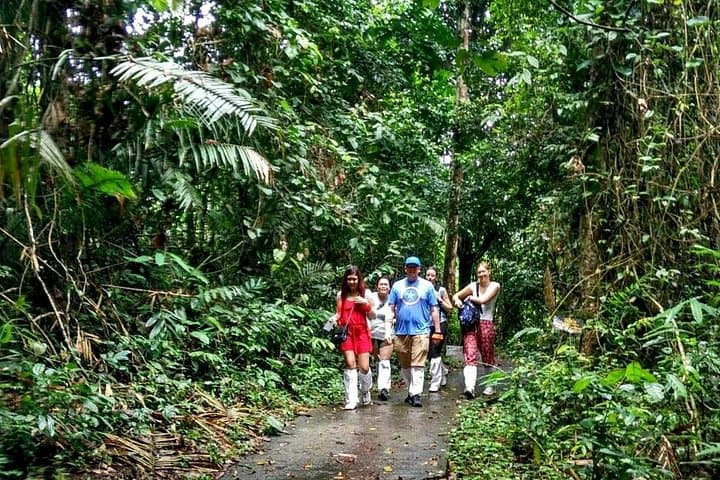
You step off the minivan into humid forest air—leaves clack overhead and the park’s mountain spine looms beyond the road. The trail to Haew Narok begins as a ribbon of packed earth and roots, then tightens into jungle that seems to breathe. Haew Narok answers with a thunderous drop; water once carved the cliff into a ragged mouth that dares you to approach the viewpoint. Later, Haew Suwat offers a quieter stage: broad slabs and shade where the film crowd once gathered, now claimed by birds and moss.
You step off the minivan into humid forest air—leaves clack overhead and the park’s mountain spine looms beyond the road. The trail to Haew Narok begins as a ribbon of packed earth and roots, then tightens into jungle that seems to breathe. Haew Narok answers with a thunderous drop; water once carved the cliff into a ragged mouth that dares you to approach the viewpoint. Later, Haew Suwat offers a quieter stage: broad slabs and shade where the film crowd once gathered, now claimed by birds and moss.
Khao Yai sits on the northern edge of Thailand’s Gulf watershed and is part of the Dong Phayayen–Khao Yai Forest Complex, a UNESCO World Heritage area. Geologically, the park is a mix of sandstone ridges and fertile valleys that funnel monsoon flows into the waterfalls. Culturally, the park has been a seasonal destination for Bangkok residents since the 1960s, when Thailand established it as one of its first national parks.
On a practical note, this is a full-day outing from Bangkok (approximately 11–12 hours including transit). Trails to viewpoints are short but can be steep and slippery after rain—expect a 1 km approach to Haew Narok with some stair sections. The operator provides raincoats and anti-leech socks in the wet season; swimming is prohibited. Pack water, sun protection, sturdy shoes, and a light rain shell. Time your visit for the rainy months (June–October) for full flows; in the dry season some cascades may be thin or dry. Keep your distance from wildlife, stick to marked routes, and plan for early pickup to avoid Bangkok traffic and catch the best light at KM 30 viewpoint.