THE ADVENTURE COLLECTIVE® · Independent discovery and booking for outdoor travel

Sail the dramatic Musandam fjords on a traditional Omani dhow—dolphin watches, two snorkel stops and a hot buffet lunch make for a full and accessible day on the water. Read on for what to expect, how to prepare, and local tips to get the most from the trip.
Sail the dramatic Musandam fjords on a traditional Omani dhow—dolphin watches, two snorkel stops and a hot buffet lunch make for a full and accessible day on the water. Read on for what to expect, how to prepare, and local tips to get the most from the trip.
The dhow slips out of Khasab harbor and the city melts into cliffs—sheer, weathered limestone that rise like pages torn from the earth. Salt and sun set the deck warm beneath your feet while the captain eases into the fingered inlets of the Musandam fjords, and the sea dares you to look closer.
Verified experiences and guided adventures in the surrounding area.
Operated by Ahlam Musandam Tours · Khasab, Musandam Governorate
The dhow slips out of Khasab harbor and the city melts into cliffs—sheer, weathered limestone that rise like pages torn from the earth. Salt and sun set the deck warm beneath your feet while the captain eases into the fingered inlets of the Musandam fjords, and the sea dares you to look closer.
This stretch of the Arabian Sea has been a crossroads for centuries: Telegraph Island still carries the ghost of Victorian cable-laying, and tiny fishing hamlets recall a dhow-driven economy that predates modern Oman. Geologically the fjords are drowned river valleys carved into ancient limestone, creating sheltered coves where corals cling and schools of colorful reef fish feed in clear water.
Expect a paced day: dolphin watches as you pass Nadifi and Qanah, two swim-and-snorkel stops near Telegraph Island and Seebi Island, and a buffet of Omani-style rice, fried fish and salads on board. Guides provide life jackets, towels and snorkel kits; dhows include changing rooms and toilets but can be exposed to sun and spray.
Practical edge: bring a fitted snorkel mask if you prefer your own seal, reef‑safe sunscreen, and water shoes for rocky shores. Stay hydrated—six hours on the water in Musandam can be deceptively tiring—and plan for possible wind on open stretches. If you want calmer conditions and clearer visibility, aim for winter mornings when seas are cooler and winds often lighter.
This is a low-impact, high-reward outing: minimal hiking, maximum shoreline drama, and repeated chances to swim among reefs and watch dolphins racing the bow.
Yes—snorkel kits, life jackets and towels are provided on board, though many guests bring a personal mask for fit.
Yes, the dhows used on this route include a toilet and a basic changing area on board.
Dolphins are commonly seen in the Musandam fjords and often approach dhows, but sightings aren’t guaranteed—timing and sea conditions affect encounters.
The tour is family‑friendly and the operator lists wheelchair accessibility, but boarding a traditional dhow and wet entries may require assistance—notify the operator ahead for accommodations.
Ahlam Musandam Tours operates guided outdoor trips and adventures with an emphasis on safety, stewardship, and memorable experiences.
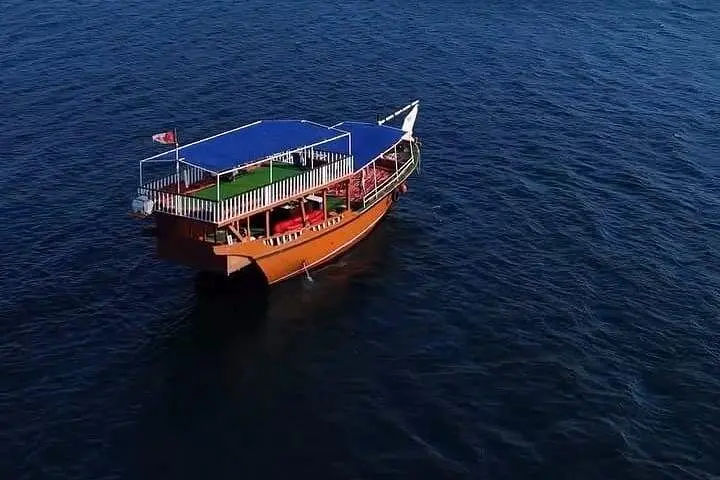
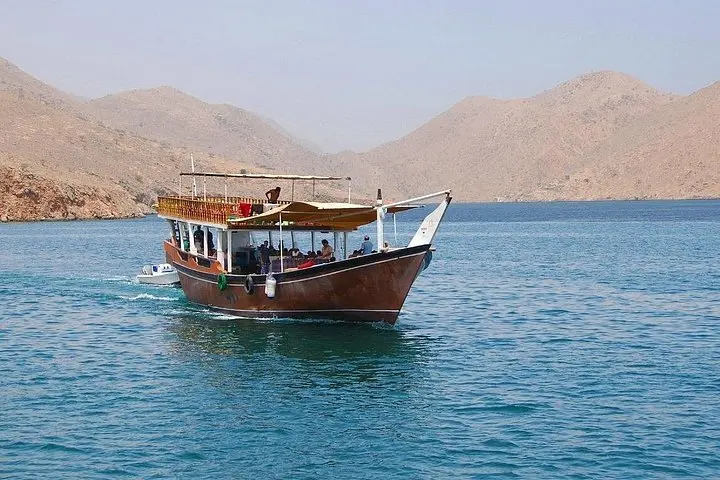
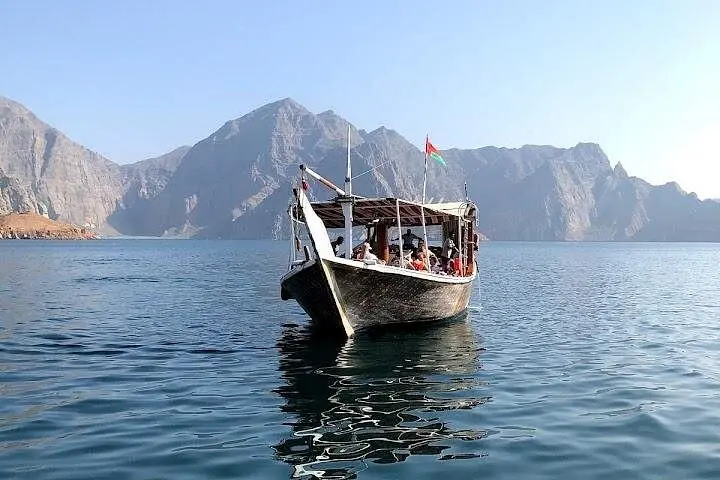
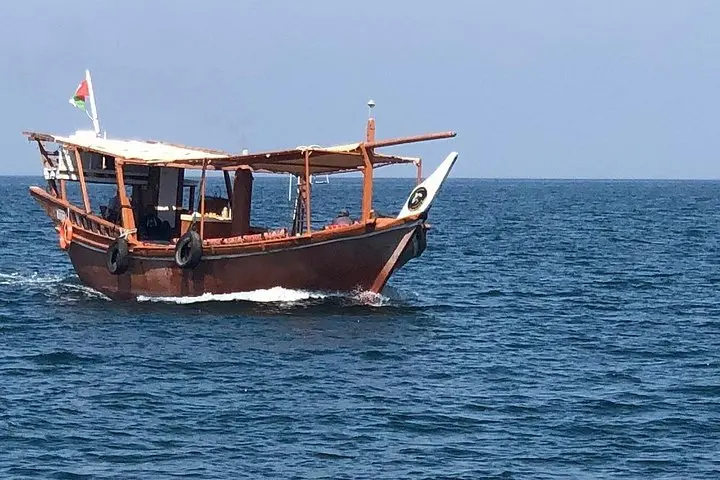
The dhow slips out of Khasab harbor and the city melts into cliffs—sheer, weathered limestone that rise like pages torn from the earth. Salt and sun set the deck warm beneath your feet while the captain eases into the fingered inlets of the Musandam fjords, and the sea dares you to look closer.
The dhow slips out of Khasab harbor and the city melts into cliffs—sheer, weathered limestone that rise like pages torn from the earth. Salt and sun set the deck warm beneath your feet while the captain eases into the fingered inlets of the Musandam fjords, and the sea dares you to look closer.
This stretch of the Arabian Sea has been a crossroads for centuries: Telegraph Island still carries the ghost of Victorian cable-laying, and tiny fishing hamlets recall a dhow-driven economy that predates modern Oman. Geologically the fjords are drowned river valleys carved into ancient limestone, creating sheltered coves where corals cling and schools of colorful reef fish feed in clear water.
Expect a paced day: dolphin watches as you pass Nadifi and Qanah, two swim-and-snorkel stops near Telegraph Island and Seebi Island, and a buffet of Omani-style rice, fried fish and salads on board. Guides provide life jackets, towels and snorkel kits; dhows include changing rooms and toilets but can be exposed to sun and spray.
Practical edge: bring a fitted snorkel mask if you prefer your own seal, reef‑safe sunscreen, and water shoes for rocky shores. Stay hydrated—six hours on the water in Musandam can be deceptively tiring—and plan for possible wind on open stretches. If you want calmer conditions and clearer visibility, aim for winter mornings when seas are cooler and winds often lighter.
This is a low-impact, high-reward outing: minimal hiking, maximum shoreline drama, and repeated chances to swim among reefs and watch dolphins racing the bow.