THE ADVENTURE COLLECTIVE® · Independent discovery and booking for outdoor travel

A full-day journey from Guba brings you to Khinalig, an isolated high-mountain village perched above the valley. Expect steep stone lanes, ancient houses stacked like terraces, and strong cultural continuity where an original language and centuries-old traditions persist.
A full-day journey from Guba brings you to Khinalig, an isolated high-mountain village perched above the valley. Expect steep stone lanes, ancient houses stacked like terraces, and strong cultural continuity where an original language and centuries-old traditions persist.
Wind scrapes the ridge as you crest the last hairpin and Khinalig appears — a compact cluster of stone roofs stacked like stepped terraces against a high alpine bowl. Thin air sharpens the colors: lichen-grey walls, rust-red roofs, and the deep green of summer pastures. The village sits at roughly 2,100–2,200 meters, where narrow lanes double as stairways and a roof often becomes a neighbor’s courtyard.
Verified experiences and guided adventures in the surrounding area.
Operated by Azerbaijan Adventures LLC · Khinalig, Quba District
Wind scrapes the ridge as you crest the last hairpin and Khinalig appears — a compact cluster of stone roofs stacked like stepped terraces against a high alpine bowl. Thin air sharpens the colors: lichen-grey walls, rust-red roofs, and the deep green of summer pastures. The village sits at roughly 2,100–2,200 meters, where narrow lanes double as stairways and a roof often becomes a neighbor’s courtyard.
This region of Quba carries layered histories. Travelers stop first in Guba: Juma Mosque and the old bathhouses echo Ottoman and Persian influences, while Krasnaya Sloboda (Red Town) preserves Mountain Jewish culture and the Judeo-Tat language. Beyond the valley floor the geology shifts — folded volcanic rock and glacially smoothed hollows that locals long considered sacred, like nearby Beshbarmaq.
In Khinalig, more than 300 stone houses, many 200–300 years old, reflect a horizontal architecture designed for steep slopes and winter snows. The people speak a unique Northeast Caucasian language; elders keep customs that attract ethnographers and curious visitors alike. Nature here is not passive: wind tests resolve, rivers carve the access road, and nights offer an intense, unpolluted sky.
Practical guide: tours run 7–8 hours from Guba, usually in an air-conditioned vehicle; expect steep walking, uneven stone steps, and short altitude change symptoms for some. Bring layered clothing, sun protection, and cash — facilities are basic. Roads can be narrow and weather-dependent; check seasonal conditions and allow flexibility in your schedule.
Most full-day tours run about 7–8 hours total, including drive time and time in the village.
Access involves narrow, winding mountain roads; operators typically use reliable vehicles but conditions can be rough and weather-dependent.
Khinalig sits around 2,100–2,200 m; most travelers feel only mild breathlessness, but anyone sensitive to altitude should take it slow and stay hydrated.
Facilities are basic; bring snacks and cash—some households or guesthouses offer simple local refreshments but availability varies.
Azerbaijan Adventures LLC operates guided outdoor trips and adventures with an emphasis on safety, stewardship, and memorable experiences.
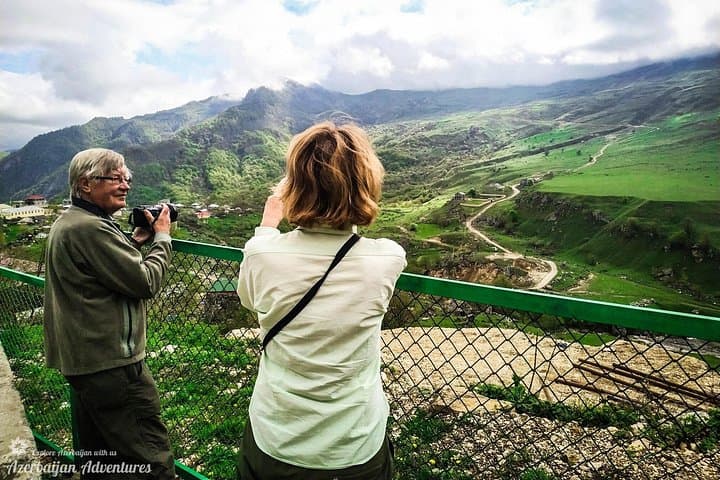
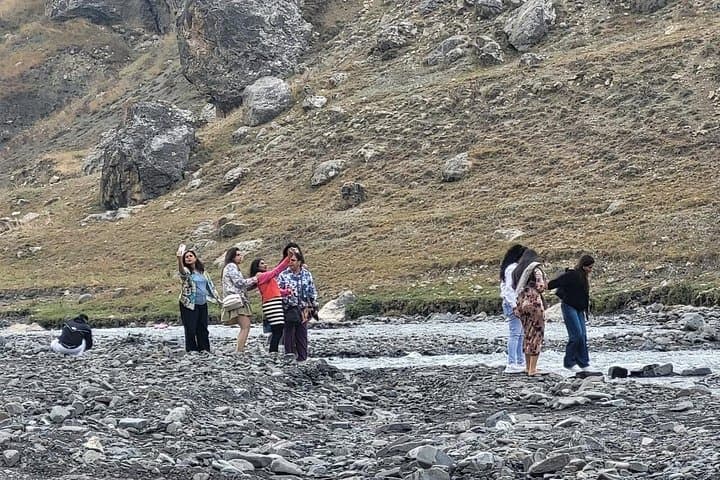
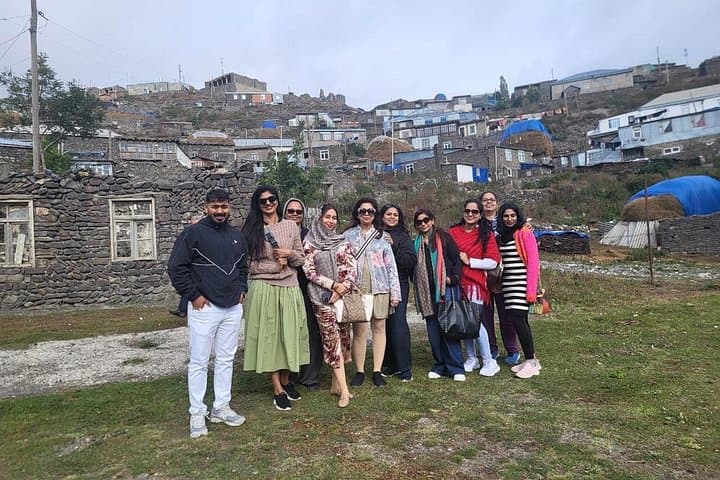
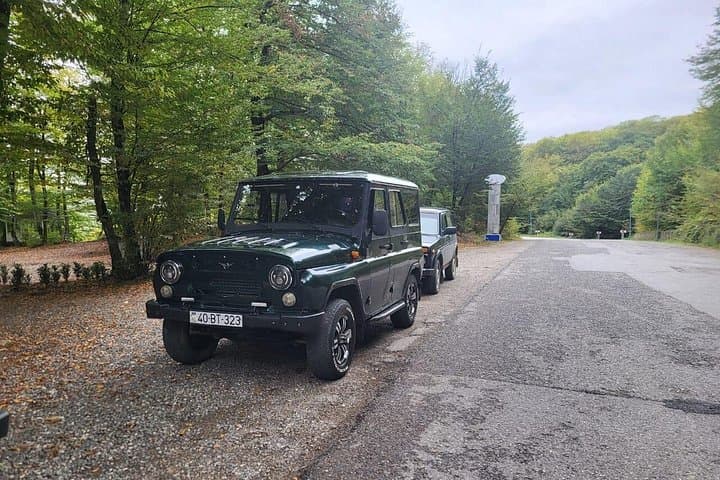
Wind scrapes the ridge as you crest the last hairpin and Khinalig appears — a compact cluster of stone roofs stacked like stepped terraces against a high alpine bowl. Thin air sharpens the colors: lichen-grey walls, rust-red roofs, and the deep green of summer pastures. The village sits at roughly 2,100–2,200 meters, where narrow lanes double as stairways and a roof often becomes a neighbor’s courtyard.
Wind scrapes the ridge as you crest the last hairpin and Khinalig appears — a compact cluster of stone roofs stacked like stepped terraces against a high alpine bowl. Thin air sharpens the colors: lichen-grey walls, rust-red roofs, and the deep green of summer pastures. The village sits at roughly 2,100–2,200 meters, where narrow lanes double as stairways and a roof often becomes a neighbor’s courtyard.
This region of Quba carries layered histories. Travelers stop first in Guba: Juma Mosque and the old bathhouses echo Ottoman and Persian influences, while Krasnaya Sloboda (Red Town) preserves Mountain Jewish culture and the Judeo-Tat language. Beyond the valley floor the geology shifts — folded volcanic rock and glacially smoothed hollows that locals long considered sacred, like nearby Beshbarmaq.
In Khinalig, more than 300 stone houses, many 200–300 years old, reflect a horizontal architecture designed for steep slopes and winter snows. The people speak a unique Northeast Caucasian language; elders keep customs that attract ethnographers and curious visitors alike. Nature here is not passive: wind tests resolve, rivers carve the access road, and nights offer an intense, unpolluted sky.
Practical guide: tours run 7–8 hours from Guba, usually in an air-conditioned vehicle; expect steep walking, uneven stone steps, and short altitude change symptoms for some. Bring layered clothing, sun protection, and cash — facilities are basic. Roads can be narrow and weather-dependent; check seasonal conditions and allow flexibility in your schedule.