THE ADVENTURE COLLECTIVE® · Independent discovery and booking for outdoor travel

Drive from Khiva across Karakalpakstan to Muynak’s haunting Ship Cemetery and witness the visible aftermath of the Aral Sea’s retreat. This long day trip pairs maritime ruins with regional history and on-the-ground context at the Aral Sea Museum.
Drive from Khiva across Karakalpakstan to Muynak’s haunting Ship Cemetery and witness the visible aftermath of the Aral Sea’s retreat. This long day trip pairs maritime ruins with regional history and on-the-ground context at the Aral Sea Museum.
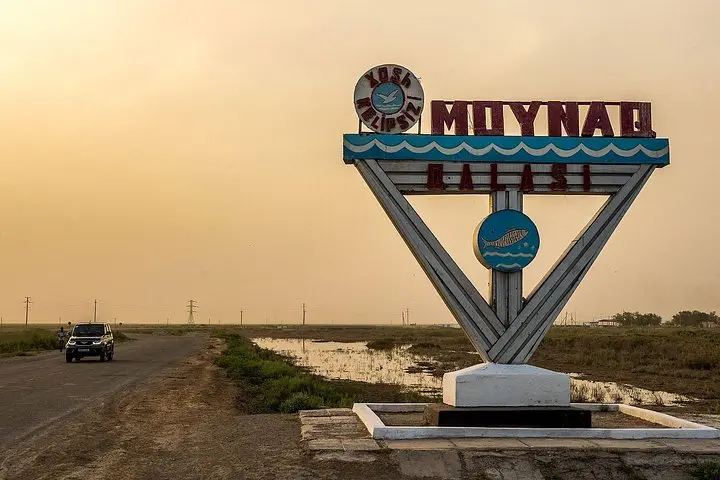
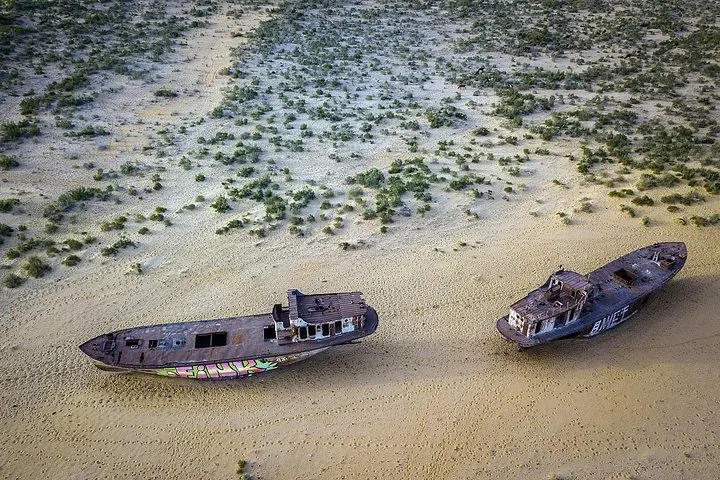
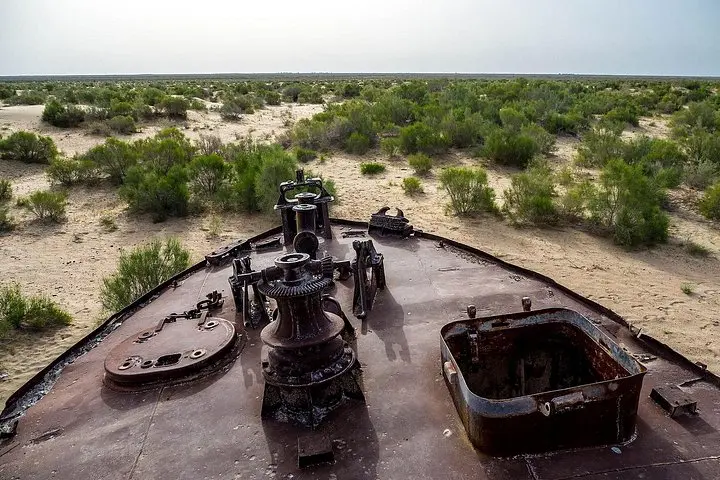
A wind that tastes of salt and dust meets the road long before the hulls appear. Travelers leaving Khiva drive across the flat, open plains of Karakalpakstan, watching the horizon open as settlements thin and the landscape shifts from irrigated fields to cracked salt flats. By midday, rusted ships jut from sand where water once lapped—an eerie, open-air archive of the Aral Sea’s retreat.
Verified experiences and guided adventures in the surrounding area.
Operated by Asli Travel · Muynak, Karakalpakstan
A wind that tastes of salt and dust meets the road long before the hulls appear. Travelers leaving Khiva drive across the flat, open plains of Karakalpakstan, watching the horizon open as settlements thin and the landscape shifts from irrigated fields to cracked salt flats. By midday, rusted ships jut from sand where water once lapped—an eerie, open-air archive of the Aral Sea’s retreat.
This one-day route threads history and geology: the ships mark the sea’s rapid shrinkage after Soviet-era irrigation projects diverted feeder rivers, transforming a thriving fishing region into a desert of relics. Along the way the tour stops at ancient sites—Chilpik Fortress and the Mizdakhan necropolis—offering a peek into pre-Islamic and medieval ritual landscapes that contrast sharply with Muynak’s modern decline. The Aral Sea Museum in Muynak contextualizes the human and ecological stories with photos, specimens, and local testimony.
Expect long stretches in a comfortable A/C vehicle covering roughly 370 km one-way on a ±12-hour circuit with stops (total trip 10–14 hours). Terrain is flat and exposed—heat, wind, and dust are constant companions; walking around the ships is short but on uneven, salty ground. Lunch in Muynak with a local family is available by request and adds cultural texture.
Practical tips: bring ample water, sun protection, sturdy shoes for uneven wreck sites, and a charged camera. Time departures early to avoid late-afternoon winds and allow daylight for photography. The visit is equal parts sobering history lesson and striking visual landscape—direct, revealing, and grounded in real-world conservation consequences.
The route covers roughly 370 km one-way with stops; the full round-trip tour lasts about 10–14 hours depending on traffic and time spent at each stop.
Yes for short visits if you wear sturdy shoes and avoid climbing on severely corroded metal; guide supervision is recommended for safe routes among the wrecks.
Lunch in Muynak with a local family is offered by request and is typically an additional cost—bring snacks if you prefer.
Yes, but conditions vary—winters are cold and windy while summers are extremely hot and exposed; spring and fall offer milder weather.
Asli Travel operates guided outdoor trips and adventures with an emphasis on safety, stewardship, and memorable experiences.
A wind that tastes of salt and dust meets the road long before the hulls appear. Travelers leaving Khiva drive across the flat, open plains of Karakalpakstan, watching the horizon open as settlements thin and the landscape shifts from irrigated fields to cracked salt flats. By midday, rusted ships jut from sand where water once lapped—an eerie, open-air archive of the Aral Sea’s retreat.
A wind that tastes of salt and dust meets the road long before the hulls appear. Travelers leaving Khiva drive across the flat, open plains of Karakalpakstan, watching the horizon open as settlements thin and the landscape shifts from irrigated fields to cracked salt flats. By midday, rusted ships jut from sand where water once lapped—an eerie, open-air archive of the Aral Sea’s retreat.
This one-day route threads history and geology: the ships mark the sea’s rapid shrinkage after Soviet-era irrigation projects diverted feeder rivers, transforming a thriving fishing region into a desert of relics. Along the way the tour stops at ancient sites—Chilpik Fortress and the Mizdakhan necropolis—offering a peek into pre-Islamic and medieval ritual landscapes that contrast sharply with Muynak’s modern decline. The Aral Sea Museum in Muynak contextualizes the human and ecological stories with photos, specimens, and local testimony.
Expect long stretches in a comfortable A/C vehicle covering roughly 370 km one-way on a ±12-hour circuit with stops (total trip 10–14 hours). Terrain is flat and exposed—heat, wind, and dust are constant companions; walking around the ships is short but on uneven, salty ground. Lunch in Muynak with a local family is available by request and adds cultural texture.
Practical tips: bring ample water, sun protection, sturdy shoes for uneven wreck sites, and a charged camera. Time departures early to avoid late-afternoon winds and allow daylight for photography. The visit is equal parts sobering history lesson and striking visual landscape—direct, revealing, and grounded in real-world conservation consequences.