THE ADVENTURE COLLECTIVE® · Independent discovery and booking for outdoor travel

Trade the crowded Poon Hill crowds for the quieter Khopra Ridge on this 11‑day alternative Annapurna trek. Expect steep stone steps, rhododendron forests, high meadows and a sacred alpine lake with expansive views of Annapurna and Dhaulagiri.
Trade the crowded Poon Hill crowds for the quieter Khopra Ridge on this 11‑day alternative Annapurna trek. Expect steep stone steps, rhododendron forests, high meadows and a sacred alpine lake with expansive views of Annapurna and Dhaulagiri.
Dawn pries apart the night and the ridgeline at Khopra Danda drinks the first light — a blunt brightness that reveals serrated peaks of Annapurna and the round bulk of Dhaulagiri. You begin in Kathmandu, unwind onto a curving highway to Pokhara, then move from lowland rice terraces into a stitched world of pine, stone steps and high alpine meadows where villages of the Gurung people punctuate the slopes.
Verified experiences and guided adventures in the surrounding area.
Operated by Osho world Adventure · Pokhara, Gandaki Province
Dawn pries apart the night and the ridgeline at Khopra Danda drinks the first light — a blunt brightness that reveals serrated peaks of Annapurna and the round bulk of Dhaulagiri. You begin in Kathmandu, unwind onto a curving highway to Pokhara, then move from lowland rice terraces into a stitched world of pine, stone steps and high alpine meadows where villages of the Gurung people punctuate the slopes.
The route follows classic Annapurna geology: steep tributary valleys cut from ancient marine sediments uplifted by the collision of the Indian and Eurasian plates. Forested sections here host Nepal’s largest rhododendron stands; above 3,000 m the trail opens to pastures where the wind shapes dwarf shrubs. Khayer Lake, a high sacred tarn, adds cultural weight — local lore links it to stories in the Ramayana and to pilgrimage practice among nearby communities.
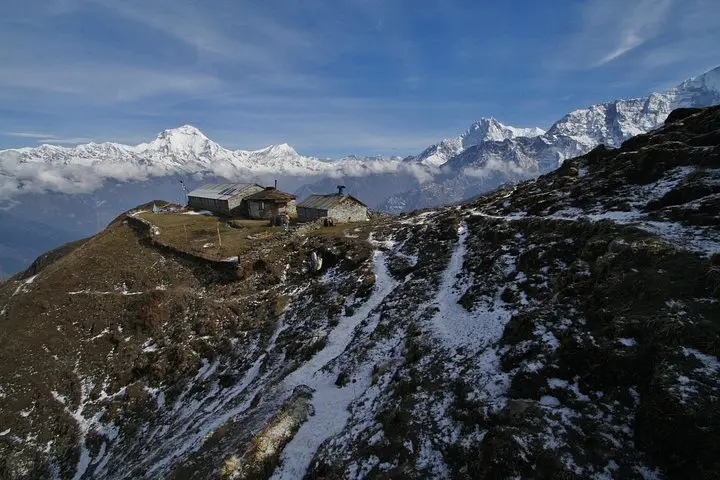
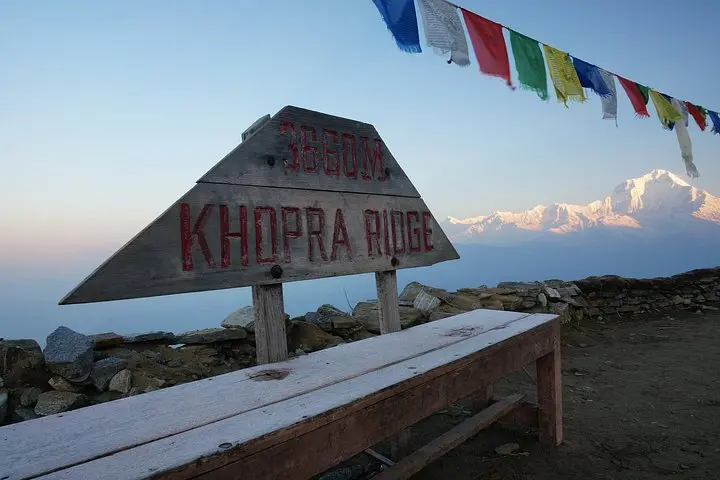
Expect long days of steady climbing (Ulleri to Ghorepani includes brutal stone stair sections), ridge walking to Khopra Danda at ~3,660 m, and an optional, steep out-and-back to Khayer Lake (~4,620 m) that requires good acclimatization. Nights are in teahouses; porters and many comforts are often included, but meals and hot water can be simple.
Practical notes: obtain ACAP/TIMS permits, move slowly around 3,000–4,000 m to reduce altitude risk, carry layered insulation and a quality sleeping bag, and plan travel time for weather windows (October–December and March–May are prime). Water sources are frequent but treatable; respect local customs, pack out waste, and let the mountains feel like an active guide — at times testing you, at times opening an easy, wide view.
Yes — you must carry an Annapurna Conservation Area Permit (ACAP) and a TIMS card; guides usually arrange these before departure.
Khayer Lake is a steep day hike from Khopra Danda at high elevation (≈4,620 m); good acclimatization and early starts reduce risk and weather exposure.
Accommodation is teahouse-style: basic rooms with mattresses, shared bathrooms, and simple hot meals; comforts improve in Pokhara and Kathmandu.
Autumn (Oct–Nov) and spring (Mar–May) offer the most stable weather and clearer mountain views; winter is colder and monsoon months bring heavy rain and slippery trails.
Osho world Adventure operates guided outdoor trips and adventures with an emphasis on safety, stewardship, and memorable experiences.
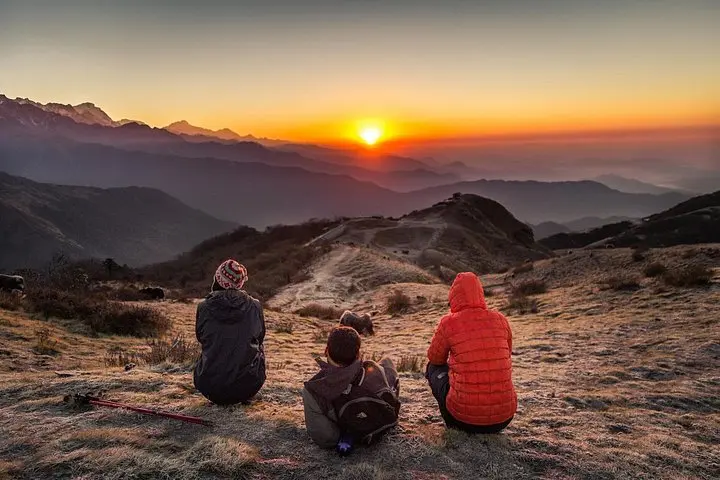
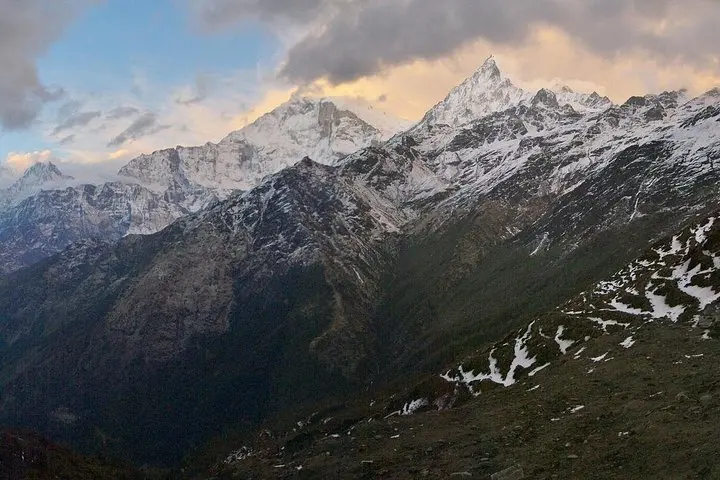
Dawn pries apart the night and the ridgeline at Khopra Danda drinks the first light — a blunt brightness that reveals serrated peaks of Annapurna and the round bulk of Dhaulagiri. You begin in Kathmandu, unwind onto a curving highway to Pokhara, then move from lowland rice terraces into a stitched world of pine, stone steps and high alpine meadows where villages of the Gurung people punctuate the slopes.
Dawn pries apart the night and the ridgeline at Khopra Danda drinks the first light — a blunt brightness that reveals serrated peaks of Annapurna and the round bulk of Dhaulagiri. You begin in Kathmandu, unwind onto a curving highway to Pokhara, then move from lowland rice terraces into a stitched world of pine, stone steps and high alpine meadows where villages of the Gurung people punctuate the slopes.
The route follows classic Annapurna geology: steep tributary valleys cut from ancient marine sediments uplifted by the collision of the Indian and Eurasian plates. Forested sections here host Nepal’s largest rhododendron stands; above 3,000 m the trail opens to pastures where the wind shapes dwarf shrubs. Khayer Lake, a high sacred tarn, adds cultural weight — local lore links it to stories in the Ramayana and to pilgrimage practice among nearby communities.
Expect long days of steady climbing (Ulleri to Ghorepani includes brutal stone stair sections), ridge walking to Khopra Danda at ~3,660 m, and an optional, steep out-and-back to Khayer Lake (~4,620 m) that requires good acclimatization. Nights are in teahouses; porters and many comforts are often included, but meals and hot water can be simple.
Practical notes: obtain ACAP/TIMS permits, move slowly around 3,000–4,000 m to reduce altitude risk, carry layered insulation and a quality sleeping bag, and plan travel time for weather windows (October–December and March–May are prime). Water sources are frequent but treatable; respect local customs, pack out waste, and let the mountains feel like an active guide — at times testing you, at times opening an easy, wide view.