THE ADVENTURE COLLECTIVE® · Independent discovery and booking for outdoor travel

A high-ridge trek in the Annapurna region that trades crowds for sweeping views: Khopra Danda delivers Dhaulagiri-to-Annapurna panoramas, alpine pastures, Khayar Lake and authentic teahouse nights. Read on for what to expect and how to prepare.
A high-ridge trek in the Annapurna region that trades crowds for sweeping views: Khopra Danda delivers Dhaulagiri-to-Annapurna panoramas, alpine pastures, Khayar Lake and authentic teahouse nights. Read on for what to expect and how to prepare.
Dawn breaks on a thin ridge and the Himalaya answers—sharpened edges of Dhaulagiri and Annapurna push the horizon into a hard-line skyline. On Khopra Danda the wind speaks in cold drafts, the ridge dares you to step closer for a panoramic sweep that includes Annapurna I, Nilgiri, Machhapuchhre and distant Dhaulagiri.
Verified experiences and guided adventures in the surrounding area.
Operated by himalayan sanctuary adventure private limited · Pokhara, Gandaki Province
Dawn breaks on a thin ridge and the Himalaya answers—sharpened edges of Dhaulagiri and Annapurna push the horizon into a hard-line skyline. On Khopra Danda the wind speaks in cold drafts, the ridge dares you to step closer for a panoramic sweep that includes Annapurna I, Nilgiri, Machhapuchhre and distant Dhaulagiri.
The route follows centuries-old shepherd tracks and modern teahouse trails through mixed oak and rhododendron forests, rising from subtropical foothills near Pokhara into alpine pastures and rocky ridgelines. Geologically this is young mountain country: steep river-carved valleys, glacially polished peaks and moraine-carved basins like Khayar Lake, which rewards those who push higher. Culturally the trail threads Magar and Gurung villages—simple stone houses, terraced fields and community cheese projects at Swanta—where hospitality is practical and direct.
Expect long days on stone steps and narrow trails, regular altitude gain up to 3,660 m at Khopra Ridge, and teahouse lodges for evenings. Wildlife is shy but present: Himalayan tahr and pheasants move through upper slopes; morning bird song and the distant bell of grazing yaks mark the day. Plan for early starts to catch sunrise from Poon Hill and Khopra; weather shifts fast, so layered insulation and a solid boot are non-negotiable.
Practical tips: acclimatize on the Ghorepani–Poon Hill segment, carry a modest daypack for summit pushes, and use a local guide to navigate seasonal trail changes. Water treatment, trekking poles and respectful camera etiquette in villages will keep the trip smooth and rewarding.
Yes; the route lies in the Annapurna Conservation Area so you need ACAP and TIMS permits—these are usually handled by your operator.
You reach about 3,660 m at Khopra Ridge; standard acclimatization practices apply and the itinerary includes gradual ascent days like Poon Hill to reduce risk.
Teahouse/lodge accommodation along the trail with shared rooms and basic facilities; meals are included on guided itineraries but expect simpler options at higher altitudes.
Spring (March–May) and fall (Sept–Nov) offer the most stable weather and clear mountain views; monsoon brings greenery but cloud, winter can be snowy and cold.
himalayan sanctuary adventure private limited operates guided outdoor trips and adventures with an emphasis on safety, stewardship, and memorable experiences.
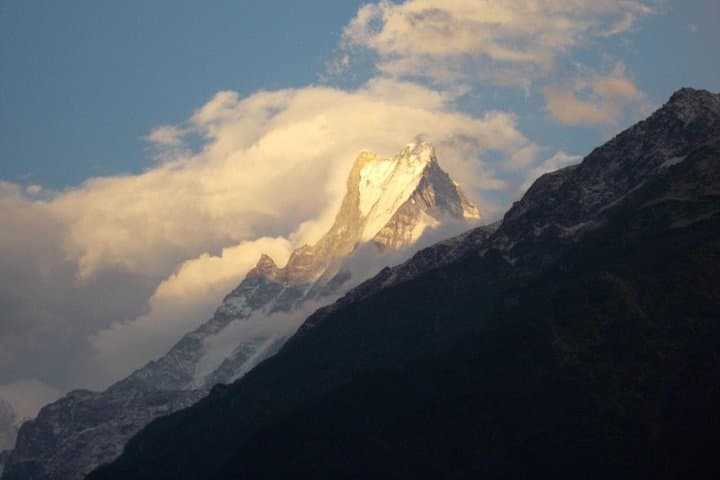

Dawn breaks on a thin ridge and the Himalaya answers—sharpened edges of Dhaulagiri and Annapurna push the horizon into a hard-line skyline. On Khopra Danda the wind speaks in cold drafts, the ridge dares you to step closer for a panoramic sweep that includes Annapurna I, Nilgiri, Machhapuchhre and distant Dhaulagiri.
Dawn breaks on a thin ridge and the Himalaya answers—sharpened edges of Dhaulagiri and Annapurna push the horizon into a hard-line skyline. On Khopra Danda the wind speaks in cold drafts, the ridge dares you to step closer for a panoramic sweep that includes Annapurna I, Nilgiri, Machhapuchhre and distant Dhaulagiri.
The route follows centuries-old shepherd tracks and modern teahouse trails through mixed oak and rhododendron forests, rising from subtropical foothills near Pokhara into alpine pastures and rocky ridgelines. Geologically this is young mountain country: steep river-carved valleys, glacially polished peaks and moraine-carved basins like Khayar Lake, which rewards those who push higher. Culturally the trail threads Magar and Gurung villages—simple stone houses, terraced fields and community cheese projects at Swanta—where hospitality is practical and direct.
Expect long days on stone steps and narrow trails, regular altitude gain up to 3,660 m at Khopra Ridge, and teahouse lodges for evenings. Wildlife is shy but present: Himalayan tahr and pheasants move through upper slopes; morning bird song and the distant bell of grazing yaks mark the day. Plan for early starts to catch sunrise from Poon Hill and Khopra; weather shifts fast, so layered insulation and a solid boot are non-negotiable.
Practical tips: acclimatize on the Ghorepani–Poon Hill segment, carry a modest daypack for summit pushes, and use a local guide to navigate seasonal trail changes. Water treatment, trekking poles and respectful camera etiquette in villages will keep the trip smooth and rewarding.