THE ADVENTURE COLLECTIVE® · Independent discovery and booking for outdoor travel

Drive from Khiva into the red sands of the Kyzylkum to explore Kyzyl Kala, Toprak Kala and Ayaz Kala on a private 5–6 hour tour. Expect short walks across ruins, a visit to a yurt camp with camel milk, and stark desert panoramas.
Drive from Khiva into the red sands of the Kyzylkum to explore Kyzyl Kala, Toprak Kala and Ayaz Kala on a private 5–6 hour tour. Expect short walks across ruins, a visit to a yurt camp with camel milk, and stark desert panoramas.
A late-morning sun slants across baked mud-brick walls as your air-conditioned vehicle eases off the asphalt into the red dust of the Kyzylkum. Up on a low rise, Ayaz Kala’s crumbling towers look out over a wide desert plain; the wind carries the dry, mineral tang of ancient earth and the faint bell-like call of distant livestock.
Verified experiences and guided adventures in the surrounding area.
Operated by Ali Travel · Khiva, Khorezm Region
A late-morning sun slants across baked mud-brick walls as your air-conditioned vehicle eases off the asphalt into the red dust of the Kyzylkum. Up on a low rise, Ayaz Kala’s crumbling towers look out over a wide desert plain; the wind carries the dry, mineral tang of ancient earth and the faint bell-like call of distant livestock.
This private 5–6 hour loop follows the spine of Khorezm history: Toprak Kala’s palace foundations and painted fragments recall a prosperous 2nd–3rd century capital, while Kyzyl Kala and Ayaz Kala date to first-millennium fort-building phases tied to Chorasmia. Geologically the Kyzylkum is a broad erg of wind-blown sands and compacted clays; you’ll see layers of loess and salt flats that shaped where settlements could stand. Culturally, the route threads traditional livelihoods—herding, yurt-making—and you’ll stop at a yurt camp to sample camel milk and meet hosts practicing age-old hospitality.
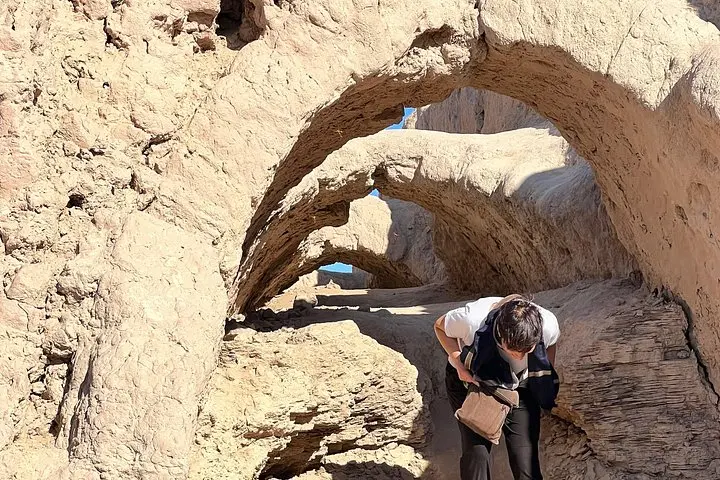
Practical guidance: expect short walks over uneven, eroding masonry and soft sand; much of the travel time is by vehicle between sites. Bring sun protection and at least 2 liters of water, wear sturdy shoes with good grip, and allow time for photography—light is best late morning and late afternoon. Drivers usually speak basic English and handle logistics and permits; entrance fees for some archaeological complexes may be paid locally. Be respectful around fragile ruins and any ongoing conservation work; stick to established paths and avoid climbing restored walls.
This tour balances accessible history with stark desert scenery—an efficient way to see Khorezm’s fortress network without a multi-day expedition.
The private tour lasts about 5–6 hours and uses an air-conditioned vehicle to move between sites with short walking stops at each fortress.
Bottled water and vehicle transport are included; entrance fees to some ruins are typically paid locally—camel milk at the yurt camp may be offered as part of the visit but confirm when booking.
Yes—the itinerary is rated easy with minimal walking; however, uneven ground can be challenging for those with limited mobility, so plan accordingly.
Drivers are usually English-communicative at a basic level and handle logistics and local introductions; a private guide with deeper historical commentary can be arranged in advance.
Ali Travel operates guided outdoor trips and adventures with an emphasis on safety, stewardship, and memorable experiences.
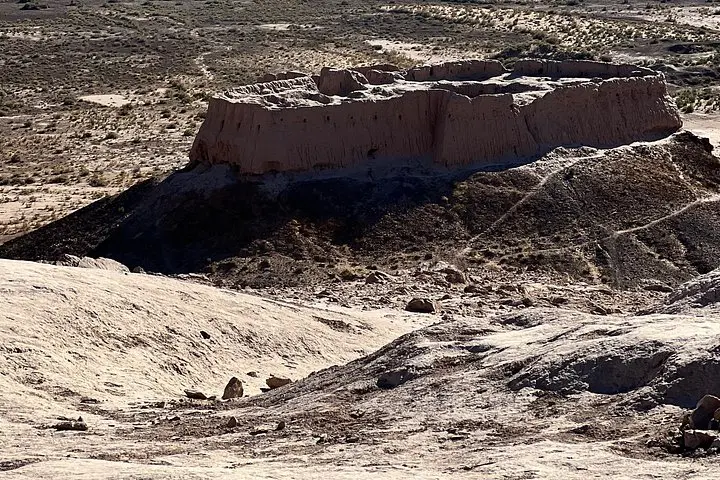
A late-morning sun slants across baked mud-brick walls as your air-conditioned vehicle eases off the asphalt into the red dust of the Kyzylkum. Up on a low rise, Ayaz Kala’s crumbling towers look out over a wide desert plain; the wind carries the dry, mineral tang of ancient earth and the faint bell-like call of distant livestock.
A late-morning sun slants across baked mud-brick walls as your air-conditioned vehicle eases off the asphalt into the red dust of the Kyzylkum. Up on a low rise, Ayaz Kala’s crumbling towers look out over a wide desert plain; the wind carries the dry, mineral tang of ancient earth and the faint bell-like call of distant livestock.
This private 5–6 hour loop follows the spine of Khorezm history: Toprak Kala’s palace foundations and painted fragments recall a prosperous 2nd–3rd century capital, while Kyzyl Kala and Ayaz Kala date to first-millennium fort-building phases tied to Chorasmia. Geologically the Kyzylkum is a broad erg of wind-blown sands and compacted clays; you’ll see layers of loess and salt flats that shaped where settlements could stand. Culturally, the route threads traditional livelihoods—herding, yurt-making—and you’ll stop at a yurt camp to sample camel milk and meet hosts practicing age-old hospitality.
Practical guidance: expect short walks over uneven, eroding masonry and soft sand; much of the travel time is by vehicle between sites. Bring sun protection and at least 2 liters of water, wear sturdy shoes with good grip, and allow time for photography—light is best late morning and late afternoon. Drivers usually speak basic English and handle logistics and permits; entrance fees for some archaeological complexes may be paid locally. Be respectful around fragile ruins and any ongoing conservation work; stick to established paths and avoid climbing restored walls.
This tour balances accessible history with stark desert scenery—an efficient way to see Khorezm’s fortress network without a multi-day expedition.