THE ADVENTURE COLLECTIVE® · Independent discovery and booking for outdoor travel

Drive two hours from Ulaanbaatar into Khustai National Park to watch Przewalski horses roam restored steppe. This two-day tour combines wildlife viewing, a museum stop, overnight in a yurt or tourist camp, and a beginner-friendly horse ride.
Drive two hours from Ulaanbaatar into Khustai National Park to watch Przewalski horses roam restored steppe. This two-day tour combines wildlife viewing, a museum stop, overnight in a yurt or tourist camp, and a beginner-friendly horse ride.
You step out of the minivan and the steppe opens like a plain breathing canvas: wind moving grass in ribs, gulls arguing over a meadow puddle, and somewhere ahead a small herd of compact, dun-colored horses grazing with a wary calm. This is Khustai National Park, where the Przewalski horse — the Takhi — returned from the brink and now chops its way across slopes that have not changed much in a century.
Verified experiences and guided adventures in the surrounding area.
Operated by Mongolian Tour Guide · Ulaanbaatar, Töv Province
You step out of the minivan and the steppe opens like a plain breathing canvas: wind moving grass in ribs, gulls arguing over a meadow puddle, and somewhere ahead a small herd of compact, dun-colored horses grazing with a wary calm. This is Khustai National Park, where the Przewalski horse — the Takhi — returned from the brink and now chops its way across slopes that have not changed much in a century.
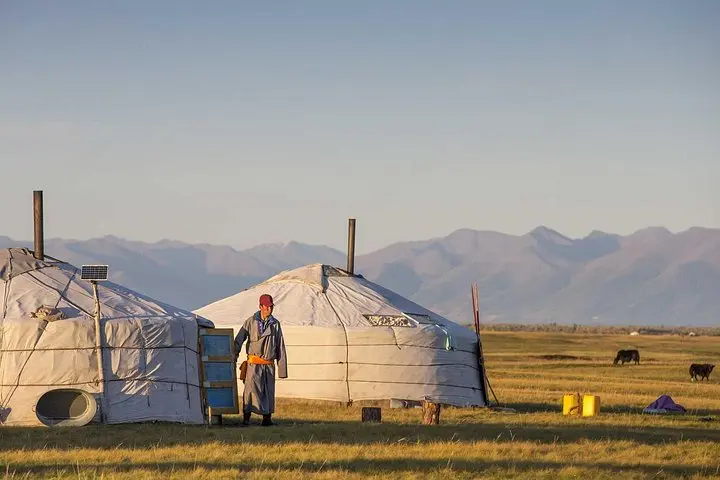
The two-day loop from Ulaanbaatar is deceptively simple: a two-hour drive into Töv Province, time at the park museum and observation points, a night in a family yurt or tourist camp, and a morning of short horseback and foot trails that put you close to wild herds and riverine meadows along the Tuul River.
Khustai’s modern story is one of rapid restoration. Established to protect the Takhi reintroduction in 1993, the park earned UNESCO biosphere status in 2002 and today balances wildlife recovery with nomadic grazing and low-impact tourism. Geologically, the terrain is folded steppe and low ridgeline — elevations sit around 1,400–1,800 meters — so views feel expansive rather than alpine. Culturally, the park is a working landscape: families keep small herds, smoke samovars in winter, and host guests in felt gers for a first-hand look at pastoral life.
On the practical side, expect variable weather and short, firm hikes — typical walks are 3–8 km with modest elevation change — and a one-hour horse trail on day two that’s suitable for beginners. Wildlife encounters are best in low light: dawn and dusk when Takhi move to graze and argali or deer appear on distant slopes. The park’s museum and conference hall give context to rewilding efforts and are worth the 30–60 minute stop.
Pack layers for sharp steppe winds, a sun hat, and a small daypack with water and snacks for on-trail comfort. Opt for footwear with ankle support for uneven ground and bring cash for small purchases at camps. If you choose a family yurt, accept the invitation to walk with your host; local knowledge often leads to the best observation points.
Logistics are straightforward: most operators include two meals on each day and hotel pickup in Ulaanbaatar. Travel light, keep your camera ready, and let the steppe do the rest — Khustai is a place where landscape and species reclaim the same horizon.
Expect roughly 1.5–2 hours each way depending on traffic and road conditions — most operators include hotel pickup.
Sightings are common but not guaranteed; mornings and evenings increase your chances and guides know the best observation areas.
You’ll stay in a family yurt (ger) or a small tourist camp with basic facilities; expect traditional meals and simple comforts.
Yes — the included one-hour trail is geared to novice riders; guides give basic instruction and lead the route.
Yes — the itinerary lists breakfast, lunch, and dinner across both days, often featuring traditional Mongolian dishes and vegetarian options.
Bring some cash for small purchases and tips; remote camps may not accept cards, though major services in Ulaanbaatar will.
Mongolian Tour Guide operates guided outdoor trips and adventures with an emphasis on safety, stewardship, and memorable experiences.
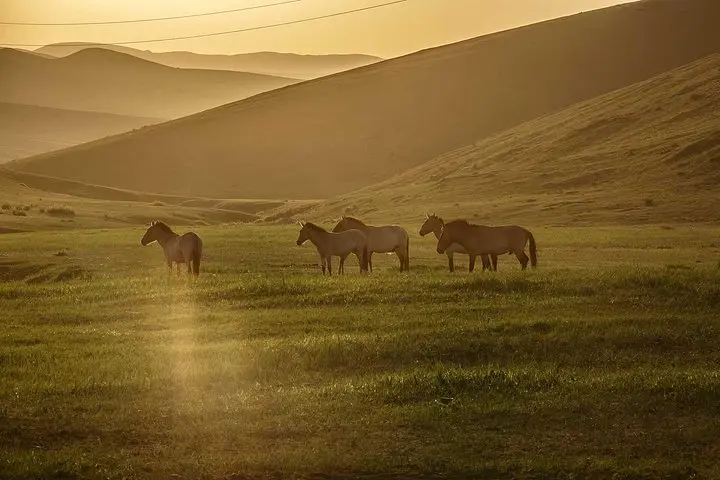
You step out of the minivan and the steppe opens like a plain breathing canvas: wind moving grass in ribs, gulls arguing over a meadow puddle, and somewhere ahead a small herd of compact, dun-colored horses grazing with a wary calm. This is Khustai National Park, where the Przewalski horse — the Takhi — returned from the brink and now chops its way across slopes that have not changed much in a century.
You step out of the minivan and the steppe opens like a plain breathing canvas: wind moving grass in ribs, gulls arguing over a meadow puddle, and somewhere ahead a small herd of compact, dun-colored horses grazing with a wary calm. This is Khustai National Park, where the Przewalski horse — the Takhi — returned from the brink and now chops its way across slopes that have not changed much in a century.
The two-day loop from Ulaanbaatar is deceptively simple: a two-hour drive into Töv Province, time at the park museum and observation points, a night in a family yurt or tourist camp, and a morning of short horseback and foot trails that put you close to wild herds and riverine meadows along the Tuul River.
Khustai’s modern story is one of rapid restoration. Established to protect the Takhi reintroduction in 1993, the park earned UNESCO biosphere status in 2002 and today balances wildlife recovery with nomadic grazing and low-impact tourism. Geologically, the terrain is folded steppe and low ridgeline — elevations sit around 1,400–1,800 meters — so views feel expansive rather than alpine. Culturally, the park is a working landscape: families keep small herds, smoke samovars in winter, and host guests in felt gers for a first-hand look at pastoral life.
On the practical side, expect variable weather and short, firm hikes — typical walks are 3–8 km with modest elevation change — and a one-hour horse trail on day two that’s suitable for beginners. Wildlife encounters are best in low light: dawn and dusk when Takhi move to graze and argali or deer appear on distant slopes. The park’s museum and conference hall give context to rewilding efforts and are worth the 30–60 minute stop.
Pack layers for sharp steppe winds, a sun hat, and a small daypack with water and snacks for on-trail comfort. Opt for footwear with ankle support for uneven ground and bring cash for small purchases at camps. If you choose a family yurt, accept the invitation to walk with your host; local knowledge often leads to the best observation points.
Logistics are straightforward: most operators include two meals on each day and hotel pickup in Ulaanbaatar. Travel light, keep your camera ready, and let the steppe do the rest — Khustai is a place where landscape and species reclaim the same horizon.