THE ADVENTURE COLLECTIVE® · Independent discovery and booking for outdoor travel

Drive from Ulaanbaatar into grassland and granite—searching for reintroduced Przewalski horses in Khustai, sleeping in a tourist camp, then exploring Terelj’s rock formations and the colossal Chinggis Khan statue. This two-park loop pairs wildlife watching with sweeping steppe views and Mongolian cultural encounters.
Drive from Ulaanbaatar into grassland and granite—searching for reintroduced Przewalski horses in Khustai, sleeping in a tourist camp, then exploring Terelj’s rock formations and the colossal Chinggis Khan statue. This two-park loop pairs wildlife watching with sweeping steppe views and Mongolian cultural encounters.
Morning light slices across the Mongolian steppe as your van leaves Ulaanbaatar and the city’s blocky silhouette recedes. The road unfurls—95 km of open country to Khustai Nuruu—where wind pushes low clouds across rolling grass, and the air carries a faint dusting of dried grass and horsehair. You step out into a landscape that behaves like an old friend: blunt, indifferent, and honest about its scale.
Verified experiences and guided adventures in the surrounding area.
Operated by Nomadic Tourism tour agency · Ulaanbaatar, Ulaanbaatar
Morning light slices across the Mongolian steppe as your van leaves Ulaanbaatar and the city’s blocky silhouette recedes. The road unfurls—95 km of open country to Khustai Nuruu—where wind pushes low clouds across rolling grass, and the air carries a faint dusting of dried grass and horsehair. You step out into a landscape that behaves like an old friend: blunt, indifferent, and honest about its scale.
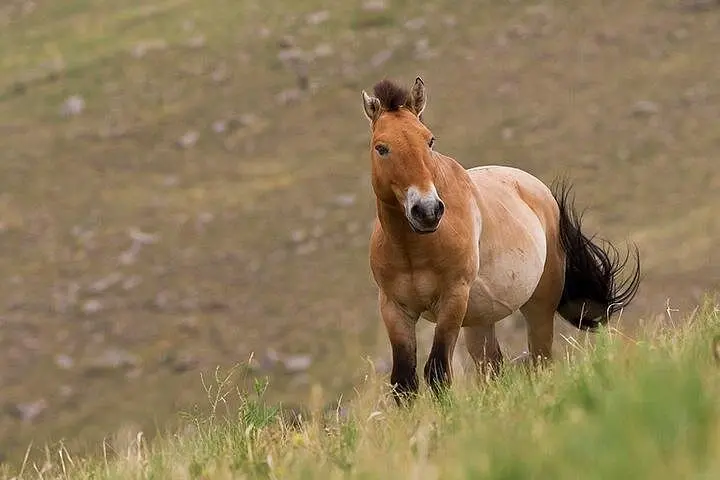
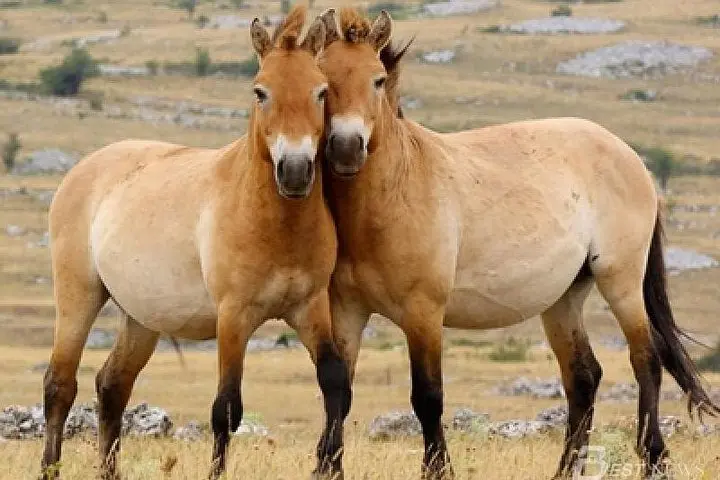
Khustai National Park is best known for the takhi, the Przewalski horse reintroduced through international breeding programs. Seeing them is less about a wildlife spectacle and more about timing and patience—small bands grazing on the ridgelines, ears flicking, bodies compact and muscular against a horizon that seems to widen every time you squint. The park’s geology is modest—granite outcrops and low ridges carved by ancient uplifts and Pleistocene permafrost—yet the openness makes every movement legible from miles away.
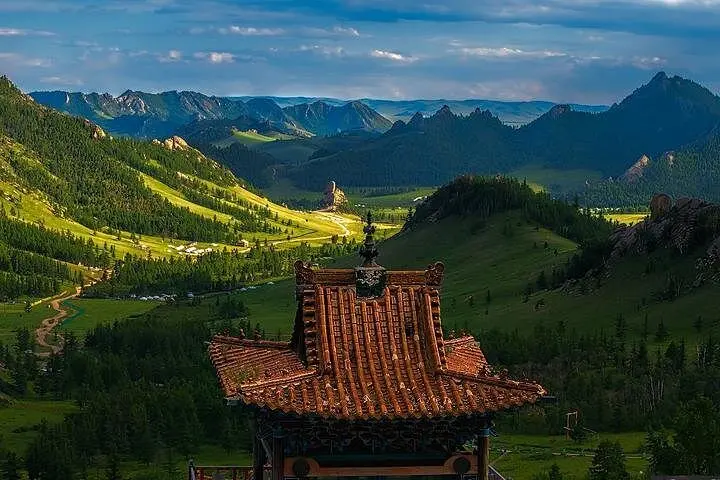
After an overnight stay in a tourist camp—yurts warmed by coal stoves and a dinner of buuz and stewed mutton—the tour pivots east toward Terelj National Park. Here the topography tightens: granite monoliths rise like ship prows, river-cut gullies crisscross open meadows, and boulders balanced on smaller stones suggest a slow, patient tectonic humor. Local herders still move seasonally, and you may pass camel saddles and tethered horses on the approach.
No visit is complete without the Chinggis Khan Statue Complex at Tsonjin Boldog. The 40-meter equestrian statue, recorded by Guinness as the tallest of its kind, presents a deliberate, larger-than-life portrait of Mongolia’s unifying ruler. An elevator takes visitors up through the horse to a viewing platform in the horse’s head; from there the steppe and the Tuul River ribbon outward, a reminder of how geography shaped empire-making.
Practical edge: the tour covers about 95 km to Khustai and roughly 160 km to Terelj from Ulaanbaatar, with much of the driving on paved and good secondary roads; allow 2–3 hours for each transfer. Expect one night in a tourist camp; bring layers for cold nights, binoculars for wildlife, and a camera with a telephoto lens.
Culturally, the trip sketches Mongolia’s relationship with mobility—herding routes, horse culture, and monuments erected to national memory. Environmentally, Khustai is a conservation success story, but fragile: stick to trails, avoid approaching wildlife, and pack out all trash.
This two-park loop is compact but varied: grassland horizons, granite relief, living history, and the scale of a steppe that always seems to be testing your sense of distance.
Expect roughly 2–3 hours between Ulaanbaatar and Khustai, and about 2–3 hours from Khustai to Terelj; total driving across the tour is around 4–6 hours depending on stops and traffic.
Sightings are common but not guaranteed—takhi are wild animals; early morning or late afternoon visits improve chances and the guide knows local concentrations.
An overnight in a tourist camp (ger/yurt-style or simple cabins) is included—basic facilities, communal meals, and local-style bedding are standard.
Yes—breakfast, lunch, and dinner are listed as included across the itinerary; specify dietary needs at booking time.
Yes—the statue has an elevator that takes visitors into the horse’s head to a viewing platform and a small museum at the base.
Children are welcome but must be accompanied by an adult; note there is some driving and basic camp accommodations that may be challenging for very young kids.
Nomadic Tourism tour agency operates guided outdoor trips and adventures with an emphasis on safety, stewardship, and memorable experiences.
Morning light slices across the Mongolian steppe as your van leaves Ulaanbaatar and the city’s blocky silhouette recedes. The road unfurls—95 km of open country to Khustai Nuruu—where wind pushes low clouds across rolling grass, and the air carries a faint dusting of dried grass and horsehair. You step out into a landscape that behaves like an old friend: blunt, indifferent, and honest about its scale.
Morning light slices across the Mongolian steppe as your van leaves Ulaanbaatar and the city’s blocky silhouette recedes. The road unfurls—95 km of open country to Khustai Nuruu—where wind pushes low clouds across rolling grass, and the air carries a faint dusting of dried grass and horsehair. You step out into a landscape that behaves like an old friend: blunt, indifferent, and honest about its scale.
Khustai National Park is best known for the takhi, the Przewalski horse reintroduced through international breeding programs. Seeing them is less about a wildlife spectacle and more about timing and patience—small bands grazing on the ridgelines, ears flicking, bodies compact and muscular against a horizon that seems to widen every time you squint. The park’s geology is modest—granite outcrops and low ridges carved by ancient uplifts and Pleistocene permafrost—yet the openness makes every movement legible from miles away.
After an overnight stay in a tourist camp—yurts warmed by coal stoves and a dinner of buuz and stewed mutton—the tour pivots east toward Terelj National Park. Here the topography tightens: granite monoliths rise like ship prows, river-cut gullies crisscross open meadows, and boulders balanced on smaller stones suggest a slow, patient tectonic humor. Local herders still move seasonally, and you may pass camel saddles and tethered horses on the approach.
No visit is complete without the Chinggis Khan Statue Complex at Tsonjin Boldog. The 40-meter equestrian statue, recorded by Guinness as the tallest of its kind, presents a deliberate, larger-than-life portrait of Mongolia’s unifying ruler. An elevator takes visitors up through the horse to a viewing platform in the horse’s head; from there the steppe and the Tuul River ribbon outward, a reminder of how geography shaped empire-making.
Practical edge: the tour covers about 95 km to Khustai and roughly 160 km to Terelj from Ulaanbaatar, with much of the driving on paved and good secondary roads; allow 2–3 hours for each transfer. Expect one night in a tourist camp; bring layers for cold nights, binoculars for wildlife, and a camera with a telephoto lens.
Culturally, the trip sketches Mongolia’s relationship with mobility—herding routes, horse culture, and monuments erected to national memory. Environmentally, Khustai is a conservation success story, but fragile: stick to trails, avoid approaching wildlife, and pack out all trash.
This two-park loop is compact but varied: grassland horizons, granite relief, living history, and the scale of a steppe that always seems to be testing your sense of distance.