THE ADVENTURE COLLECTIVE® · Independent discovery and booking for outdoor travel

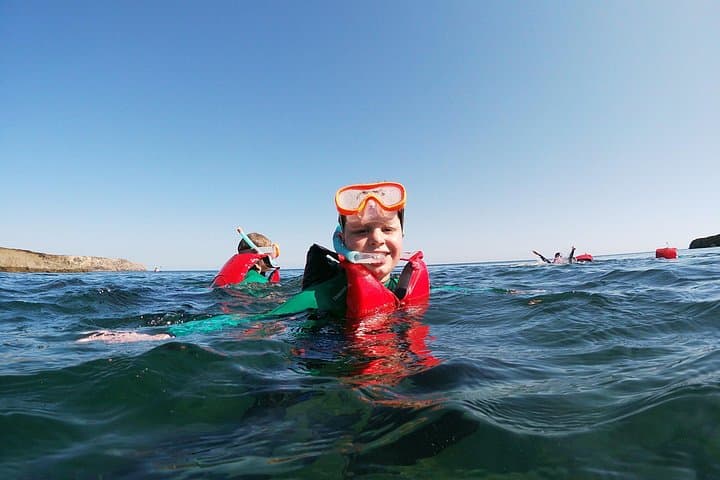
Send kids scrambling across rocky ledges, slipping into warm wetsuits, and snorkeling in hidden coves of the Algarve. This supervised coasteering tour pairs short swims, low jumps, and coastal scrambling for a 3–4 hour family-friendly adventure along the Vicentine Coast.
Send kids scrambling across rocky ledges, slipping into warm wetsuits, and snorkeling in hidden coves of the Algarve. This supervised coasteering tour pairs short swims, low jumps, and coastal scrambling for a 3–4 hour family-friendly adventure along the Vicentine Coast.
The Atlantic pushes at your calves and the cliff face watches like a patient coach as a small group edges along a ledge, then slides into a turquoise pocket of sea. This family-focused coasteering route runs along the western Algarve and into the fringes of the Vicentine Coast National Park—shallow caves, rock platforms and short swims stitched together under the guidance of an instructor.
Verified experiences and guided adventures in the surrounding area.
The Atlantic pushes at your calves and the cliff face watches like a patient coach as a small group edges along a ledge, then slides into a turquoise pocket of sea. This family-focused coasteering route runs along the western Algarve and into the fringes of the Vicentine Coast National Park—shallow caves, rock platforms and short swims stitched together under the guidance of an instructor.
The coast here carries a working history: fishing hamlets, strategic maritime outposts and a shoreline carved over millennia from sedimentary rock into stacks, arches and narrow grottoes. Geologically the route moves between low cliffs and wave-cut platforms where tides shape the access and local guides time the moves. Culturally, guides draw on a local tradition of seamanship and shorecraft; expect small stories about fishermen, wartime lookouts and the seasonal rhythms of the sea.
Practically, the kids version is paced for younger participants—short swims, supervised jumps from low ledges, and snorkeling in calmer coves when visibility allows. Guides supply wetsuits, helmets and flotation; they photograph the group and share images afterward. Plan for 3–4 hours on roughly uneven, wet rock with repeated short ascents and swims rather than long elevation gains. Wear grippy water shoes, bring sun protection and a waterproof dry bag for valuables.
Timing is everything: low to mid tide and calm swell make the route accessible to children; higher surf pushes the difficulty up quickly. Hydrate before you start, follow the guide’s safety brief, and treat every jump and scramble as a planned move rather than a thrill impulse—this keeps the day adventurous and safely within reach for families.
The kids version is tailored for younger participants with shorter swims and lower jumps, but children should be comfortable in the water and able to follow guide instructions.
Guides typically supply wetsuits, buoyancy aids, helmets and photography; confirm locally if boots or towels are included.
Operators monitor swell and tidal windows; trips are rescheduled or alternatives chosen when conditions exceed safe limits.
Basic swimming ability and comfort in moving water are required—guides use flotation and supervise closely, but confident water skills are important.
The Atlantic pushes at your calves and the cliff face watches like a patient coach as a small group edges along a ledge, then slides into a turquoise pocket of sea. This family-focused coasteering route runs along the western Algarve and into the fringes of the Vicentine Coast National Park—shallow caves, rock platforms and short swims stitched together under the guidance of an instructor.
The Atlantic pushes at your calves and the cliff face watches like a patient coach as a small group edges along a ledge, then slides into a turquoise pocket of sea. This family-focused coasteering route runs along the western Algarve and into the fringes of the Vicentine Coast National Park—shallow caves, rock platforms and short swims stitched together under the guidance of an instructor.
The coast here carries a working history: fishing hamlets, strategic maritime outposts and a shoreline carved over millennia from sedimentary rock into stacks, arches and narrow grottoes. Geologically the route moves between low cliffs and wave-cut platforms where tides shape the access and local guides time the moves. Culturally, guides draw on a local tradition of seamanship and shorecraft; expect small stories about fishermen, wartime lookouts and the seasonal rhythms of the sea.
Practically, the kids version is paced for younger participants—short swims, supervised jumps from low ledges, and snorkeling in calmer coves when visibility allows. Guides supply wetsuits, helmets and flotation; they photograph the group and share images afterward. Plan for 3–4 hours on roughly uneven, wet rock with repeated short ascents and swims rather than long elevation gains. Wear grippy water shoes, bring sun protection and a waterproof dry bag for valuables.
Timing is everything: low to mid tide and calm swell make the route accessible to children; higher surf pushes the difficulty up quickly. Hydrate before you start, follow the guide’s safety brief, and treat every jump and scramble as a planned move rather than a thrill impulse—this keeps the day adventurous and safely within reach for families.