
Kilimani Cultural Tour and Materuni Waterfalls — Chagga Coffee, Culture & Kilimanjaro Footpaths
Spend a day with Chagga coffee growers and hike to Materuni Waterfalls at Kilimanjaro’s foot. This culturally rich, moderately active tour combines coffee processing demonstrations, village history, and a forested waterfall walk.
An Adventure In Moshi.
Spend a day with Chagga coffee growers and hike to Materuni Waterfalls at Kilimanjaro’s foot. This culturally rich, moderately active tour combines coffee processing demonstrations, village history, and a forested waterfall walk.
Read the full experience
Morning light on the lower slopes of Kilimanjaro finds the air thick with the scent of wet earth and roasting coffee.
Morning light on the lower slopes of Kilimanjaro finds the air thick with the scent of wet earth and roasting coffee.
On this full-day outing from Arusha or Moshi, visitors move through small Chagga hamlets around Uru and Kilimani, watching farmers sort beans and learning the local techniques that have shaped life at the mountain’s base. The route runs through red volcanic soil and terraced farms—geology and human labor laid out in stepped fields—before a forest track leads to Materuni Waterfalls, where water finds the easiest route and drops in a cool, audible curtain.
The Chagga people shaped much of this landscape over centuries, carving terraces and irrigation channels that still feed the villages below Kilimanjaro. Geologically, this is the mountain’s foothill zone—eroded ash and basalt that supports dense, moisture-loving forest and a network of springs.
Practical guidance: expect 4–6 hours of walking mixed with cultural stops; trails are uneven with short, steep sections and muddy patches after rain. Wear sturdy hiking shoes, carry at least 1–2 liters of water, and bring a lightweight rain shell. Local guides explain coffee processing steps, offer tastings, and point out native trees and birdlife.
Timing matters—early departures avoid midday heat and the afternoon showers common in the long-rains season. Respect private farms, ask before photographing people, and tip guides when service exceeds expectations. The experience is equal parts human culture and active nature walk—hands-on, informative, and grounded in the daily life of Kilimanjaro’s foothills.
Frequently asked questions
From the village trailhead the walking portion is typically 30–60 minutes each way depending on pace and stops; soft mud or steep steps can slow progress.
Yes—guides usually demonstrate bean picking, pulping, drying, and roasting, and many tours allow guests to participate in roasting and tasting.
Families can join but the provider notes infants must sit on laps and the route may be unsuitable for those with limited mobility; moderate fitness is advised for older children.
According to the itinerary, park fees and local charges are included in the tour price, but carry cash for optional extras and tips.
About This Experience
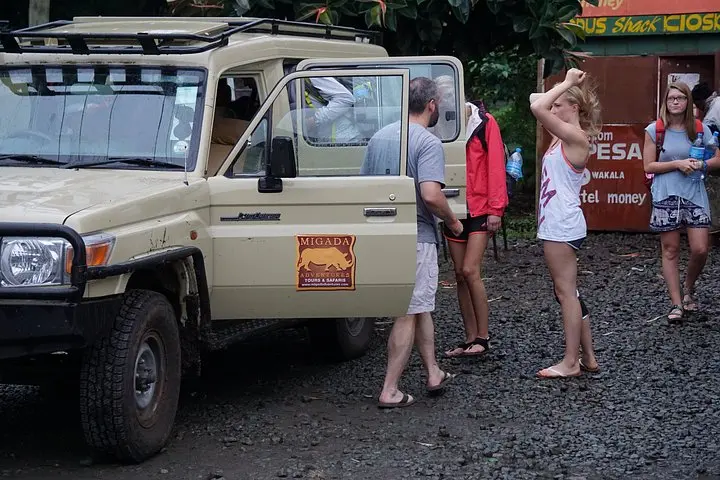
Migada Adventures Tours and Safaris Co Ltd operates guided outdoor trips and adventures with an emphasis on safety, stewardship, and memorable experiences.
Adventure tips
Recommended gear
- Sturdy hiking shoes: Provide ankle support and traction on uneven, often muddy paths to the waterfall.
- Light rain shell: Quick showers are common during the long rains; a compact rain jacket keeps you dry and warm.
- Reusable water bottle or hydration bladder: Ensures adequate hydration during the walk—water refills may not be available on trail.
- Insect repellent: Useful in forested sections where mosquitoes and biting flies are present, especially at dawn and dusk.
Photos of the experience

Related adventures & guides
Read the full experience
Morning light on the lower slopes of Kilimanjaro finds the air thick with the scent of wet earth and roasting coffee.
Morning light on the lower slopes of Kilimanjaro finds the air thick with the scent of wet earth and roasting coffee.
On this full-day outing from Arusha or Moshi, visitors move through small Chagga hamlets around Uru and Kilimani, watching farmers sort beans and learning the local techniques that have shaped life at the mountain’s base. The route runs through red volcanic soil and terraced farms—geology and human labor laid out in stepped fields—before a forest track leads to Materuni Waterfalls, where water finds the easiest route and drops in a cool, audible curtain.
The Chagga people shaped much of this landscape over centuries, carving terraces and irrigation channels that still feed the villages below Kilimanjaro. Geologically, this is the mountain’s foothill zone—eroded ash and basalt that supports dense, moisture-loving forest and a network of springs.
Practical guidance: expect 4–6 hours of walking mixed with cultural stops; trails are uneven with short, steep sections and muddy patches after rain. Wear sturdy hiking shoes, carry at least 1–2 liters of water, and bring a lightweight rain shell. Local guides explain coffee processing steps, offer tastings, and point out native trees and birdlife.
Timing matters—early departures avoid midday heat and the afternoon showers common in the long-rains season. Respect private farms, ask before photographing people, and tip guides when service exceeds expectations. The experience is equal parts human culture and active nature walk—hands-on, informative, and grounded in the daily life of Kilimanjaro’s foothills.
Make a day of it nearby.
Verified experiences and guided adventures in the surrounding area.