THE ADVENTURE COLLECTIVE® · Independent discovery and booking for outdoor travel

Six days of varied terrain, village encounters and crater-lake sunsets: Kilimanjaro 360 circles Africa’s tallest peak by bike, mixing long rides with cultural stops and camping under the mountain’s shadow. Expect tough mileage, mixed surfaces, and unforgettable views of Kibo and Mawenzi.
Six days of varied terrain, village encounters and crater-lake sunsets: Kilimanjaro 360 circles Africa’s tallest peak by bike, mixing long rides with cultural stops and camping under the mountain’s shadow. Expect tough mileage, mixed surfaces, and unforgettable views of Kibo and Mawenzi.
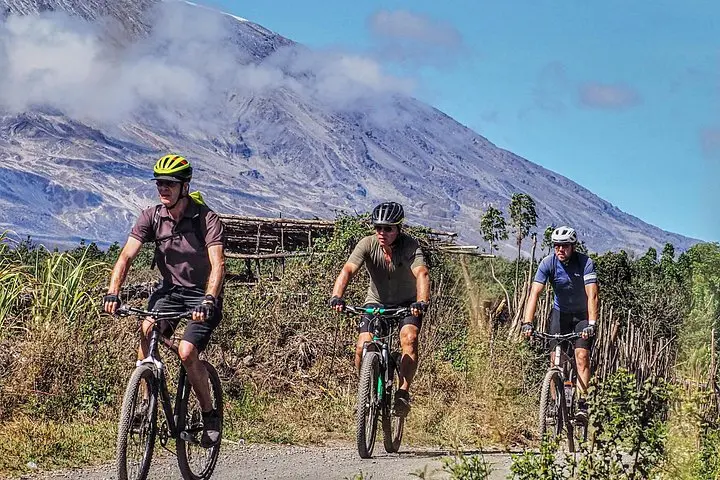
Dawn in Moshi smells of coffee and sun-warmed dust. Riders emerge from Keys Hotel with bikes already tuned by the mechanic, helmets clipped, and a thin chill still clinging to the lowlands. On the horizon, Kilimanjaro’s two main shoulders — Kibo’s ice-capped cone and Mawenzi’s jagged ridge — press into the sky; the route doesn’t climb the summit, but it traces every facet of the mountain’s geography and the cultures that live at its knees.
Verified experiences and guided adventures in the surrounding area.
Operated by Kili Bike Adventures · Moshi, Kilimanjaro Region
Dawn in Moshi smells of coffee and sun-warmed dust. Riders emerge from Keys Hotel with bikes already tuned by the mechanic, helmets clipped, and a thin chill still clinging to the lowlands. On the horizon, Kilimanjaro’s two main shoulders — Kibo’s ice-capped cone and Mawenzi’s jagged ridge — press into the sky; the route doesn’t climb the summit, but it traces every facet of the mountain’s geography and the cultures that live at its knees.
Across six hard, rewarding days you move from sugarcane lanes and banana terraces to acacia-dotted plains, through the Enduimet Wildlife Management Area, and along the rim of Lake Chala — a crater lake whose turquoise skin seems to mock how far you’ve come. The Chagga people farm the fertile southern slopes; Maasai herders patrol the western plains where elephants still use ancient corridors. Geologically, the ride reads like a primer: wind-blown ash and lava flows give way to rich volcanic soils that feed coffee, then to arid plains and caldera cliffs carved by water and tectonics.
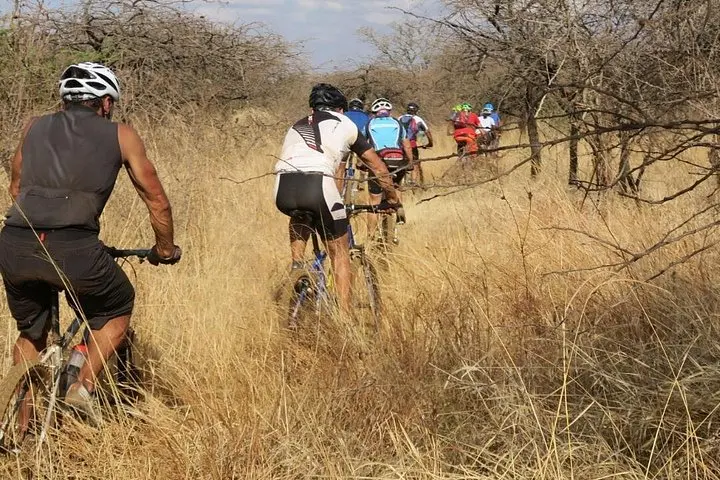
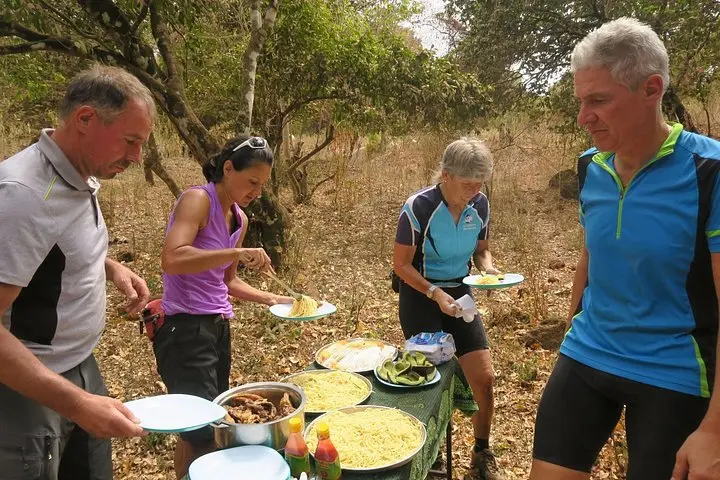
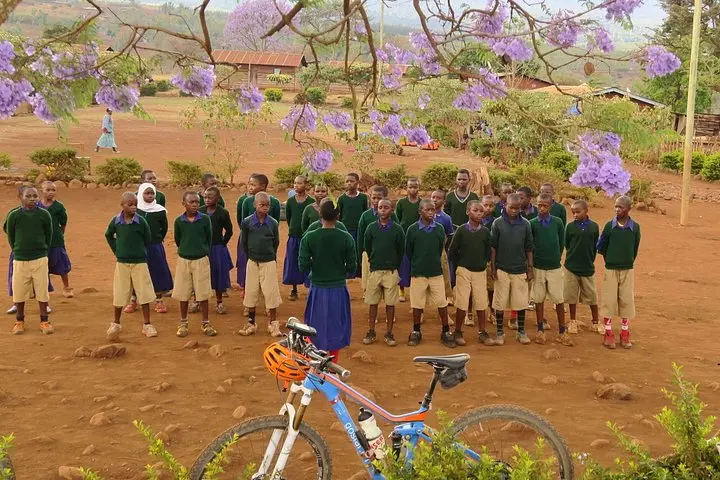
Daily mileage varies: the longest pushes are roughly 77 km and 73 km across mixed tarmac, dirt and gravel; a couple of shorter days fall under 30–40 km but include steep ripples of ascent and descent. Expect technical surfaces — loose gravel and hardened ruts — and stretches where the support vehicle is your lifeline. Nights are outdoors: quality camping gear and meals are provided, and villages like Olpopongi and Snowcap offer cultural stops where local guides explain traditions and share stories such as the Kinukamori waterfall legend.
Practicalities matter as much as enthusiasm. The operator supplies mountain bikes, helmets, a mechanic, and two to three liters of water per day, but you should arrive comfortable with off-road handling and prepared for long days in the saddle. Pack layers: mornings can be cool on the plains and humid nearer the forest; afternoons heat up quickly. The best window for steady weather is the dry season (June–October), though short rains can appear in November and March–May.
Pace yourself: ride conservatively on descents, rotate turns in the group, and work with guides for route choices through wildlife areas. Respect village life: greetings and small purchases go far. When you reach Lake Chala at dusk, let the crater’s stillness repay you — it’s the kind of landscape that keeps you honest about why you rode here.
This is a trip where cultural insight, wildlife sightings and demanding pedaling combine — not a race, but a full-tilt encounter with Kilimanjaro’s lower slopes and the people who call them home.
You should have a moderate-to-high fitness base—able to ride 5–8 hours with varied effort; previous multi-day or long-ride experience is strongly recommended.
Yes—mountain bikes, helmets and a mechanic are included, but bring personal items like gloves and padded shorts.
Expect a mix of tarmac, hard-packed dirt, gravel and occasional rough tracks; some descents are loose and technical.
Yes; routes cross the Enduimet WMA and open plains where elephant and plains game may be encountered—guides manage safety and vehicle support.
Camping is provided most nights with quality tents, sleeping bags and mattresses; there are also village and lodge stays as listed in the itinerary.
Travelers usually need a Tanzanian entry visa and recommended vaccinations (e.g., yellow fever depending on origin); check health and visa requirements well before travel.
Kili Bike Adventures operates guided outdoor trips and adventures with an emphasis on safety, stewardship, and memorable experiences.
Dawn in Moshi smells of coffee and sun-warmed dust. Riders emerge from Keys Hotel with bikes already tuned by the mechanic, helmets clipped, and a thin chill still clinging to the lowlands. On the horizon, Kilimanjaro’s two main shoulders — Kibo’s ice-capped cone and Mawenzi’s jagged ridge — press into the sky; the route doesn’t climb the summit, but it traces every facet of the mountain’s geography and the cultures that live at its knees.
Dawn in Moshi smells of coffee and sun-warmed dust. Riders emerge from Keys Hotel with bikes already tuned by the mechanic, helmets clipped, and a thin chill still clinging to the lowlands. On the horizon, Kilimanjaro’s two main shoulders — Kibo’s ice-capped cone and Mawenzi’s jagged ridge — press into the sky; the route doesn’t climb the summit, but it traces every facet of the mountain’s geography and the cultures that live at its knees.
Across six hard, rewarding days you move from sugarcane lanes and banana terraces to acacia-dotted plains, through the Enduimet Wildlife Management Area, and along the rim of Lake Chala — a crater lake whose turquoise skin seems to mock how far you’ve come. The Chagga people farm the fertile southern slopes; Maasai herders patrol the western plains where elephants still use ancient corridors. Geologically, the ride reads like a primer: wind-blown ash and lava flows give way to rich volcanic soils that feed coffee, then to arid plains and caldera cliffs carved by water and tectonics.
Daily mileage varies: the longest pushes are roughly 77 km and 73 km across mixed tarmac, dirt and gravel; a couple of shorter days fall under 30–40 km but include steep ripples of ascent and descent. Expect technical surfaces — loose gravel and hardened ruts — and stretches where the support vehicle is your lifeline. Nights are outdoors: quality camping gear and meals are provided, and villages like Olpopongi and Snowcap offer cultural stops where local guides explain traditions and share stories such as the Kinukamori waterfall legend.
Practicalities matter as much as enthusiasm. The operator supplies mountain bikes, helmets, a mechanic, and two to three liters of water per day, but you should arrive comfortable with off-road handling and prepared for long days in the saddle. Pack layers: mornings can be cool on the plains and humid nearer the forest; afternoons heat up quickly. The best window for steady weather is the dry season (June–October), though short rains can appear in November and March–May.
Pace yourself: ride conservatively on descents, rotate turns in the group, and work with guides for route choices through wildlife areas. Respect village life: greetings and small purchases go far. When you reach Lake Chala at dusk, let the crater’s stillness repay you — it’s the kind of landscape that keeps you honest about why you rode here.
This is a trip where cultural insight, wildlife sightings and demanding pedaling combine — not a race, but a full-tilt encounter with Kilimanjaro’s lower slopes and the people who call them home.