THE ADVENTURE COLLECTIVE® · Independent discovery and booking for outdoor travel

Walk the Marangu Route to Mandara Hut on a full-day Kilimanjaro hike that packs rainforest trails, wildlife viewing, and crater views into an accessible alpine day. Expect rooted paths, 840 m of gain, and vivid mountain scenery without an overnight climb.
Walk the Marangu Route to Mandara Hut on a full-day Kilimanjaro hike that packs rainforest trails, wildlife viewing, and crater views into an accessible alpine day. Expect rooted paths, 840 m of gain, and vivid mountain scenery without an overnight climb.
You step out of the vehicle into cool, mist-sleek forest and the mountain immediately rearranges the air around you — damp, green, and alive. The trail from Marangu Gate climbs steadily through montane rainforest, the path threaded with roots and ferns, colobus monkeys calling from the canopy as the slope draws you upward toward Mandara Hut at 2,700 m.
Verified experiences and guided adventures in the surrounding area.
Operated by Digalah Expedition · Moshi, Kilimanjaro Region
You step out of the vehicle into cool, mist-sleek forest and the mountain immediately rearranges the air around you — damp, green, and alive. The trail from Marangu Gate climbs steadily through montane rainforest, the path threaded with roots and ferns, colobus monkeys calling from the canopy as the slope draws you upward toward Mandara Hut at 2,700 m.
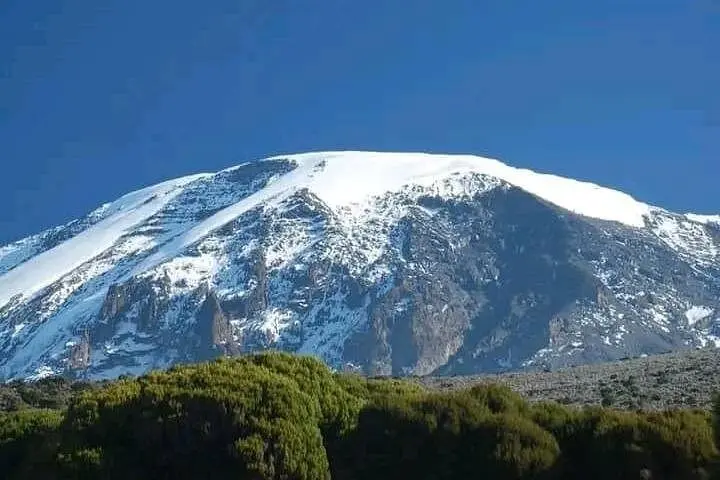
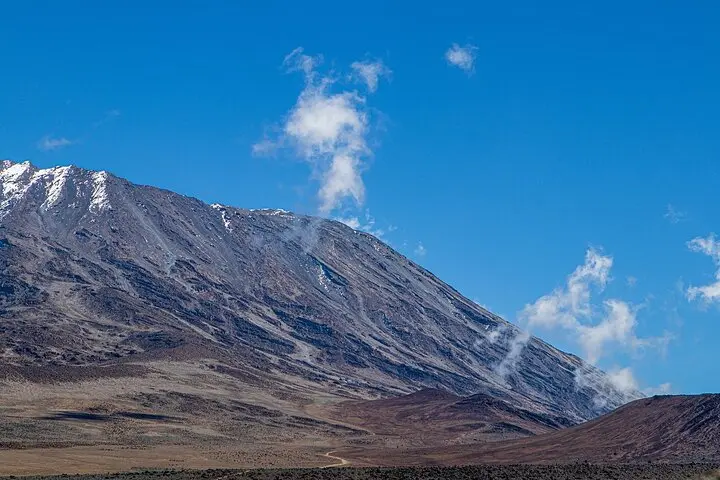
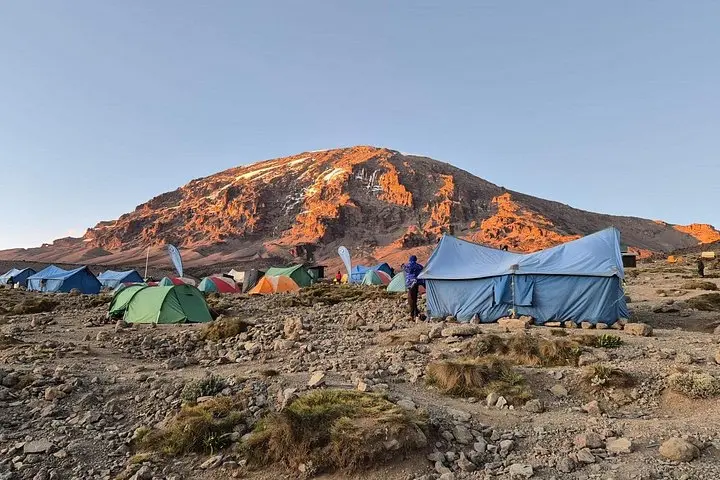
Kilimanjaro’s slopes are a study in elevation zones: farmers and Chagga villages give way to dense rainforest, then heath and moorland higher up. The Marangu Route has been used for decades by porters and climbers; Mandara Hut sits on the rim of Maundi Crater and was long a waypoint for summit attempts. Geologically, Kibo’s volcanic core dominates the skyline — a reminder that these volcanic soils feed the rich biodiversity below.
Culture is visible along the drive: terraced farms, coffee plots, and small Chagga homesteads. Local guides share stories of mountain stewardship and the rituals that mark harvest and weather.
Practical guidance: expect 8–10 hours door-to-door, roughly 3–4 hours ascent and 2–3 hours descent, with ~840 m (2,740 ft) of elevation gain from Marangu Gate (1,860 m) to Mandara Hut (2,700 m) and about 8–12 km round-trip depending on side hikes. Trails are often muddy after rain and rooted underfoot — waterproof footwear with good grip matters. Carry at least 2 liters of water, sun protection, and a warm midlayer for lunch at the hut. Altitude can make the hike feel harder than distance suggests; move steadily, take breaks, and heed your guide. The day delivers rainforest wildlife, crater views, and a compact taste of Kilimanjaro without committing to a summit climb.
The trail is moderate: steady uphill with about 840 m elevation gain; it’s non-technical but can feel strenuous because of altitude.
Acute altitude sickness is less common on a single-day hike to 2,700 m but possible; drink water, move slowly, and notify your guide if you feel unwell.
Typical inclusions are private transportation from Moshi/Arusha, park fees, a professional mountain guide, bottled water, and a packed lunch.
Yes — the route is popular with beginners who want a day on Kilimanjaro, provided they have reasonable fitness and follow the guide’s pace.
Digalah Expedition operates guided outdoor trips and adventures with an emphasis on safety, stewardship, and memorable experiences.
You step out of the vehicle into cool, mist-sleek forest and the mountain immediately rearranges the air around you — damp, green, and alive. The trail from Marangu Gate climbs steadily through montane rainforest, the path threaded with roots and ferns, colobus monkeys calling from the canopy as the slope draws you upward toward Mandara Hut at 2,700 m.
You step out of the vehicle into cool, mist-sleek forest and the mountain immediately rearranges the air around you — damp, green, and alive. The trail from Marangu Gate climbs steadily through montane rainforest, the path threaded with roots and ferns, colobus monkeys calling from the canopy as the slope draws you upward toward Mandara Hut at 2,700 m.
Kilimanjaro’s slopes are a study in elevation zones: farmers and Chagga villages give way to dense rainforest, then heath and moorland higher up. The Marangu Route has been used for decades by porters and climbers; Mandara Hut sits on the rim of Maundi Crater and was long a waypoint for summit attempts. Geologically, Kibo’s volcanic core dominates the skyline — a reminder that these volcanic soils feed the rich biodiversity below.
Culture is visible along the drive: terraced farms, coffee plots, and small Chagga homesteads. Local guides share stories of mountain stewardship and the rituals that mark harvest and weather.
Practical guidance: expect 8–10 hours door-to-door, roughly 3–4 hours ascent and 2–3 hours descent, with ~840 m (2,740 ft) of elevation gain from Marangu Gate (1,860 m) to Mandara Hut (2,700 m) and about 8–12 km round-trip depending on side hikes. Trails are often muddy after rain and rooted underfoot — waterproof footwear with good grip matters. Carry at least 2 liters of water, sun protection, and a warm midlayer for lunch at the hut. Altitude can make the hike feel harder than distance suggests; move steadily, take breaks, and heed your guide. The day delivers rainforest wildlife, crater views, and a compact taste of Kilimanjaro without committing to a summit climb.