THE ADVENTURE COLLECTIVE® · Independent discovery and booking for outdoor travel

In a morning you can trade Moshi’s heat for cool rainforest and the first dramatic ascent of Mt. Kilimanjaro. This half‑day Marangu hike delivers mossy trails, giant lobelia, cultural encounters and a clear view of why climbers spend days on this mountain.
In a morning you can trade Moshi’s heat for cool rainforest and the first dramatic ascent of Mt. Kilimanjaro. This half‑day Marangu hike delivers mossy trails, giant lobelia, cultural encounters and a clear view of why climbers spend days on this mountain.
Dawn in Moshi smells of coffee and diesel; minibuses hum as guides load packs and check radios. By the time you reach Marangu gate the air is cooler, wrapped in the wet-green smell of montane rainforest. Your guide points up the trail — a ribbon of footfall and roots climbing the mountain — and for the next three to four hours the slope does the talking: steep steps, moss-slick switchbacks and sudden clearings that throw the plains back at you like a map.
Verified experiences and guided adventures in the surrounding area.
Operated by Kilisa Tours & Safaris · Moshi, Kilimanjaro Region
Dawn in Moshi smells of coffee and diesel; minibuses hum as guides load packs and check radios. By the time you reach Marangu gate the air is cooler, wrapped in the wet-green smell of montane rainforest. Your guide points up the trail — a ribbon of footfall and roots climbing the mountain — and for the next three to four hours the slope does the talking: steep steps, moss-slick switchbacks and sudden clearings that throw the plains back at you like a map.
This short hike follows the lower line of Mount Kilimanjaro’s Marangu route to the first lodges at roughly 2,700 meters. Geologically, Kilimanjaro is a three‑peaked stratovolcano — Kibo the sleeping giant at the heart, flanked by Mawenzi and Shira — built by eruptions and long pauses that created a stair-step of ecosystems you pass through: village farms, dense cloud forest, then the heath zone where giant lobelia and groundsels begin to appear.
The trail is as much cultural as natural. The Chagga people have worked these lower slopes for generations; you’ll cross coffee terraces and sometimes meet farmers carrying wood or market goods. Guides are often Chagga too, fluent in English and steeped in the route’s practical lore: where the path bogs after rains, where birds hide, which roots like to snag your ankles.
Expect wildlife in the forest — lively monkeys and a surprising chorus of birds — and the occasional glimpse of larger mammals if you’re quiet at the edges. The hike’s payoff is simple: a high, clear lunch at the lodges, views sliding toward the plains, and a sense of how long the mountain is when you can see both the cultivated foothills and the flat horizon beyond.
Practicalities: the walk itself is moderate — roughly 3–6 kilometers up and back with about 700–900 meters of cumulative elevation change depending on start point — but the full trip from Moshi, including transfers and brief stops, takes a half to most of a day. The trail can be muddy after rain and steep in places; sturdy boots and trekking poles make a big difference. Altitude is the primary concern: you won’t summit, but you’ll be above 2,500 meters where breathing is heavier; pace yourself, hydrate, and communicate any dizziness to your guide.
Logistics are straightforward: most operators include hotel pickup, licensed guide, park fees and lunchbox. The best windows are morning starts to avoid afternoon cloud and rain; shoulder seasons after the rains yield clear views and fewer crowds. If you’ve got limited time in Tanzania, this is the clearest, safest way to feel Kilimanjaro under your boots and learn the mountain’s stories without committing to a multi‑day expedition.
The uphill portion to the first lodges takes about 3–4 hours; expect the full excursion including transfers and stops to last 6–8 hours.
No technical experience is required, but a moderate level of fitness and regular walking are necessary for sustained uphill sections.
You’re climbing to about 2,700 m, where mild symptoms (headache, breathlessness) can occur; pace yourself, hydrate, and inform your guide of any issues.
Most operators include park fees, a qualified English‑speaking guide, transport to/from Marangu gate and a lunch box — confirm at booking.
Waterproof or water‑resistant hiking boots with good tread and ankle support are recommended; avoid trainers with slick soles.
Basic toilet facilities exist near the lodges and gate, but expect limited options on the trail itself — bring toilet paper and hand sanitizer.
Kilisa Tours & Safaris operates guided outdoor trips and adventures with an emphasis on safety, stewardship, and memorable experiences.
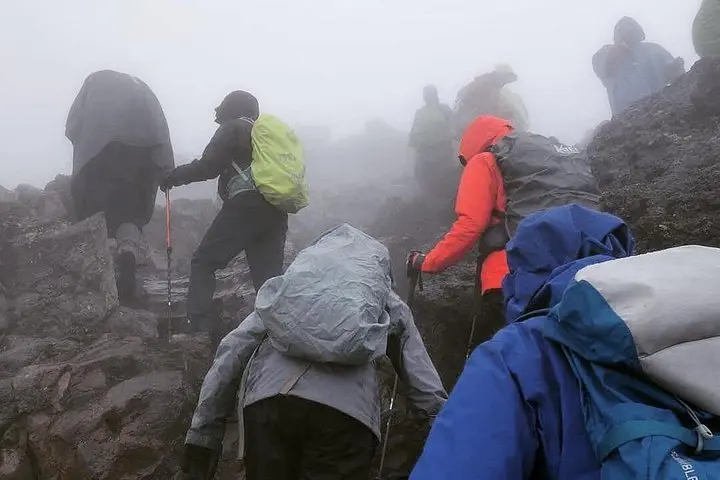
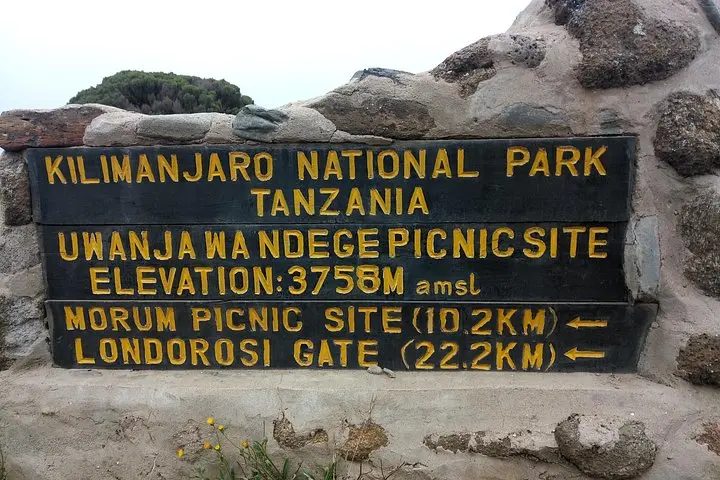
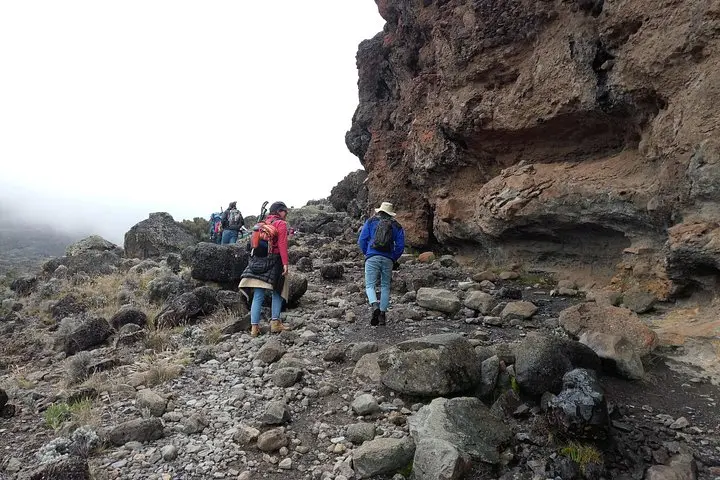
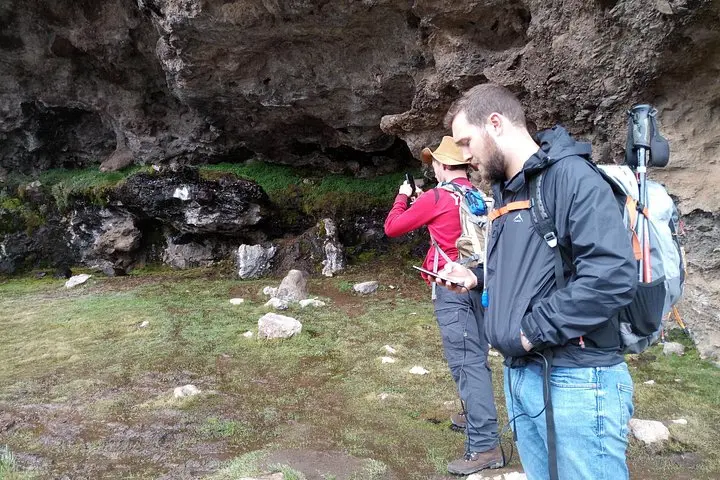
Dawn in Moshi smells of coffee and diesel; minibuses hum as guides load packs and check radios. By the time you reach Marangu gate the air is cooler, wrapped in the wet-green smell of montane rainforest. Your guide points up the trail — a ribbon of footfall and roots climbing the mountain — and for the next three to four hours the slope does the talking: steep steps, moss-slick switchbacks and sudden clearings that throw the plains back at you like a map.
Dawn in Moshi smells of coffee and diesel; minibuses hum as guides load packs and check radios. By the time you reach Marangu gate the air is cooler, wrapped in the wet-green smell of montane rainforest. Your guide points up the trail — a ribbon of footfall and roots climbing the mountain — and for the next three to four hours the slope does the talking: steep steps, moss-slick switchbacks and sudden clearings that throw the plains back at you like a map.
This short hike follows the lower line of Mount Kilimanjaro’s Marangu route to the first lodges at roughly 2,700 meters. Geologically, Kilimanjaro is a three‑peaked stratovolcano — Kibo the sleeping giant at the heart, flanked by Mawenzi and Shira — built by eruptions and long pauses that created a stair-step of ecosystems you pass through: village farms, dense cloud forest, then the heath zone where giant lobelia and groundsels begin to appear.
The trail is as much cultural as natural. The Chagga people have worked these lower slopes for generations; you’ll cross coffee terraces and sometimes meet farmers carrying wood or market goods. Guides are often Chagga too, fluent in English and steeped in the route’s practical lore: where the path bogs after rains, where birds hide, which roots like to snag your ankles.
Expect wildlife in the forest — lively monkeys and a surprising chorus of birds — and the occasional glimpse of larger mammals if you’re quiet at the edges. The hike’s payoff is simple: a high, clear lunch at the lodges, views sliding toward the plains, and a sense of how long the mountain is when you can see both the cultivated foothills and the flat horizon beyond.
Practicalities: the walk itself is moderate — roughly 3–6 kilometers up and back with about 700–900 meters of cumulative elevation change depending on start point — but the full trip from Moshi, including transfers and brief stops, takes a half to most of a day. The trail can be muddy after rain and steep in places; sturdy boots and trekking poles make a big difference. Altitude is the primary concern: you won’t summit, but you’ll be above 2,500 meters where breathing is heavier; pace yourself, hydrate, and communicate any dizziness to your guide.
Logistics are straightforward: most operators include hotel pickup, licensed guide, park fees and lunchbox. The best windows are morning starts to avoid afternoon cloud and rain; shoulder seasons after the rains yield clear views and fewer crowds. If you’ve got limited time in Tanzania, this is the clearest, safest way to feel Kilimanjaro under your boots and learn the mountain’s stories without committing to a multi‑day expedition.