THE ADVENTURE COLLECTIVE® · Independent discovery and booking for outdoor travel

Short on time but hungry for Kilimanjaro’s drama? A day hike to the Shira Plateau delivers high-altitude panoramas, volcanic geology and moorland landscapes without a multi-day trek. Choose a short 1.5-mile route or push to 7 miles for wider vistas.
Short on time but hungry for Kilimanjaro’s drama? A day hike to the Shira Plateau delivers high-altitude panoramas, volcanic geology and moorland landscapes without a multi-day trek. Choose a short 1.5-mile route or push to 7 miles for wider vistas.
You step out of the vehicle and the air hits differently — thinner, colder, carrying the dry, mineral scent of volcanic soil. The Shira Plateau opens like a high-altitude plain carved into Kilimanjaro’s western flank: flat stretches of weathered lava, islands of scrub and protea-like shrubs, and distant walls of pale rock that rise toward Kibo’s snow-capped dome. A guide taps the map, and the group disperses across a route that can be a brisk 1.5-mile out-and-back or a deliberate 7-mile traverse that explores the plateau’s folds.
Verified experiences and guided adventures in the surrounding area.
Operated by Petit Maasai Safaris · Moshi, Kilimanjaro Region
You step out of the vehicle and the air hits differently — thinner, colder, carrying the dry, mineral scent of volcanic soil. The Shira Plateau opens like a high-altitude plain carved into Kilimanjaro’s western flank: flat stretches of weathered lava, islands of scrub and protea-like shrubs, and distant walls of pale rock that rise toward Kibo’s snow-capped dome. A guide taps the map, and the group disperses across a route that can be a brisk 1.5-mile out-and-back or a deliberate 7-mile traverse that explores the plateau’s folds.
Geologically Shira is older than Kibo, a remnant of an extinct volcanic cone whose collapse left a broad caldera. The plateau’s soils are raw — ash-silt and basalt boulders that give way to moorland of senecio and giant lobelia. Culturally, the trail threads through an area long used by the Chagga and Maasai as grazing ground; on the drive up you’ll pass small farms that grow maize and beans in the mountain’s rain shadow. Kilimanjaro National Park protects the plateau, and a ranger accompanies hikers — not for ceremony but for safety and to ensure this fragile alpine habitat endures.
On the trail the landscape keeps you honest. The terrain alternates between packed dirt, loose volcanic scree and patches of tussock grass. Elevation on the plateau sits roughly between 3,500–3,800 meters, so your lungs notice the gradient even when your legs don’t. Weather changes fast: the plateau can wear sun, sleet and gusting wind in a single afternoon. The reward is clear — a panorama that frames Kibo’s summit and its teetering glaciers, cliffs of ancient lava, and the wide, empty sky.
Practicalities: the hike is offered as a private, flexible day trip from Moshi or Arusha, with private transport, bottled water, lunch and park entry included. Routes vary from a 3-hour to an 8-hour outing depending on distance selected. Because of altitude, guides recommend a moderate fitness baseline and basic acclimatization — spend a night at 1,200–1,800 m first in Moshi or Arusha and avoid heavy exertion the day before. Bring layered clothing, sun protection, sturdy boots and at least 2–3 liters of water; trekking poles help on scree.
Timing matters: clear morning light gives the best views and cooler hiking conditions; afternoons bring building clouds and wind. Respect the environment — stick to paths, carry out waste, and listen to your ranger. For travelers short on time or summit ambitions, the Shira Plateau delivers the high-mountain scene of Kilimanjaro in a single, accessible day.
It’s flexible — operators offer routes from about 3 hours (1.5 miles) up to 8 hours (around 7 miles), depending on your pace and chosen itinerary.
Yes — the plateau sits around 3,500–3,800 m. Mild symptoms are possible; acclimatize beforehand, hydrate, and descend if symptoms worsen.
No technical experience is required; this is a high-altitude day hike rather than a glacier or summit climb.
Typical inclusions: private transport from Moshi/Arusha, bottled water, lunch, park entry and a park ranger/guide.
Dry months June–October offer the most reliable weather and clearest views; avoid heavy rain seasons (March–May and Oct–Dec) if possible.
This trip is not recommended for pregnant travelers or those with serious cardiovascular or spinal conditions; check operator age restrictions before booking.
Petit Maasai Safaris operates guided outdoor trips and adventures with an emphasis on safety, stewardship, and memorable experiences.
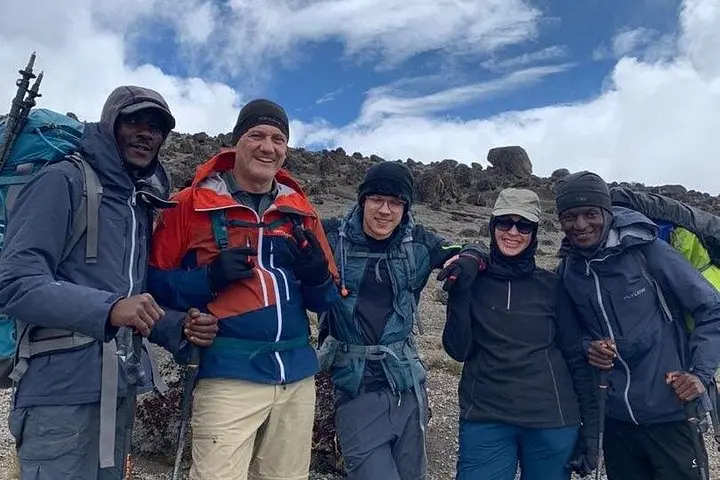
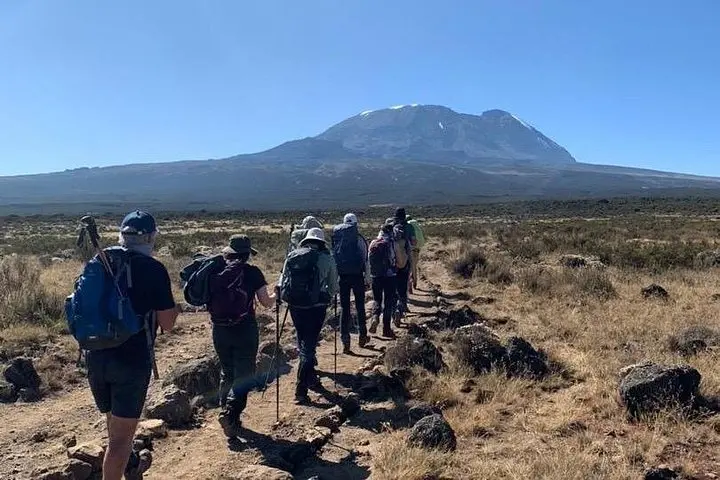
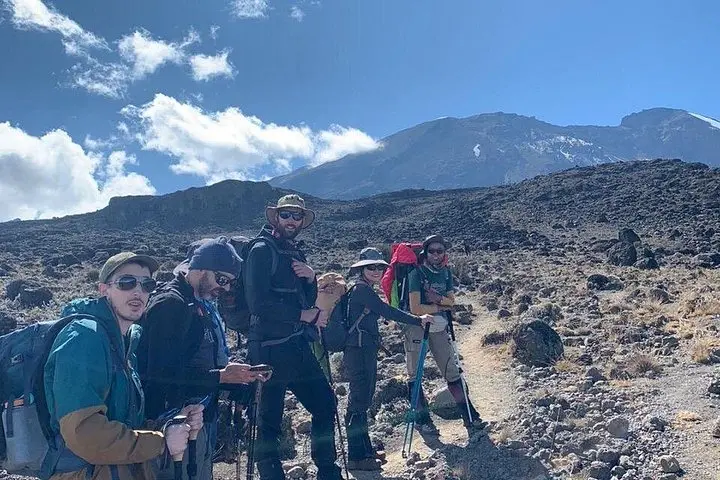
You step out of the vehicle and the air hits differently — thinner, colder, carrying the dry, mineral scent of volcanic soil. The Shira Plateau opens like a high-altitude plain carved into Kilimanjaro’s western flank: flat stretches of weathered lava, islands of scrub and protea-like shrubs, and distant walls of pale rock that rise toward Kibo’s snow-capped dome. A guide taps the map, and the group disperses across a route that can be a brisk 1.5-mile out-and-back or a deliberate 7-mile traverse that explores the plateau’s folds.
You step out of the vehicle and the air hits differently — thinner, colder, carrying the dry, mineral scent of volcanic soil. The Shira Plateau opens like a high-altitude plain carved into Kilimanjaro’s western flank: flat stretches of weathered lava, islands of scrub and protea-like shrubs, and distant walls of pale rock that rise toward Kibo’s snow-capped dome. A guide taps the map, and the group disperses across a route that can be a brisk 1.5-mile out-and-back or a deliberate 7-mile traverse that explores the plateau’s folds.
Geologically Shira is older than Kibo, a remnant of an extinct volcanic cone whose collapse left a broad caldera. The plateau’s soils are raw — ash-silt and basalt boulders that give way to moorland of senecio and giant lobelia. Culturally, the trail threads through an area long used by the Chagga and Maasai as grazing ground; on the drive up you’ll pass small farms that grow maize and beans in the mountain’s rain shadow. Kilimanjaro National Park protects the plateau, and a ranger accompanies hikers — not for ceremony but for safety and to ensure this fragile alpine habitat endures.
On the trail the landscape keeps you honest. The terrain alternates between packed dirt, loose volcanic scree and patches of tussock grass. Elevation on the plateau sits roughly between 3,500–3,800 meters, so your lungs notice the gradient even when your legs don’t. Weather changes fast: the plateau can wear sun, sleet and gusting wind in a single afternoon. The reward is clear — a panorama that frames Kibo’s summit and its teetering glaciers, cliffs of ancient lava, and the wide, empty sky.
Practicalities: the hike is offered as a private, flexible day trip from Moshi or Arusha, with private transport, bottled water, lunch and park entry included. Routes vary from a 3-hour to an 8-hour outing depending on distance selected. Because of altitude, guides recommend a moderate fitness baseline and basic acclimatization — spend a night at 1,200–1,800 m first in Moshi or Arusha and avoid heavy exertion the day before. Bring layered clothing, sun protection, sturdy boots and at least 2–3 liters of water; trekking poles help on scree.
Timing matters: clear morning light gives the best views and cooler hiking conditions; afternoons bring building clouds and wind. Respect the environment — stick to paths, carry out waste, and listen to your ranger. For travelers short on time or summit ambitions, the Shira Plateau delivers the high-mountain scene of Kilimanjaro in a single, accessible day.