THE ADVENTURE COLLECTIVE® · Independent discovery and booking for outdoor travel

Walk the lower slopes of Kilimanjaro on a full-day Marangu-route trek to Shira Plateau and Maundi Crater. Expect rainforest trails, local coffee farms, close-up views of Mawenzi, and a manageable climb that delivers serious mountain scenery without an overnight permit.
Walk the lower slopes of Kilimanjaro on a full-day Marangu-route trek to Shira Plateau and Maundi Crater. Expect rainforest trails, local coffee farms, close-up views of Mawenzi, and a manageable climb that delivers serious mountain scenery without an overnight permit.
The bus eases out of Moshi before dawn and the silhouette of Kilimanjaro grows, first a low shadow, then a definitive spine of rock and snow. By the time you reach Marangu Gate, coffee farms ripple past the window and the air has a green, slightly damp bite—the rainforest here wants to be heard. You step onto a ridged trail under a thick canopy; the path is narrow and braided with roots, birds call like small clarions, and inquisitive blue monkeys watch from branches as if measuring your resolve.
Verified experiences and guided adventures in the surrounding area.
Operated by Shagami Kenya Tours and Safaris · Marangu, Kilimanjaro Region
The bus eases out of Moshi before dawn and the silhouette of Kilimanjaro grows, first a low shadow, then a definitive spine of rock and snow. By the time you reach Marangu Gate, coffee farms ripple past the window and the air has a green, slightly damp bite—the rainforest here wants to be heard. You step onto a ridged trail under a thick canopy; the path is narrow and braided with roots, birds call like small clarions, and inquisitive blue monkeys watch from branches as if measuring your resolve.
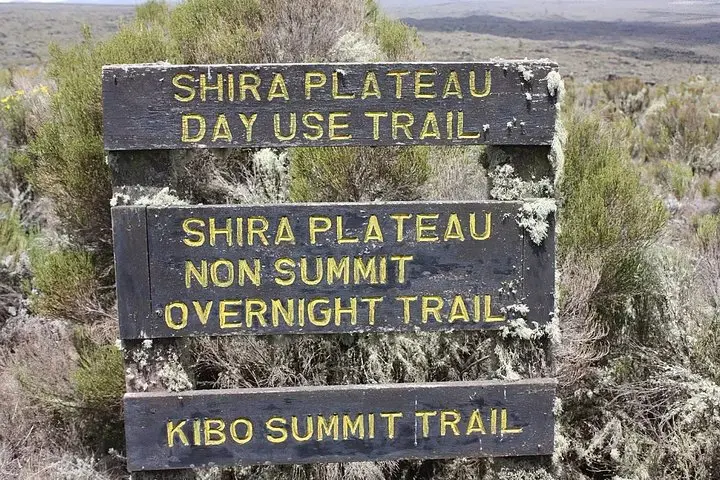
This is not a summit bid but an insistently close encounter with Kilimanjaro’s lower slopes. The route follows the historic Marangu trail—the same approach used by early 20th-century climbers and the local Chagga people who have lived and farmed the mountain’s flanks for generations. Geologically, you’re walking the eroded eastern flank of a three-peaked volcano; Shira Plateau is an ancient caldera plateau cut off from the summit’s jagged Mawenzi and Kibo peaks. The terrain shifts from humus-rich rainforest to stubbier heath and, finally, to the rocky, wind-scoured rim of the Maundi Crater where the mountain opens its views east toward Taveta and northwest toward Mawenzi.
Culturally, Marangu village feels quietly present — coffee and banana plantations irrigate the slope, and small stone houses cluster where streams funnel nutrients down the mountain. Guides on this trip often point out Chagga terracing techniques and local plant uses; a quick cup of locally roasted coffee after the trek makes the landscape taste as much as it looks.
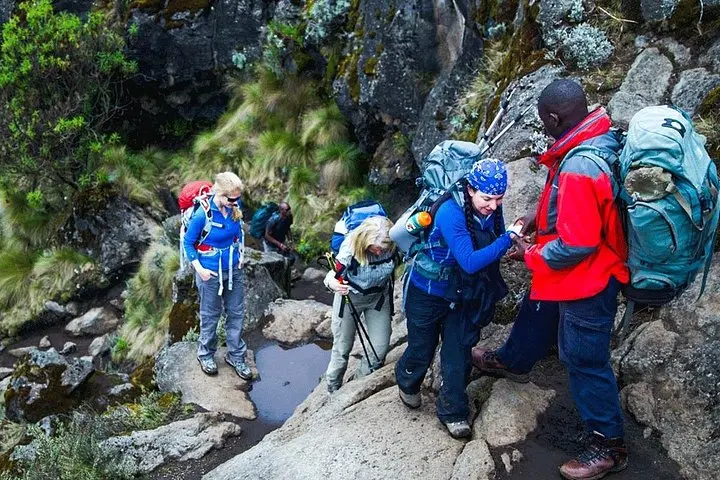
Practically, expect a full day: hotel pickup in Moshi, roughly an hour’s drive to Marangu Gate, then approximately 3 hours of uphill hiking through mixed trail conditions to the lunch hut and the short but steep scramble to Maundi Crater. Round-trip hiking distance is roughly 6–10 km depending on exact turns, with an elevation gain in the neighborhood of 500–800 meters on uneven, sometimes muddy ground. The pace is steady; the climb includes tree-rooted steps and wet patches in the rainforest, and a firmer rocky ridge approaching the crater.
Bring layered clothing for rapid temperature swings, a reliable pair of grippy hiking boots, and 1–2 liters of water plus snacks (the trip includes lunch and bottled water). Take your time on the return—descending rewards clearer views and a chance to spot colobus and blue monkeys again, or the small, lithe mongoose that darts across the trail. On a clear day the crater rim presents one of the most immediate, accessible perspectives of Kilimanjaro’s higher peaks without committing to an overnight route. It’s a day that gives scale—mountain as neighborhood—and enough terrain and culture to leave you tired, informed, and quietly thrilled.
The full day including transfers is about 6–8 hours; expect 3+ hours of uphill hiking with 500–800 m of ascent—moderate difficulty for someone in reasonable shape.
This day trip reaches lower to mid mountain elevations; severe altitude sickness is unlikely but take it easy, hydrate, and tell your guide if you feel unwell.
The tour lists entry/admission to Mount Kilimanjaro as included, but confirm at booking; carrying your ID is recommended.
Children can join if they are physically able to handle the uphill sections; infants must sit on an adult’s lap during transport per the operator’s policy.
Facilities are limited to basic huts and pit toilets near the Marangu huts; bring hand sanitizer and toilet paper.
Tipping is customary in Tanzania—plan a modest tip for your guide and driver if you’re pleased with the service.
Shagami Kenya Tours and Safaris operates guided outdoor trips and adventures with an emphasis on safety, stewardship, and memorable experiences.
The bus eases out of Moshi before dawn and the silhouette of Kilimanjaro grows, first a low shadow, then a definitive spine of rock and snow. By the time you reach Marangu Gate, coffee farms ripple past the window and the air has a green, slightly damp bite—the rainforest here wants to be heard. You step onto a ridged trail under a thick canopy; the path is narrow and braided with roots, birds call like small clarions, and inquisitive blue monkeys watch from branches as if measuring your resolve.
The bus eases out of Moshi before dawn and the silhouette of Kilimanjaro grows, first a low shadow, then a definitive spine of rock and snow. By the time you reach Marangu Gate, coffee farms ripple past the window and the air has a green, slightly damp bite—the rainforest here wants to be heard. You step onto a ridged trail under a thick canopy; the path is narrow and braided with roots, birds call like small clarions, and inquisitive blue monkeys watch from branches as if measuring your resolve.
This is not a summit bid but an insistently close encounter with Kilimanjaro’s lower slopes. The route follows the historic Marangu trail—the same approach used by early 20th-century climbers and the local Chagga people who have lived and farmed the mountain’s flanks for generations. Geologically, you’re walking the eroded eastern flank of a three-peaked volcano; Shira Plateau is an ancient caldera plateau cut off from the summit’s jagged Mawenzi and Kibo peaks. The terrain shifts from humus-rich rainforest to stubbier heath and, finally, to the rocky, wind-scoured rim of the Maundi Crater where the mountain opens its views east toward Taveta and northwest toward Mawenzi.
Culturally, Marangu village feels quietly present — coffee and banana plantations irrigate the slope, and small stone houses cluster where streams funnel nutrients down the mountain. Guides on this trip often point out Chagga terracing techniques and local plant uses; a quick cup of locally roasted coffee after the trek makes the landscape taste as much as it looks.
Practically, expect a full day: hotel pickup in Moshi, roughly an hour’s drive to Marangu Gate, then approximately 3 hours of uphill hiking through mixed trail conditions to the lunch hut and the short but steep scramble to Maundi Crater. Round-trip hiking distance is roughly 6–10 km depending on exact turns, with an elevation gain in the neighborhood of 500–800 meters on uneven, sometimes muddy ground. The pace is steady; the climb includes tree-rooted steps and wet patches in the rainforest, and a firmer rocky ridge approaching the crater.
Bring layered clothing for rapid temperature swings, a reliable pair of grippy hiking boots, and 1–2 liters of water plus snacks (the trip includes lunch and bottled water). Take your time on the return—descending rewards clearer views and a chance to spot colobus and blue monkeys again, or the small, lithe mongoose that darts across the trail. On a clear day the crater rim presents one of the most immediate, accessible perspectives of Kilimanjaro’s higher peaks without committing to an overnight route. It’s a day that gives scale—mountain as neighborhood—and enough terrain and culture to leave you tired, informed, and quietly thrilled.