THE ADVENTURE COLLECTIVE® · Independent discovery and booking for outdoor travel

You can’t summit Kilimanjaro in a day, but a Marangu Route hike to Mandara Hut delivers a compact, high-altitude taste of the mountain—forest trails, Chagga foothills, and a front-row view of Kibo’s ice-capped ridge. This day trip balances scenery with practical logistics for travelers based in Moshi.
You can’t summit Kilimanjaro in a day, but a Marangu Route hike to Mandara Hut delivers a compact, high-altitude taste of the mountain—forest trails, Chagga foothills, and a front-row view of Kibo’s ice-capped ridge. This day trip balances scenery with practical logistics for travelers based in Moshi.
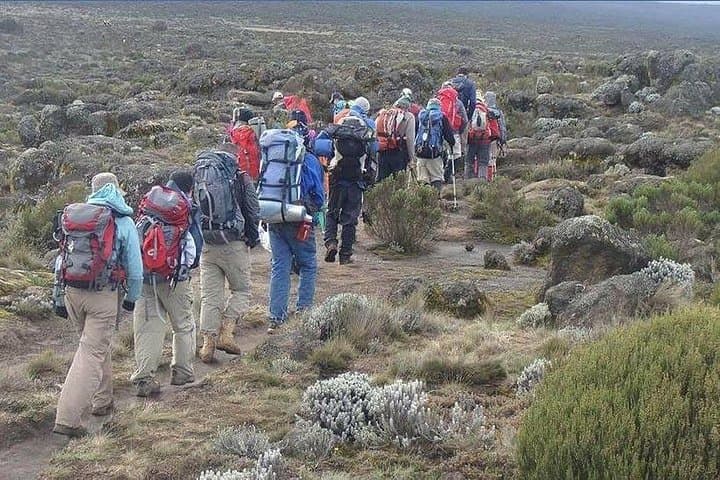
Morning light on Kilimanjaro is a slow reveal: cloud banks part like curtains and the mountain’s ice rim appears—sharp and improbable—above a corridor of moss-draped forest. On this day trip the road from Moshi climbs through avocado terraces and Chagga homesteads until the trees thicken and the air takes on that thin, cool quality of altitude. Guides tighten packs, and porters move with casual purpose as the Marangu Route leads hikers into the lower montane woods toward Mandara Hut.
Verified experiences and guided adventures in the surrounding area.
Operated by Mikumi National Park · Moshi, Kilimanjaro Region
Morning light on Kilimanjaro is a slow reveal: cloud banks part like curtains and the mountain’s ice rim appears—sharp and improbable—above a corridor of moss-draped forest. On this day trip the road from Moshi climbs through avocado terraces and Chagga homesteads until the trees thicken and the air takes on that thin, cool quality of altitude. Guides tighten packs, and porters move with casual purpose as the Marangu Route leads hikers into the lower montane woods toward Mandara Hut.
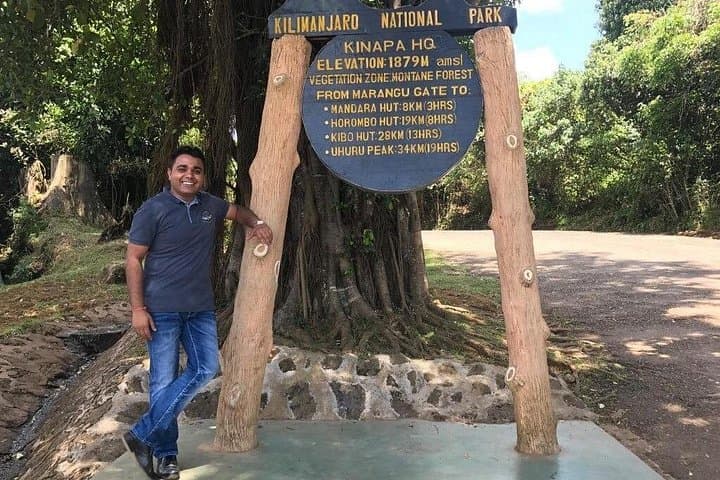
The route itself is textbook East African mountain walking: rooted, red-soil tracks give way to timbered switchbacks through giant lobelias and heather. In the lower sections, the trail threads through farmland where Chagga households tend potatoes and bananas; higher up the forest thickens, dripping with epiphytes, and birds call from canopy holes. After roughly 4–5 hours of steady gain—about 800–900 meters of elevation—the clearing at Mandara Hut opens, where a picnic lunch and a far-reaching vista of Kibo’s flanks reward the climb.
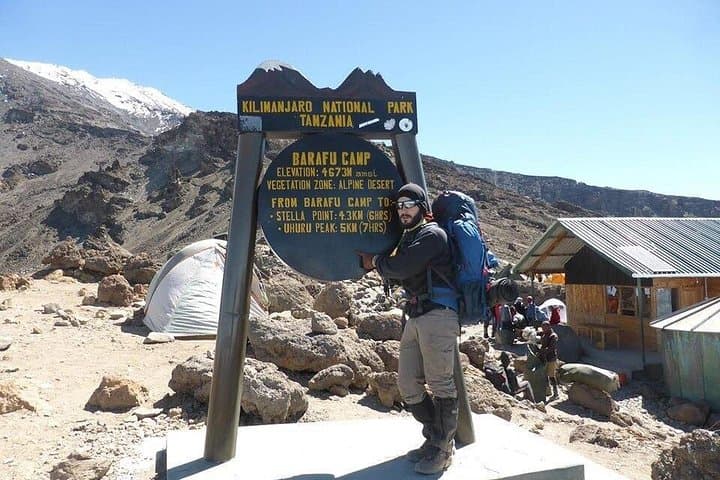
Kilimanjaro’s story is layered. The Chagga have lived on these slopes for centuries, shaping terraces and paths long before climbers arrived. The mountain itself is a dormant stratovolcano with three peaks—Kibo, Mawenzi and Shira—and the summit, Uhuru Peak, tops out at 5,895 m. Kilimanjaro National Park has been protected since 1977 and became a UNESCO World Heritage Site in 1987. Those who visit witness a landscape in transition: the glaciers that crown Kibo are receding, a reminder of global change.
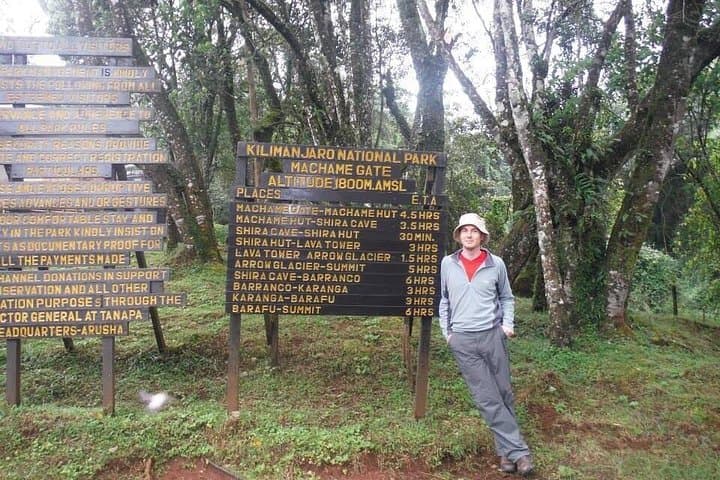
This day trip is a practical primer rather than an attempt on the summit. Expect 5–9 hours total including round-trip hiking and drive time from Moshi, with trails ranging from packed earth to rocky, wet roots. The climb is steady; you’ll feel the thin air as you approach Mandara. Bring layered clothing for rapid temperature swings, waterproof footwear for muddy sections, and at least 2 liters of water. Guides supplied by local operators know the rhythm of the mountain—listen to their pace and advice on acclimatization.
Local culture is part of the itinerary: on descent there’s time to pass through Chagga villages where coffee plants and banana groves define the lower slopes. Practice low-impact travel—carry out waste and tip porters fairly; their work is essential to any Kilimanjaro visit. Whether you want a taste of high-altitude walking or a photo-perfect day in montane forest, the Marangu day trip to Mandara is an accessible, meaningful way to meet Africa’s highest peak without committing to a multiday ascent.
No. This is a taster hike that reaches Mandara Hut on the Marangu Route; summit attempts require multiple days and acclimatization.
Expect roughly 5–9 hours total including drive time; the hiking portion gains about 800–900 meters round trip to Mandara Hut with mixed terrain.
Children in good health can often join with prior guidance, but this activity is not recommended for pregnant travelers or those with serious spinal or cardiovascular conditions.
Most tour operators include entrance fees and a picnic lunch; check your booking confirmation to confirm inclusions.
Even on a day hike you can feel altitude effects—headache, nausea or shortness of breath are possible; descend and seek medical help if symptoms worsen.
Operators typically provide private transport from Moshi (about 1–1.5 hours) or Arusha (about 2 hours); pickup details are arranged at booking.
Mikumi National Park operates guided outdoor trips and adventures with an emphasis on safety, stewardship, and memorable experiences.
Morning light on Kilimanjaro is a slow reveal: cloud banks part like curtains and the mountain’s ice rim appears—sharp and improbable—above a corridor of moss-draped forest. On this day trip the road from Moshi climbs through avocado terraces and Chagga homesteads until the trees thicken and the air takes on that thin, cool quality of altitude. Guides tighten packs, and porters move with casual purpose as the Marangu Route leads hikers into the lower montane woods toward Mandara Hut.
Morning light on Kilimanjaro is a slow reveal: cloud banks part like curtains and the mountain’s ice rim appears—sharp and improbable—above a corridor of moss-draped forest. On this day trip the road from Moshi climbs through avocado terraces and Chagga homesteads until the trees thicken and the air takes on that thin, cool quality of altitude. Guides tighten packs, and porters move with casual purpose as the Marangu Route leads hikers into the lower montane woods toward Mandara Hut.
The route itself is textbook East African mountain walking: rooted, red-soil tracks give way to timbered switchbacks through giant lobelias and heather. In the lower sections, the trail threads through farmland where Chagga households tend potatoes and bananas; higher up the forest thickens, dripping with epiphytes, and birds call from canopy holes. After roughly 4–5 hours of steady gain—about 800–900 meters of elevation—the clearing at Mandara Hut opens, where a picnic lunch and a far-reaching vista of Kibo’s flanks reward the climb.
Kilimanjaro’s story is layered. The Chagga have lived on these slopes for centuries, shaping terraces and paths long before climbers arrived. The mountain itself is a dormant stratovolcano with three peaks—Kibo, Mawenzi and Shira—and the summit, Uhuru Peak, tops out at 5,895 m. Kilimanjaro National Park has been protected since 1977 and became a UNESCO World Heritage Site in 1987. Those who visit witness a landscape in transition: the glaciers that crown Kibo are receding, a reminder of global change.
This day trip is a practical primer rather than an attempt on the summit. Expect 5–9 hours total including round-trip hiking and drive time from Moshi, with trails ranging from packed earth to rocky, wet roots. The climb is steady; you’ll feel the thin air as you approach Mandara. Bring layered clothing for rapid temperature swings, waterproof footwear for muddy sections, and at least 2 liters of water. Guides supplied by local operators know the rhythm of the mountain—listen to their pace and advice on acclimatization.
Local culture is part of the itinerary: on descent there’s time to pass through Chagga villages where coffee plants and banana groves define the lower slopes. Practice low-impact travel—carry out waste and tip porters fairly; their work is essential to any Kilimanjaro visit. Whether you want a taste of high-altitude walking or a photo-perfect day in montane forest, the Marangu day trip to Mandara is an accessible, meaningful way to meet Africa’s highest peak without committing to a multiday ascent.