THE ADVENTURE COLLECTIVE® · Independent discovery and booking for outdoor travel

Lift off from Usa River and cross Arusha’s green coffee farms to meet Kilimanjaro at close range. This helicopter tour combines panoramic aerial approaches with a possible landing near Kibo for a fast, high-altitude encounter with East Africa’s highest peak.
Lift off from Usa River and cross Arusha’s green coffee farms to meet Kilimanjaro at close range. This helicopter tour combines panoramic aerial approaches with a possible landing near Kibo for a fast, high-altitude encounter with East Africa’s highest peak.
You feel the rotor wash before the mountain appears — a warm, gritty wind that lifts dust from the airstrip in Usa River. Minutes later the Airbus H130 climbs eastward over Arusha and the patchwork of banana and coffee farms, and Kilimanjaro unnerves the horizon: a solitary massif breaking the plains, white cap catching the sun.
Verified experiences and guided adventures in the surrounding area.
Operated by Discover Africa · Usa River, Arusha Region
You feel the rotor wash before the mountain appears — a warm, gritty wind that lifts dust from the airstrip in Usa River. Minutes later the Airbus H130 climbs eastward over Arusha and the patchwork of banana and coffee farms, and Kilimanjaro unnerves the horizon: a solitary massif breaking the plains, white cap catching the sun.
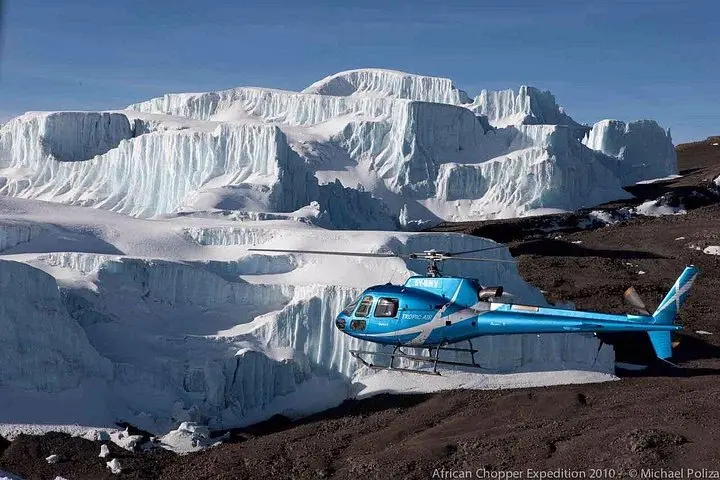
The flight is compact and exact. From a small private terminal you’re airborne by 9:00 AM, a one-hour circuit that swings close enough to read the routes climbers use and far enough to sense the mountain’s scale. The pilot traces the eastern flank, revealing Mawenzi’s serrated teeth, the broad shoulder of Shira, and Kibo’s summit dome where Uhuru Peak reaches 5,895 meters. On clear days you can see the shrinking glaciers and the deep saddle that separates the cones; on others, clouds braid around the ridgelines like a curtain.
Kilimanjaro is a geological timeline made visible: a dormant volcanic cone sitting on a basalt plateau, sculpted by ice and rain. Europeans first linked the peak to global narratives of exploration in the late 19th century, and today the mountain is both a cultural landmark for the Chagga people and a protected area under Tanzanian National Parks (TANAPA). Recent agreements allow provisional helicopter operations at TANAPA aerodromes and coordinated evacuations with the Mount Kilimanjaro Rescue Team — the sort of arrangement that makes a high-altitude landing possible and safer.
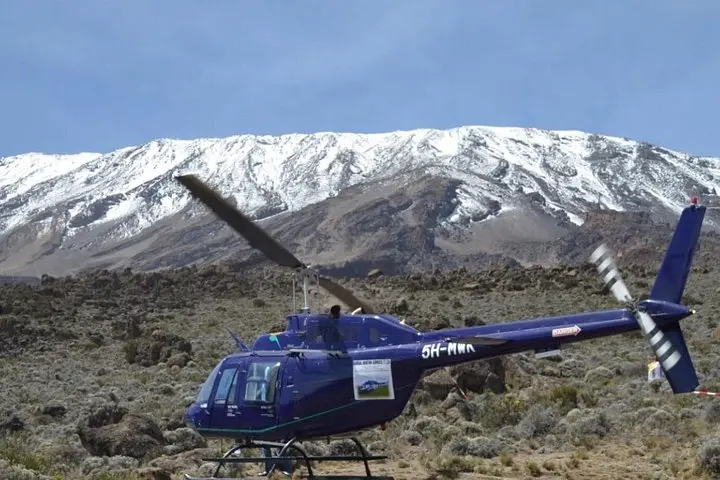
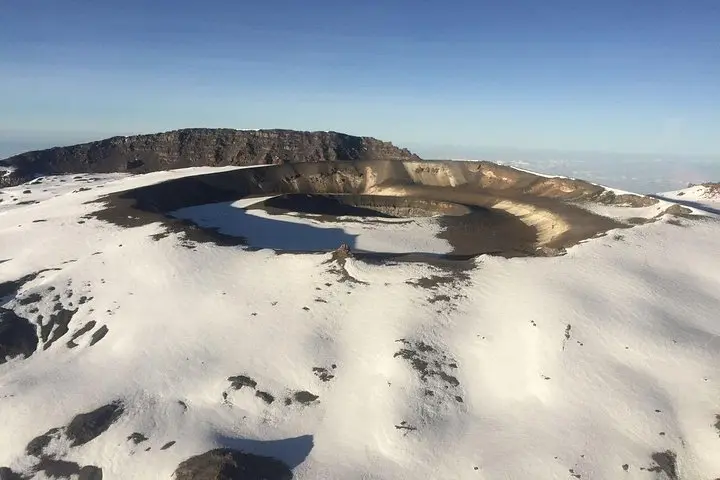
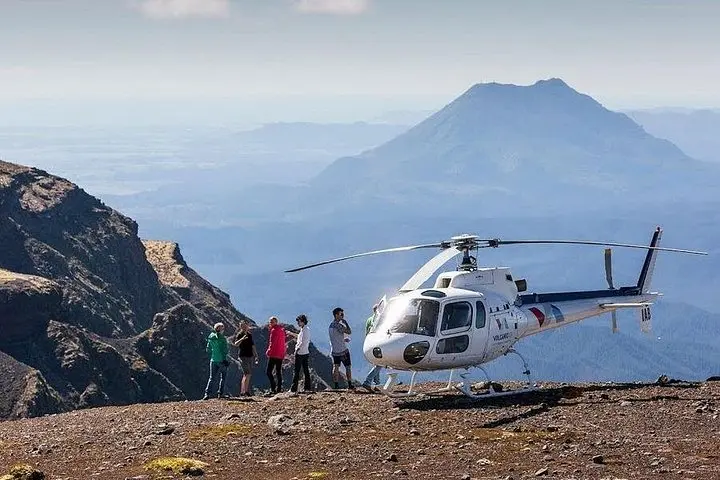
The landing at Kibo point is the tour’s centerpiece. You step onto thin air, snack in a cramped crater-side clearing, and trade the steady thump of the rotor for wind that seems intent on sweeping you off your feet. The experience is brief but intense: vistas that rearrange any sense of distance, the bitter tang of alpine wind, and a clear reminder that you’re visiting an ecosystem under pressure.
Practical details matter here. Pick-up begins around 8:00 AM; the full experience, including transfers, runs about three hours and accommodates up to six passengers. Flights are weather- and weight-dependent; TANAPA permits, pilot discretion, and safety checks determine the final route and whether a Kibo landing is possible. Travelers should be in moderate physical condition — expect uneven, cold surfaces at high elevation and the possibility of mild altitude effects.
Pack warm layers, a windproof shell, sturdy shoes, and a camera with fast shutters for aerial windows. Respect park rules: no litter, minimal noise on the ground, and follow crew instructions during landing and boarding. With a little preparation, this helicopter tour is an efficient, unforgettable way to see Kilimanjaro’s scale and complexity in a single morning — a vivid, accessible glimpse at East Africa’s highest point without the multi-day climb.
The full experience including transfers runs about three hours; the airborne portion is roughly one hour plus boarding and a landing stop.
Landings depend on weather, weight limits, and TANAPA permissions; the pilot and park officials make the final call for safety reasons.
No — the tour is not recommended for travelers with serious cardiovascular conditions due to high-altitude exposure and flight stresses.
Yes — pickups begin at about 8:00 AM from hotels or Airbnbs in the Arusha/Usa River area; you’ll be scheduled in advance.
Flights are subject to cancellation for safety; the operator will offer a refund if cancelled at least 24 hours prior or reschedule if possible.
Yes, but secure your gear during takeoff and landing; avoid changing lenses in dusty or windy conditions.
Discover Africa operates guided outdoor trips and adventures with an emphasis on safety, stewardship, and memorable experiences.
You feel the rotor wash before the mountain appears — a warm, gritty wind that lifts dust from the airstrip in Usa River. Minutes later the Airbus H130 climbs eastward over Arusha and the patchwork of banana and coffee farms, and Kilimanjaro unnerves the horizon: a solitary massif breaking the plains, white cap catching the sun.
You feel the rotor wash before the mountain appears — a warm, gritty wind that lifts dust from the airstrip in Usa River. Minutes later the Airbus H130 climbs eastward over Arusha and the patchwork of banana and coffee farms, and Kilimanjaro unnerves the horizon: a solitary massif breaking the plains, white cap catching the sun.
The flight is compact and exact. From a small private terminal you’re airborne by 9:00 AM, a one-hour circuit that swings close enough to read the routes climbers use and far enough to sense the mountain’s scale. The pilot traces the eastern flank, revealing Mawenzi’s serrated teeth, the broad shoulder of Shira, and Kibo’s summit dome where Uhuru Peak reaches 5,895 meters. On clear days you can see the shrinking glaciers and the deep saddle that separates the cones; on others, clouds braid around the ridgelines like a curtain.
Kilimanjaro is a geological timeline made visible: a dormant volcanic cone sitting on a basalt plateau, sculpted by ice and rain. Europeans first linked the peak to global narratives of exploration in the late 19th century, and today the mountain is both a cultural landmark for the Chagga people and a protected area under Tanzanian National Parks (TANAPA). Recent agreements allow provisional helicopter operations at TANAPA aerodromes and coordinated evacuations with the Mount Kilimanjaro Rescue Team — the sort of arrangement that makes a high-altitude landing possible and safer.
The landing at Kibo point is the tour’s centerpiece. You step onto thin air, snack in a cramped crater-side clearing, and trade the steady thump of the rotor for wind that seems intent on sweeping you off your feet. The experience is brief but intense: vistas that rearrange any sense of distance, the bitter tang of alpine wind, and a clear reminder that you’re visiting an ecosystem under pressure.
Practical details matter here. Pick-up begins around 8:00 AM; the full experience, including transfers, runs about three hours and accommodates up to six passengers. Flights are weather- and weight-dependent; TANAPA permits, pilot discretion, and safety checks determine the final route and whether a Kibo landing is possible. Travelers should be in moderate physical condition — expect uneven, cold surfaces at high elevation and the possibility of mild altitude effects.
Pack warm layers, a windproof shell, sturdy shoes, and a camera with fast shutters for aerial windows. Respect park rules: no litter, minimal noise on the ground, and follow crew instructions during landing and boarding. With a little preparation, this helicopter tour is an efficient, unforgettable way to see Kilimanjaro’s scale and complexity in a single morning — a vivid, accessible glimpse at East Africa’s highest point without the multi-day climb.