THE ADVENTURE COLLECTIVE® · Independent discovery and booking for outdoor travel

The Lemosho Route on Kilimanjaro offers a quieter, more gradual ascent to Uhuru Peak over seven days. Expect varied habitats, staged acclimatization, and one of Tanzania’s most scenic summit approaches.
The Lemosho Route on Kilimanjaro offers a quieter, more gradual ascent to Uhuru Peak over seven days. Expect varied habitats, staged acclimatization, and one of Tanzania’s most scenic summit approaches.
By headlamp you pick your way through a night still cold enough to make your breath a thin white ribbon. Guides call cadences, porters move in a practiced silence; the mountain takes the lead. On the Lemosho Route the climb is less the roar of crowds and more a slow, disciplined conversation between body and altitude. Over seven days the route trades tropical rainforest for heather, moorland, alpine desert, and finally the knife-edge of the crater rim where Uhuru Peak pierces the sky at 5,895 meters.
Verified experiences and guided adventures in the surrounding area.
Operated by Kilimanjaro Brothers · Moshi, Kilimanjaro
By headlamp you pick your way through a night still cold enough to make your breath a thin white ribbon. Guides call cadences, porters move in a practiced silence; the mountain takes the lead. On the Lemosho Route the climb is less the roar of crowds and more a slow, disciplined conversation between body and altitude. Over seven days the route trades tropical rainforest for heather, moorland, alpine desert, and finally the knife-edge of the crater rim where Uhuru Peak pierces the sky at 5,895 meters.
The western Lemosho approach was opened to reduce traffic on classic paths and to give trekkers more gradual acclimatization. Geologically, Kilimanjaro is a three-cone stratovolcano—Kibo, Mawenzi and Shira—shaped by eruptions and erosion. Lemosho rolls across the Shira Plateau, a broad volcanic tableland that reveals Kibo’s glaciated dome in stages. The Chagga people who live on the mountain’s lower slopes shaped much of the agricultural history around its rich volcanic soils; their villages around Moshi remain the cultural gateway for treks, offering coffee farms, local guide services, and a direct link to mountain life.
You’ll move through habitats rather than hours—a rainforest that seems to insist you slow down, a heathland peppered with giant lobelias, and a barren, wind-scoured alpine that tests every layer in your pack. The Barranco Wall is a highlight: a short, exposed scramble that rewards with sweeping views back down toward the Kenyan plains. Summit night is long and deliberate: a 2 a.m. departure, slow switchbacks under a sky stripped of light pollution, then a sunrise that repaints glaciers and scree in gold.
Practical edge: the Lemosho Route’s advantage is time for acclimatization—days 2 through 5 are paced to reduce altitude sickness. The logistics supplied here include full board meals, tents, sleeping mats, and emergency gear such as a Gamow bag and oxygen. Porters carry heavy loads and a porter will carry your daypack during the summit push; ethical treatment is explicitly noted in the inclusions.
Expect hiking days between 3 and 8 hours, with the summit day the longest and most demanding (7–8 hours up, 4–5 hours down to Mweka). Fitness expectations are moderate to high; no technical climbing skills are required but stamina and prior multi-day hiking experience make success more likely. Time your trip in drier months (June–October or January–March) for firmer trails and clearer summit views.
On return you’ll descend to Mweka Gate for certificates and a small summit party—proof that the mountain, despite its size, rewards careful planning, steady pacing, and respect for the thin air that eventually decides who reaches the top.
Summit day is the longest and most strenuous—expect 7–8 hours ascending over steep, loose scree followed by a 4–5 hour descent; pacing and acclimatization matter more than speed.
No technical mountaineering skills are required; the route is a trek, but high-altitude experience and good fitness are essential.
Drier months June–October and January–March offer more reliable weather and firmer trails; shoulder months see more rain and cloud cover.
Guides supply Gamow bags, oxygen tanks, pulse oximeters, and VHF radios; rescue fees and mountain permits are included in this itinerary.
Yes—this tour includes porters and specifies fair and ethical treatment; gratuities are customary but separate from the tour price.
Minimize load—carry water, snacks, a warm layer, and essential documents; a porter will carry your main daypack during the summit attempt.
Kilimanjaro Brothers operates guided outdoor trips and adventures with an emphasis on safety, stewardship, and memorable experiences.
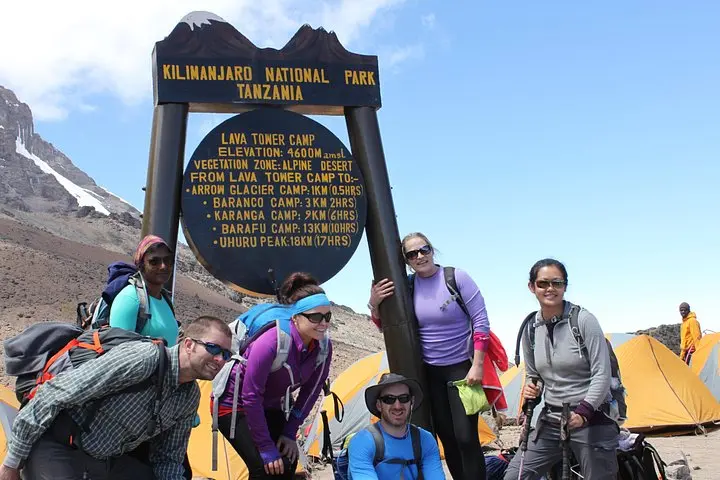
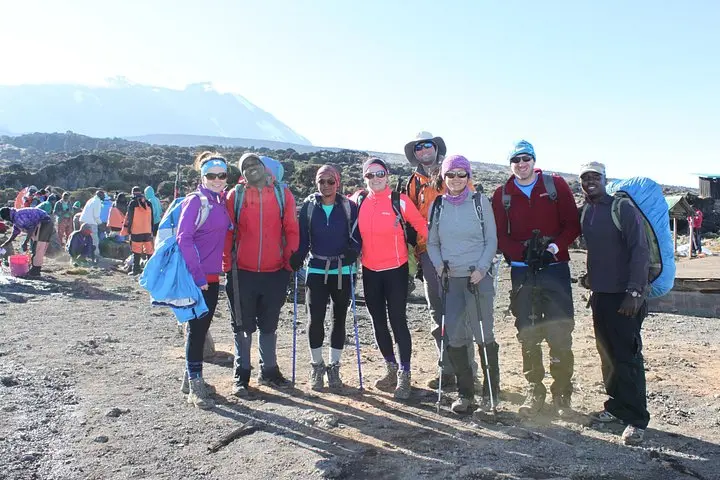
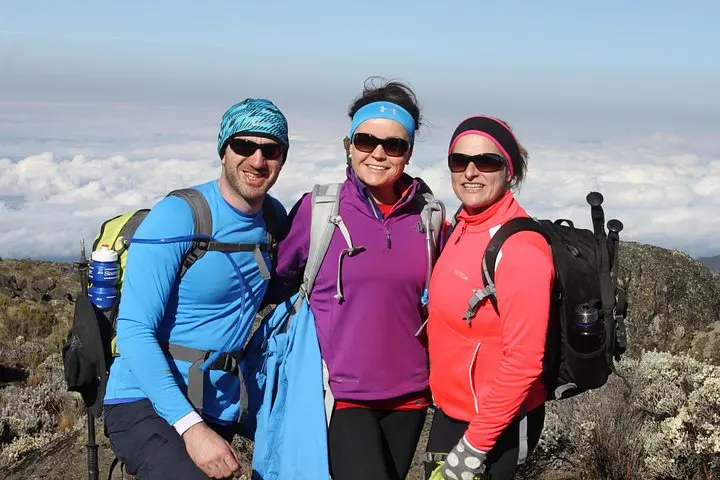
By headlamp you pick your way through a night still cold enough to make your breath a thin white ribbon. Guides call cadences, porters move in a practiced silence; the mountain takes the lead. On the Lemosho Route the climb is less the roar of crowds and more a slow, disciplined conversation between body and altitude. Over seven days the route trades tropical rainforest for heather, moorland, alpine desert, and finally the knife-edge of the crater rim where Uhuru Peak pierces the sky at 5,895 meters.
By headlamp you pick your way through a night still cold enough to make your breath a thin white ribbon. Guides call cadences, porters move in a practiced silence; the mountain takes the lead. On the Lemosho Route the climb is less the roar of crowds and more a slow, disciplined conversation between body and altitude. Over seven days the route trades tropical rainforest for heather, moorland, alpine desert, and finally the knife-edge of the crater rim where Uhuru Peak pierces the sky at 5,895 meters.
The western Lemosho approach was opened to reduce traffic on classic paths and to give trekkers more gradual acclimatization. Geologically, Kilimanjaro is a three-cone stratovolcano—Kibo, Mawenzi and Shira—shaped by eruptions and erosion. Lemosho rolls across the Shira Plateau, a broad volcanic tableland that reveals Kibo’s glaciated dome in stages. The Chagga people who live on the mountain’s lower slopes shaped much of the agricultural history around its rich volcanic soils; their villages around Moshi remain the cultural gateway for treks, offering coffee farms, local guide services, and a direct link to mountain life.
You’ll move through habitats rather than hours—a rainforest that seems to insist you slow down, a heathland peppered with giant lobelias, and a barren, wind-scoured alpine that tests every layer in your pack. The Barranco Wall is a highlight: a short, exposed scramble that rewards with sweeping views back down toward the Kenyan plains. Summit night is long and deliberate: a 2 a.m. departure, slow switchbacks under a sky stripped of light pollution, then a sunrise that repaints glaciers and scree in gold.
Practical edge: the Lemosho Route’s advantage is time for acclimatization—days 2 through 5 are paced to reduce altitude sickness. The logistics supplied here include full board meals, tents, sleeping mats, and emergency gear such as a Gamow bag and oxygen. Porters carry heavy loads and a porter will carry your daypack during the summit push; ethical treatment is explicitly noted in the inclusions.
Expect hiking days between 3 and 8 hours, with the summit day the longest and most demanding (7–8 hours up, 4–5 hours down to Mweka). Fitness expectations are moderate to high; no technical climbing skills are required but stamina and prior multi-day hiking experience make success more likely. Time your trip in drier months (June–October or January–March) for firmer trails and clearer summit views.
On return you’ll descend to Mweka Gate for certificates and a small summit party—proof that the mountain, despite its size, rewards careful planning, steady pacing, and respect for the thin air that eventually decides who reaches the top.