THE ADVENTURE COLLECTIVE® · Independent discovery and booking for outdoor travel

The Lemosho Route is one of Kilimanjaro’s most scenic and acclimatization-friendly approaches, combining rainforest, high desert and glacial ridges across 7–8 days. This 8-day itinerary gives you pole-pole pacing, expert support, and a route designed to maximize summit odds while minimizing altitude risk.
The Lemosho Route is one of Kilimanjaro’s most scenic and acclimatization-friendly approaches, combining rainforest, high desert and glacial ridges across 7–8 days. This 8-day itinerary gives you pole-pole pacing, expert support, and a route designed to maximize summit odds while minimizing altitude risk.
A pre-dawn wind arrives like an usher, slipping beneath the flap of a tent on Barafu Ridge. Headlamps bob in a line of slow, deliberate footsteps as the climbing party inches away from the ridge toward a freezing, blue-haloed sky. By the time the sun pries the horizon open, the line reaches Stella Point and then presses on—each breath a bargaining with altitude, each step a small victory until at last Uhuru Peak appears, a jagged rim above a cloud sea.
Verified experiences and guided adventures in the surrounding area.
Operated by Jaribu Africa Adventures · Moshi, Kilimanjaro Region
A pre-dawn wind arrives like an usher, slipping beneath the flap of a tent on Barafu Ridge. Headlamps bob in a line of slow, deliberate footsteps as the climbing party inches away from the ridge toward a freezing, blue-haloed sky. By the time the sun pries the horizon open, the line reaches Stella Point and then presses on—each breath a bargaining with altitude, each step a small victory until at last Uhuru Peak appears, a jagged rim above a cloud sea.
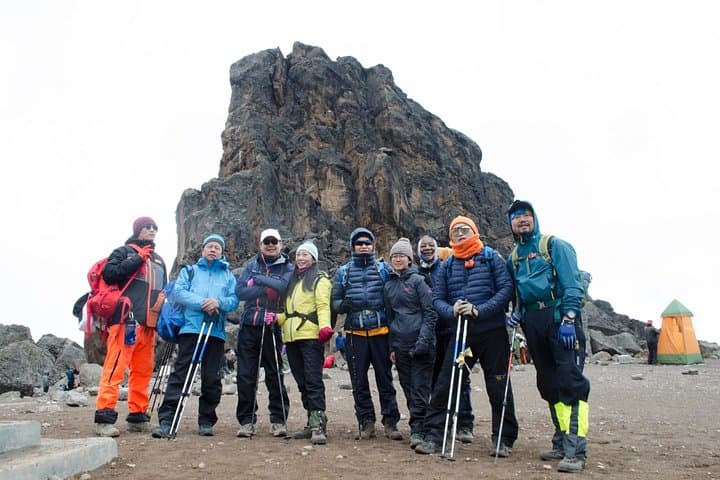
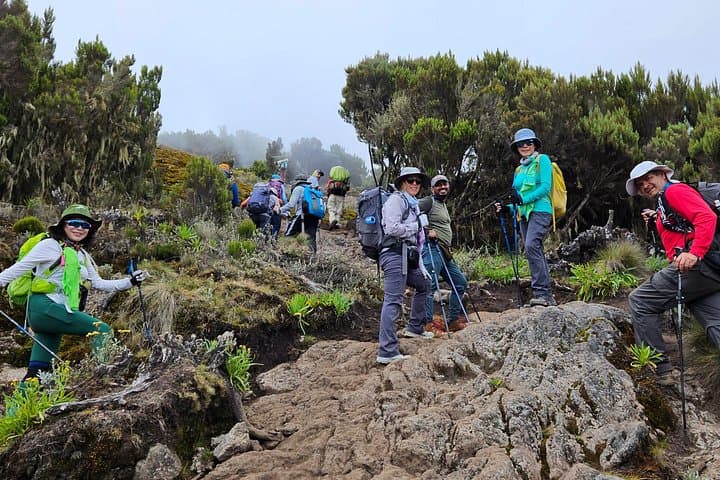
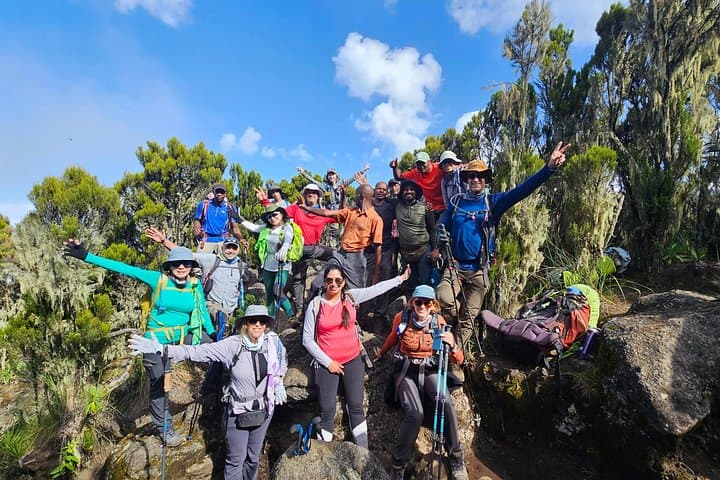
The Lemosho Route is the mountain’s west-facing approach and one of the best for acclimatization: you “trek high, sleep low” across rainforest, moorland, high desert and the glacial rim of Kibo. The track threads through ancient montane forest—podocarpus and hagenia—then opens to the Shira Plateau, a collapsed volcanic caldera that feels almost otherworldly. Geologically, Kilimanjaro is a three-cone stratovolcano; Lemosho slices beneath Kibo’s southern face and offers sweeping views of Mawenzi’s rugged buttresses and the glinting Rebmann and Ratzel glaciers near the summit.
Culturally the mountain is tied to the Chagga people who farm its lower slopes; along the route you’ll pass coffee plantations and small villages where the rhythm of “pole pole” (Swahili: slowly, slowly) still governs pace and conversation. Porters—an indispensable local workforce—keep camps functioning, and responsible operators include fair-wage policies and weigh duffel bags at Londrossi Gate to honor porter limits.
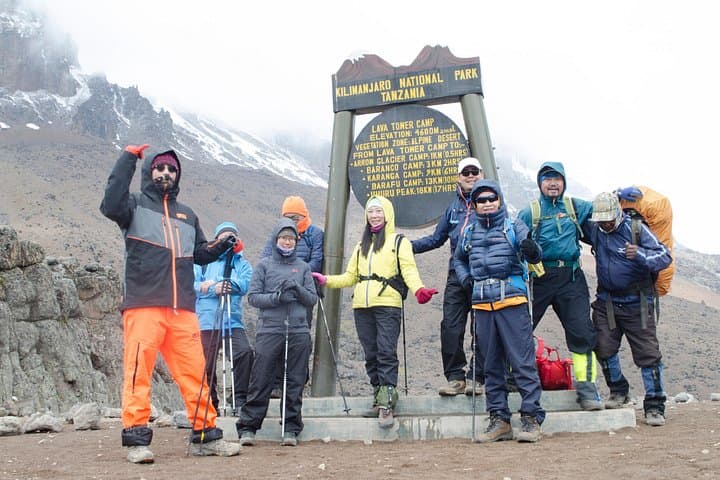
Practicalities matter here. Expect 7–8 days on the trail with key altitude gains: Londrossi (1,980m) to Mti Mkubwa (~2,780m), a long push to Shira (3,511m), then gradually up to Moir (4,175m), Lava Tower (4,530m) and the Barranco/Barafu corridor (4,600m) before the 1,385m summit thrust to 5,895m. Terrain shifts from muddy, root-laced rainforest to scree and compact volcanic sand; the Barranco Wall has non-technical scrambling and the final summit ridge can be icy and wind-exposed.
Health-wise, acclimatization is your ally: hydrate, eat, move pole pole and listen to your guides. This itinerary includes expedition tents, hot meals, a Gamow bag and pulse oximeters—essentials for safe summit attempts. Summit night starts around midnight; plan to layer, carry a reliable headlamp and accept slow progress as normal.
Timing: the best weather windows are the long dry season (June–October) and the short dry period (January–February). Book with operators that provide experienced wilderness-first-responder guides, rescue insurance and ethical porter practices.
If you want the mountain to give something back, prepare physically with long uphill days, get used to 4–8 hours of daily walking, and train on mixed terrain. On the mountain, leave no trace, respect the local culture, and when you finally stand on the roof of Africa, stay a few minutes longer—breathing that thin air, the mountain remembers your name.
Lemosho is considered one of the best for acclimatization and scenery; it’s non-technical but physically demanding due to altitude and long hiking days.
Success depends on fitness, acclimatization and weather; Lemosho’s longer profile improves odds, but operators cannot guarantee summit success.
No technical climbing skills are required, but previous multi-day hiking and endurance training are strongly recommended.
Guides monitor symptoms, use pulse oximeters, and carry a Gamow bag; follow instructions, hydrate, rest and report any symptoms immediately.
Camps use tented private flush toilets on this itinerary; hot wash water and shower tents are often available but limited—expect basic facilities.
Carry proof of yellow fever vaccination if required by travel history; Kilimanjaro National Park permits and park fees are included by reputable operators.
Jaribu Africa Adventures operates guided outdoor trips and adventures with an emphasis on safety, stewardship, and memorable experiences.
A pre-dawn wind arrives like an usher, slipping beneath the flap of a tent on Barafu Ridge. Headlamps bob in a line of slow, deliberate footsteps as the climbing party inches away from the ridge toward a freezing, blue-haloed sky. By the time the sun pries the horizon open, the line reaches Stella Point and then presses on—each breath a bargaining with altitude, each step a small victory until at last Uhuru Peak appears, a jagged rim above a cloud sea.
A pre-dawn wind arrives like an usher, slipping beneath the flap of a tent on Barafu Ridge. Headlamps bob in a line of slow, deliberate footsteps as the climbing party inches away from the ridge toward a freezing, blue-haloed sky. By the time the sun pries the horizon open, the line reaches Stella Point and then presses on—each breath a bargaining with altitude, each step a small victory until at last Uhuru Peak appears, a jagged rim above a cloud sea.
The Lemosho Route is the mountain’s west-facing approach and one of the best for acclimatization: you “trek high, sleep low” across rainforest, moorland, high desert and the glacial rim of Kibo. The track threads through ancient montane forest—podocarpus and hagenia—then opens to the Shira Plateau, a collapsed volcanic caldera that feels almost otherworldly. Geologically, Kilimanjaro is a three-cone stratovolcano; Lemosho slices beneath Kibo’s southern face and offers sweeping views of Mawenzi’s rugged buttresses and the glinting Rebmann and Ratzel glaciers near the summit.
Culturally the mountain is tied to the Chagga people who farm its lower slopes; along the route you’ll pass coffee plantations and small villages where the rhythm of “pole pole” (Swahili: slowly, slowly) still governs pace and conversation. Porters—an indispensable local workforce—keep camps functioning, and responsible operators include fair-wage policies and weigh duffel bags at Londrossi Gate to honor porter limits.
Practicalities matter here. Expect 7–8 days on the trail with key altitude gains: Londrossi (1,980m) to Mti Mkubwa (~2,780m), a long push to Shira (3,511m), then gradually up to Moir (4,175m), Lava Tower (4,530m) and the Barranco/Barafu corridor (4,600m) before the 1,385m summit thrust to 5,895m. Terrain shifts from muddy, root-laced rainforest to scree and compact volcanic sand; the Barranco Wall has non-technical scrambling and the final summit ridge can be icy and wind-exposed.
Health-wise, acclimatization is your ally: hydrate, eat, move pole pole and listen to your guides. This itinerary includes expedition tents, hot meals, a Gamow bag and pulse oximeters—essentials for safe summit attempts. Summit night starts around midnight; plan to layer, carry a reliable headlamp and accept slow progress as normal.
Timing: the best weather windows are the long dry season (June–October) and the short dry period (January–February). Book with operators that provide experienced wilderness-first-responder guides, rescue insurance and ethical porter practices.
If you want the mountain to give something back, prepare physically with long uphill days, get used to 4–8 hours of daily walking, and train on mixed terrain. On the mountain, leave no trace, respect the local culture, and when you finally stand on the roof of Africa, stay a few minutes longer—breathing that thin air, the mountain remembers your name.