THE ADVENTURE COLLECTIVE® · Independent discovery and booking for outdoor travel

Take the classic Marangu route on Kilimanjaro for a hut-to-hut climb that moves from rainforest to alpine desert in five intense days. This guide covers what to expect, how to prepare, and the practical realities of summit night.
Take the classic Marangu route on Kilimanjaro for a hut-to-hut climb that moves from rainforest to alpine desert in five intense days. This guide covers what to expect, how to prepare, and the practical realities of summit night.
The day begins before dawn in Moshi, when the town still smells of roasted coffee and diesel and porters finish packing headlamps into canvas duffels. A short drive takes the group to Marangu Gate where the trail immediately pulls you under a cathedral of tropical canopy—ferns brushing your sleeves, sun filtering through layers of green. The first steps are soft, muddy, alive with birds; higher up, the jungle loosens into heather and moorland, and the mountain’s voice changes from chattering streams to an austere wind that seems to dare you onward.
Verified experiences and guided adventures in the surrounding area.
Operated by Yedi Explorers · Moshi, Kilimanjaro Region
The day begins before dawn in Moshi, when the town still smells of roasted coffee and diesel and porters finish packing headlamps into canvas duffels. A short drive takes the group to Marangu Gate where the trail immediately pulls you under a cathedral of tropical canopy—ferns brushing your sleeves, sun filtering through layers of green. The first steps are soft, muddy, alive with birds; higher up, the jungle loosens into heather and moorland, and the mountain’s voice changes from chattering streams to an austere wind that seems to dare you onward.
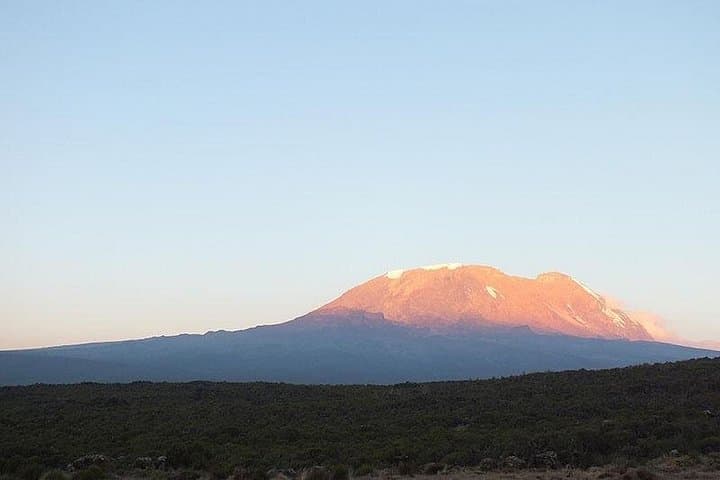
Marangu is the route that prefers comfort over camp. Huts replace tents on most nights, an old-school concession that earned it the nickname the "Coca-Cola" route because it’s considered more accessible. The route arcs west toward Kibo, slicing through five clear ecological bands: rainforest, heath and moor, alpine desert, crater rim and the arctic summit. Geologically Kilimanjaro is a dormant stratovolcano; Kibo’s crater holds the highest point, Uhuru Peak at 5,895 meters, a stark bowl scoured by past ice and current winds.
History sits quietly on the trail. Hans Meyer recorded the first verified ascent in 1889, and the Chagga people have long lived on these lower slopes as agriculturalists and guides. On the ascent you’ll notice village-stone terraces below Moshi and hear the soft, efficient rhythm of porters who carry both kit and local knowledge.
Practicality governs the climb. Expect about 4,000 meters of elevation gain from Marangu Gate (1,860 m) to Uhuru Peak. Typical trekking days range from four to eight hours; summit day is a long, midnight start that often runs 12–16 hours round trip and requires slow, steady pacing. The huts provide basic bunks and communal meals, but nights at Kibo are frigid—bring a properly rated sleeping bag. Acclimatization here is non-negotiable; the itinerary includes an optional rest day at Horombo Hut which dramatically increases summit success.
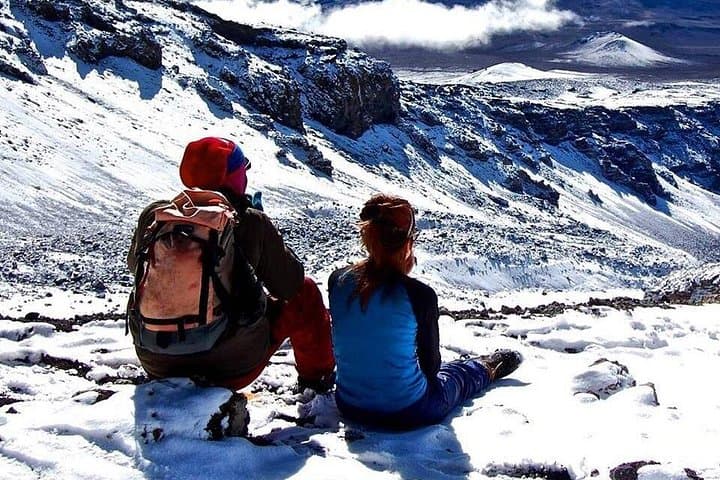
Plan for variable weather: rain on the lower slopes, sun and wind on the saddle, freezing cold above 4,500 meters. Hydration, slow ascent, and respectful teamwork with guides are your best defenses against altitude illness. You’ll descend on tired legs but with a clear, elemental memory of standing above clouds, the sun burning the rim, and the mountain finally, undeniably, letting you in.
Yes, it is considered one of the more accessible routes because of hut accommodations, but altitude remains the main challenge—allow extra time for acclimatization if you have no high-altitude experience.
No technical gear is required; the route is a high-altitude trek rather than a technical climb, though crampons are not typically needed.
Huts offer bunk beds and communal dining; facilities are basic and cold at higher elevations, so a warm sleeping bag is essential.
Expect a 12–16 hour round trip: a midnight start, 6–8 hours to the crater rim and Uhuru Peak, then several hours descending to Horombo or the gate depending on your schedule.
Many operators include fees and taxes in the package—confirm with your provider. This specific itinerary notes that all fees and taxes are included.
Watch for persistent headache, nausea, dizziness, shortness of breath at rest, or decreased coordination; tell your guide immediately and follow their acclimatization or evacuation plan.
Yedi Explorers operates guided outdoor trips and adventures with an emphasis on safety, stewardship, and memorable experiences.
The day begins before dawn in Moshi, when the town still smells of roasted coffee and diesel and porters finish packing headlamps into canvas duffels. A short drive takes the group to Marangu Gate where the trail immediately pulls you under a cathedral of tropical canopy—ferns brushing your sleeves, sun filtering through layers of green. The first steps are soft, muddy, alive with birds; higher up, the jungle loosens into heather and moorland, and the mountain’s voice changes from chattering streams to an austere wind that seems to dare you onward.
The day begins before dawn in Moshi, when the town still smells of roasted coffee and diesel and porters finish packing headlamps into canvas duffels. A short drive takes the group to Marangu Gate where the trail immediately pulls you under a cathedral of tropical canopy—ferns brushing your sleeves, sun filtering through layers of green. The first steps are soft, muddy, alive with birds; higher up, the jungle loosens into heather and moorland, and the mountain’s voice changes from chattering streams to an austere wind that seems to dare you onward.
Marangu is the route that prefers comfort over camp. Huts replace tents on most nights, an old-school concession that earned it the nickname the "Coca-Cola" route because it’s considered more accessible. The route arcs west toward Kibo, slicing through five clear ecological bands: rainforest, heath and moor, alpine desert, crater rim and the arctic summit. Geologically Kilimanjaro is a dormant stratovolcano; Kibo’s crater holds the highest point, Uhuru Peak at 5,895 meters, a stark bowl scoured by past ice and current winds.
History sits quietly on the trail. Hans Meyer recorded the first verified ascent in 1889, and the Chagga people have long lived on these lower slopes as agriculturalists and guides. On the ascent you’ll notice village-stone terraces below Moshi and hear the soft, efficient rhythm of porters who carry both kit and local knowledge.
Practicality governs the climb. Expect about 4,000 meters of elevation gain from Marangu Gate (1,860 m) to Uhuru Peak. Typical trekking days range from four to eight hours; summit day is a long, midnight start that often runs 12–16 hours round trip and requires slow, steady pacing. The huts provide basic bunks and communal meals, but nights at Kibo are frigid—bring a properly rated sleeping bag. Acclimatization here is non-negotiable; the itinerary includes an optional rest day at Horombo Hut which dramatically increases summit success.
Plan for variable weather: rain on the lower slopes, sun and wind on the saddle, freezing cold above 4,500 meters. Hydration, slow ascent, and respectful teamwork with guides are your best defenses against altitude illness. You’ll descend on tired legs but with a clear, elemental memory of standing above clouds, the sun burning the rim, and the mountain finally, undeniably, letting you in.