THE ADVENTURE COLLECTIVE® · Independent discovery and booking for outdoor travel

Choose the Northern Circuit for a quieter, eight-day ascent of Kilimanjaro that adds valuable acclimatization time. This route traverses the remote northern slopes, crosses the Shira Plateau and gives climbers a better shot at Uhuru Peak with fewer crowds.
Choose the Northern Circuit for a quieter, eight-day ascent of Kilimanjaro that adds valuable acclimatization time. This route traverses the remote northern slopes, crosses the Shira Plateau and gives climbers a better shot at Uhuru Peak with fewer crowds.
A cold wind cuts across the high desert before dawn as headlamps dot a ribbon of climbers threading toward Stella Point. On the Northern Circuit the ascent feels spacious: the trail bends away from the busiest corridors, trades crowded campsites for long ridgelines and gives climbers extra days to acclimatize. Over eight days you move from misty montane forest at 1,980 m to the ragged, thin air of Uhuru Peak at 5,895 m — the mountain tests patience as much as legs.
Verified experiences and guided adventures in the surrounding area.
Operated by Jaribu Africa Adventures · Moshi, Kilimanjaro Region
A cold wind cuts across the high desert before dawn as headlamps dot a ribbon of climbers threading toward Stella Point. On the Northern Circuit the ascent feels spacious: the trail bends away from the busiest corridors, trades crowded campsites for long ridgelines and gives climbers extra days to acclimatize. Over eight days you move from misty montane forest at 1,980 m to the ragged, thin air of Uhuru Peak at 5,895 m — the mountain tests patience as much as legs.
Geology and history are written in the rocks here. Kilimanjaro is a dormant stratovolcano with three volcanic cones; the route skirts Kibo’s northern flank and crosses the Shira Plateau, a flattened caldera whose lava flows and glacial bowls tell of ice and fire. Culturally, the mountain is part of Chagga homeland; village terraces and coffee farms on the lower slopes reflect centuries of adaptation to altitude, and guides often share Swahili phrases — pole pole, slow down — that become a rhythm for safe climbing.
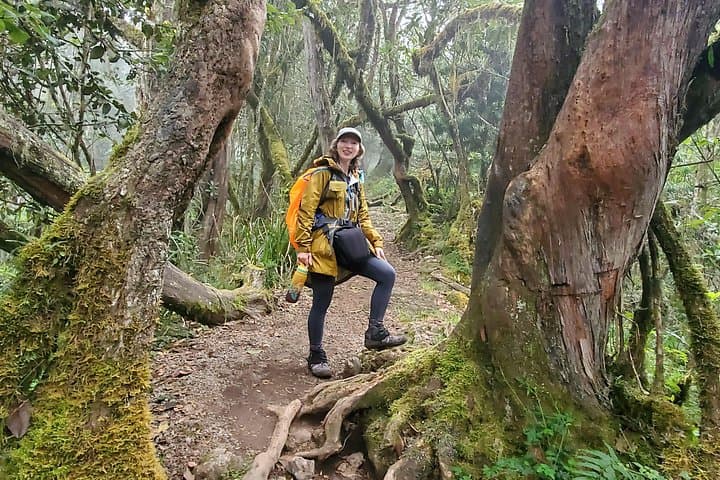
Expect terrain that shifts every day: rain forest with deep duff and bird song (look for black-and-white colobus), heather and giant lobelia on the moorland, then an austere alpine desert of scree and volcanic rock. Daily hiking spans 3–8 hours until summit day, when a 12:00 a.m. start turns into a 13–16 hour push that includes a 1,100 m overnight ascent and a descent of nearly 2,800 m to Mweka Camp.
The Northern Circuit’s extra days raise success rates; the slower profile means your body sees altitude more gently. Guides carry pulse oximeters and a Gamow bag for emergencies, and the itinerary includes private tents, hot meals, purified water on route, and airport transfers. Practical planning matters: train on sustained uphill hikes and long walks with a loaded pack, break in waterproof boots, and practice walking on loose scree.
Timing is crucial — aim for the dry season (June–October or January–February) for more stable summit windows. Hydrate deliberately at altitude, eat often, and respect the slow pace of acclimatization. When you crest at sunrise above the cloud deck, the cold is sharp and the view is exacting: Mawenzi’s serrated peaks to the east, Kibo’s ice to the west, and the feeling that the mountain has tested you fairly.
Whether you want a quieter approach to Africa’s roof or a route that prioritizes acclimatization over speed, the Northern Circuit rewards patience with space, varied landscapes, and a statistically higher chance of standing on Uhuru Peak.
Uhuru Peak at 5,895 m (19,341 ft) via Gillman’s and Stella Point.
Summit day is typically 13–16 hours total, including the night ascent and descent to Mweka Camp.
No technical climbing skills are required, but prior multi-day trekking and high-altitude experience improve comfort and success odds.
It’s the longest route with extra acclimatization days and fewer crowds, which increases summit success rates.
Guides carry pulse oximeters, Gamow bags, emergency oxygen, radio/phone communication and have access to AMREF air evacuation.
The driest windows are June–October and January–February; avoid peak rains (March–May) for safer summit conditions.
Jaribu Africa Adventures operates guided outdoor trips and adventures with an emphasis on safety, stewardship, and memorable experiences.



A cold wind cuts across the high desert before dawn as headlamps dot a ribbon of climbers threading toward Stella Point. On the Northern Circuit the ascent feels spacious: the trail bends away from the busiest corridors, trades crowded campsites for long ridgelines and gives climbers extra days to acclimatize. Over eight days you move from misty montane forest at 1,980 m to the ragged, thin air of Uhuru Peak at 5,895 m — the mountain tests patience as much as legs.
A cold wind cuts across the high desert before dawn as headlamps dot a ribbon of climbers threading toward Stella Point. On the Northern Circuit the ascent feels spacious: the trail bends away from the busiest corridors, trades crowded campsites for long ridgelines and gives climbers extra days to acclimatize. Over eight days you move from misty montane forest at 1,980 m to the ragged, thin air of Uhuru Peak at 5,895 m — the mountain tests patience as much as legs.
Geology and history are written in the rocks here. Kilimanjaro is a dormant stratovolcano with three volcanic cones; the route skirts Kibo’s northern flank and crosses the Shira Plateau, a flattened caldera whose lava flows and glacial bowls tell of ice and fire. Culturally, the mountain is part of Chagga homeland; village terraces and coffee farms on the lower slopes reflect centuries of adaptation to altitude, and guides often share Swahili phrases — pole pole, slow down — that become a rhythm for safe climbing.
Expect terrain that shifts every day: rain forest with deep duff and bird song (look for black-and-white colobus), heather and giant lobelia on the moorland, then an austere alpine desert of scree and volcanic rock. Daily hiking spans 3–8 hours until summit day, when a 12:00 a.m. start turns into a 13–16 hour push that includes a 1,100 m overnight ascent and a descent of nearly 2,800 m to Mweka Camp.
The Northern Circuit’s extra days raise success rates; the slower profile means your body sees altitude more gently. Guides carry pulse oximeters and a Gamow bag for emergencies, and the itinerary includes private tents, hot meals, purified water on route, and airport transfers. Practical planning matters: train on sustained uphill hikes and long walks with a loaded pack, break in waterproof boots, and practice walking on loose scree.
Timing is crucial — aim for the dry season (June–October or January–February) for more stable summit windows. Hydrate deliberately at altitude, eat often, and respect the slow pace of acclimatization. When you crest at sunrise above the cloud deck, the cold is sharp and the view is exacting: Mawenzi’s serrated peaks to the east, Kibo’s ice to the west, and the feeling that the mountain has tested you fairly.
Whether you want a quieter approach to Africa’s roof or a route that prioritizes acclimatization over speed, the Northern Circuit rewards patience with space, varied landscapes, and a statistically higher chance of standing on Uhuru Peak.