THE ADVENTURE COLLECTIVE® · Independent discovery and booking for outdoor travel

Take the quieter northern road to Kilimanjaro’s summit on the Rongai 7-day trek—gentler slopes, rich moorland, and a pre-dawn summit push past glaciers. This guide covers the route’s terrain, timing, and practical tips to reach Uhuru Peak safely.
Take the quieter northern road to Kilimanjaro’s summit on the Rongai 7-day trek—gentler slopes, rich moorland, and a pre-dawn summit push past glaciers. This guide covers the route’s terrain, timing, and practical tips to reach Uhuru Peak safely.
You wake before dawn to a sky so clear the stars feel close enough to touch, a cool hush over Mawenzi’s jagged spires. Headtorches bob along a switchback of volcanic scree as the group eases into the summit push; behind you, the saddle between Mawenzi and Kibo has already closed like a dry sea. The Rongai route begins on Kilimanjaro’s quieter northern flank near the Kenyan border and unfolds through several distinct worlds—farm fields and pine forest, moorland dotted with giant senecios, a lunar saddle of gravel, and finally the ice-rimmed crater near Uhuru Peak (19,345 ft / 5,895 m).
Verified experiences and guided adventures in the surrounding area.
Operated by Africa Joy Tours - Day Tours / Mult Day Tours · Moshi, Kilimanjaro Region
You wake before dawn to a sky so clear the stars feel close enough to touch, a cool hush over Mawenzi’s jagged spires. Headtorches bob along a switchback of volcanic scree as the group eases into the summit push; behind you, the saddle between Mawenzi and Kibo has already closed like a dry sea. The Rongai route begins on Kilimanjaro’s quieter northern flank near the Kenyan border and unfolds through several distinct worlds—farm fields and pine forest, moorland dotted with giant senecios, a lunar saddle of gravel, and finally the ice-rimmed crater near Uhuru Peak (19,345 ft / 5,895 m).
Geologically, Kilimanjaro is a dormant stratovolcano made of three cones—Kibo, Mawenzi and Shira—whose hard volcanic rock and glaciers record millions of years of uplift and erosion. Culturally, the climb threads through Chagga farmland and Marangu villages where coffee and banana terraces slope away toward the plains; porters and guides, often from local communities, form the backbone of a successful summit bid.
The Rongai approach is notable for its gentler gradients and drier northern exposure. Typical daily gains: start at Nale Moru (6,400 ft / 1,950 m), reach Rongai One Camp (~8,500 ft / 2,590 m) on day two, press up to Second Cave (~11,300 ft / 3,440 m) and Kikelewa/Mawenzi Tarn (14,200 ft / 4,327 m) for acclimatization, then cross the saddle to Kibo Hut (15,400 ft / 4,694 m) before the pre-dawn summit attempt. Expect walking days of 3–7 hours most days and one long summit day of 11–15 hours.
Practical guide: pace is everything—use the “pole, pole” (slowly, slowly) approach to protect against altitude. Aim to drink 3–4 liters daily and carry a light daypack for layers, snacks and water. The route mixes packed dirt, volcanic scree and rocky sections; trekking poles and good, broken-in boots are essential. Camps are basic but organized: tents, three meals a day and crew support are typically included, and park fees and rescue infrastructure mean you’re climbing in a managed conservation area.
Timing matters—June through October and late December to February offer the most stable weather. Expect strong sun at lower elevations and thin air and sub-zero temperatures near the crater. Treat the summit as a high-altitude expedition: permit, proper insurance and a trained guide are non-negotiable.
The reward is more than a photo at the rim. From Gillman’s Point, the sunrise over Mawenzi is raw and immediate, glaciers gleam like old ice hung on black rock, and the descent through moorland back to Marangu is a reminder that Kilimanjaro’s true scale is the slow, layered rise of ecosystems beneath your boots.
Rongai is generally gentler in gradient and less crowded than Machame; however, it still requires sustained exertion and good altitude acclimatization for a safe summit.
Yes—entry to Kilimanjaro National Park requires a permit and climbing with a registered guide and support crew is mandatory for safety and legal compliance.
The driest, most reliable months are June–October and late December–February; April–May are the long rains and more unpredictable.
While the Rongai route is recommended for less technical climbers because of its gradual ascent, beginners should still prepare physically and choose an operator experienced in altitude management.
Camps provide tents, communal meals (usually three per day), and crew service; some itineraries include a night at Kilimanjaro Mountain Resort before and after the climb.
Headache, nausea and fatigue are common; persistent vomiting, severe breathlessness, confusion or inability to walk indicate serious illness—your guide will decide if descent is required.
Africa Joy Tours - Day Tours / Mult Day Tours operates guided outdoor trips and adventures with an emphasis on safety, stewardship, and memorable experiences.


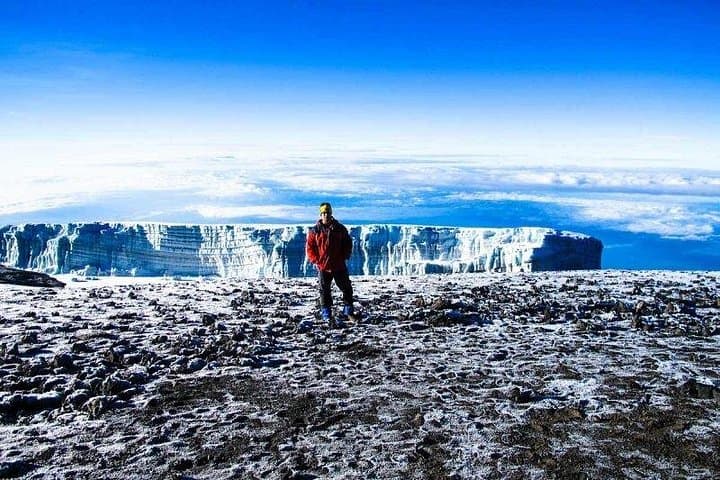
You wake before dawn to a sky so clear the stars feel close enough to touch, a cool hush over Mawenzi’s jagged spires. Headtorches bob along a switchback of volcanic scree as the group eases into the summit push; behind you, the saddle between Mawenzi and Kibo has already closed like a dry sea. The Rongai route begins on Kilimanjaro’s quieter northern flank near the Kenyan border and unfolds through several distinct worlds—farm fields and pine forest, moorland dotted with giant senecios, a lunar saddle of gravel, and finally the ice-rimmed crater near Uhuru Peak (19,345 ft / 5,895 m).
You wake before dawn to a sky so clear the stars feel close enough to touch, a cool hush over Mawenzi’s jagged spires. Headtorches bob along a switchback of volcanic scree as the group eases into the summit push; behind you, the saddle between Mawenzi and Kibo has already closed like a dry sea. The Rongai route begins on Kilimanjaro’s quieter northern flank near the Kenyan border and unfolds through several distinct worlds—farm fields and pine forest, moorland dotted with giant senecios, a lunar saddle of gravel, and finally the ice-rimmed crater near Uhuru Peak (19,345 ft / 5,895 m).
Geologically, Kilimanjaro is a dormant stratovolcano made of three cones—Kibo, Mawenzi and Shira—whose hard volcanic rock and glaciers record millions of years of uplift and erosion. Culturally, the climb threads through Chagga farmland and Marangu villages where coffee and banana terraces slope away toward the plains; porters and guides, often from local communities, form the backbone of a successful summit bid.
The Rongai approach is notable for its gentler gradients and drier northern exposure. Typical daily gains: start at Nale Moru (6,400 ft / 1,950 m), reach Rongai One Camp (~8,500 ft / 2,590 m) on day two, press up to Second Cave (~11,300 ft / 3,440 m) and Kikelewa/Mawenzi Tarn (14,200 ft / 4,327 m) for acclimatization, then cross the saddle to Kibo Hut (15,400 ft / 4,694 m) before the pre-dawn summit attempt. Expect walking days of 3–7 hours most days and one long summit day of 11–15 hours.
Practical guide: pace is everything—use the “pole, pole” (slowly, slowly) approach to protect against altitude. Aim to drink 3–4 liters daily and carry a light daypack for layers, snacks and water. The route mixes packed dirt, volcanic scree and rocky sections; trekking poles and good, broken-in boots are essential. Camps are basic but organized: tents, three meals a day and crew support are typically included, and park fees and rescue infrastructure mean you’re climbing in a managed conservation area.
Timing matters—June through October and late December to February offer the most stable weather. Expect strong sun at lower elevations and thin air and sub-zero temperatures near the crater. Treat the summit as a high-altitude expedition: permit, proper insurance and a trained guide are non-negotiable.
The reward is more than a photo at the rim. From Gillman’s Point, the sunrise over Mawenzi is raw and immediate, glaciers gleam like old ice hung on black rock, and the descent through moorland back to Marangu is a reminder that Kilimanjaro’s true scale is the slow, layered rise of ecosystems beneath your boots.