THE ADVENTURE COLLECTIVE® · Independent discovery and booking for outdoor travel

Ride the wild western shoulder of Kilimanjaro in a one-day mountain bike challenge to Shira II. Expect steep climbs, rocky singletrack, high-altitude air and a lunch with a view of Africa’s highest peak.
Ride the wild western shoulder of Kilimanjaro in a one-day mountain bike challenge to Shira II. Expect steep climbs, rocky singletrack, high-altitude air and a lunch with a view of Africa’s highest peak.
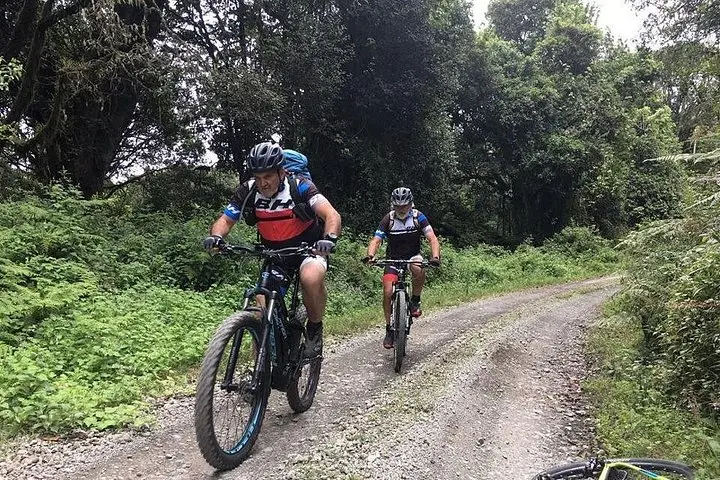
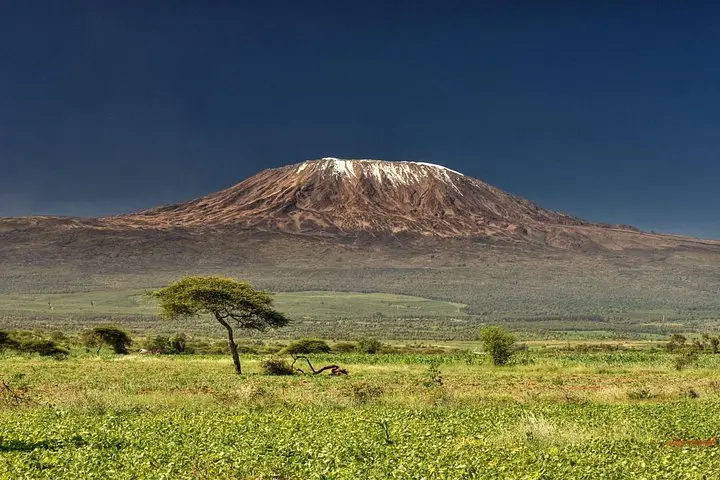
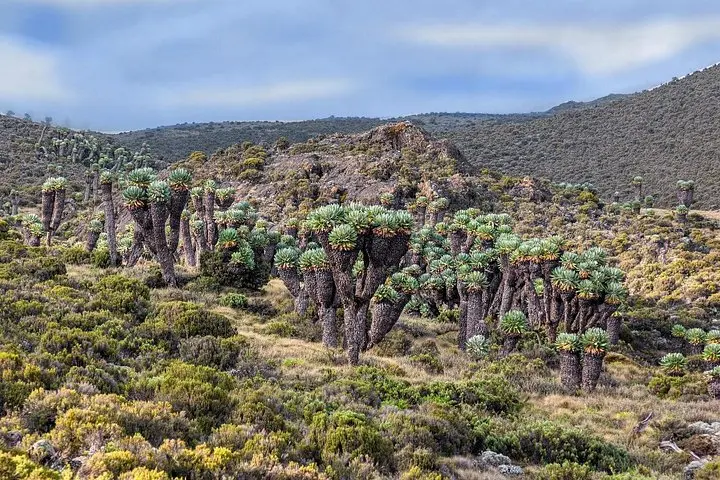
A cold wind cuts across the Shira Plateau and the summit of Kilimanjaro—white and compact—holds itself like a distant promise. Riders emerge from the 4x4 at Londorossi Gate (about 2,360 m), stretch knees and shoulders, and clip into carbon-framed mountain bikes waiting like patient horses. The trail climbs away from acacia scrub into moorland: heather, lobelia towers, and open basalt slabs. With each pedal stroke the air thins and the peak of Uhuru Point slides into view, insisting on its presence.
Verified experiences and guided adventures in the surrounding area.
Operated by Safari Bike Africa, Ltd · Arusha, Kilimanjaro Region
A cold wind cuts across the Shira Plateau and the summit of Kilimanjaro—white and compact—holds itself like a distant promise. Riders emerge from the 4x4 at Londorossi Gate (about 2,360 m), stretch knees and shoulders, and clip into carbon-framed mountain bikes waiting like patient horses. The trail climbs away from acacia scrub into moorland: heather, lobelia towers, and open basalt slabs. With each pedal stroke the air thins and the peak of Uhuru Point slides into view, insisting on its presence.
The Shira Route traces a western shoulder of Kilimanjaro carved by ancient lava flows. Geologically the plateau is a remnant caldera, a broad dish of volcanic rock flattened by time and ice. Shira II—at roughly 3,800–3,900 m—is a high, grassy basin that feels unexpectedly big for a single-day ride, its horizons governed by sky and glacier.
Historically, Shira was a separate volcanic cone long before the ice of the Pleistocene sculpted the massif into the mountain climbers know today. Local Chagga communities have lived on Kilimanjaro’s lower slopes for generations, tending coffee terraces and passing down stories about the mountain’s moods: dry seasons that pull the ferns inward, and rainy spells that make the plateau green and smelling of wet stone.
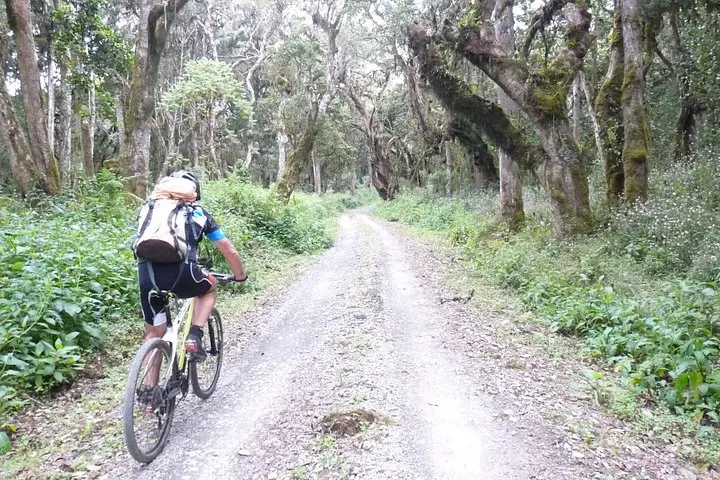
The ride itself is immediate and physical: about 40–45 km roundtrip with sustained climbs from 2,360 m to 3,810 m and technical sections that include rocky singletrack, loose scree, and fast gravel descents. Safari Bike Africa supplies top-tier carbon bikes and support in the form of a 4x4 and guides—so the focus becomes rhythm and route-reading rather than logistics. Lunch at Shira II is a slow, deliberate re-fuel with views of Kibo’s ice cap looming behind.
Practical considerations matter here. Altitude changes are the single biggest variable: riders should hydrate early, pace their efforts on the climbs, and be honest about symptoms of nausea or headache. Wear layers—the temperature swings from warm at the gate to sharply cool on the plateau—and bring sun protection; the equatorial sun is intense at altitude. Because the route crosses protected park land, expect the discipline of permits and rangers; bikes are allowed only where conditions are safe and wildlife risk is low.
For cyclists who want a concentrated taste of Kilimanjaro’s high country without committing to a multi-day summit attempt, the Shira Route is a rare combination: high-altitude landscape, technical mountain biking, and a clear logistical scaffolding. It’s not a casual spin, but for those with the fitness and a sense of curiosity, the plateau rewards effort with an expansive, glacier-backed horizon that keeps you honest about scale and, briefly, makes you feel very small in the right way.
No—moderate off-road experience is sufficient, but riders should be comfortable on loose gravel, rocky singletrack and technical descents.
The route reaches about 3,800–3,900 m; altitude symptoms can occur—drink plenty of water, ascend at a steady pace and inform guides if you feel unwell.
Yes—Safari Bike Africa supplies professional carbon mountain bikes and helmet options; personal gear like gloves or eyewear is recommended.
Expect roughly 40–45 km roundtrip with an elevation gain of approximately 1,400–1,600 m from Londorossi Gate to Shira II.
Support vehicles accompany the ride and can assist with bike carrying, but the tour is designed as a ride; discuss options with the operator if needed.
This specific tour lists all-sales-final—confirm dates and fitness before booking because refunds are not available.
Safari Bike Africa, Ltd operates guided outdoor trips and adventures with an emphasis on safety, stewardship, and memorable experiences.
A cold wind cuts across the Shira Plateau and the summit of Kilimanjaro—white and compact—holds itself like a distant promise. Riders emerge from the 4x4 at Londorossi Gate (about 2,360 m), stretch knees and shoulders, and clip into carbon-framed mountain bikes waiting like patient horses. The trail climbs away from acacia scrub into moorland: heather, lobelia towers, and open basalt slabs. With each pedal stroke the air thins and the peak of Uhuru Point slides into view, insisting on its presence.
A cold wind cuts across the Shira Plateau and the summit of Kilimanjaro—white and compact—holds itself like a distant promise. Riders emerge from the 4x4 at Londorossi Gate (about 2,360 m), stretch knees and shoulders, and clip into carbon-framed mountain bikes waiting like patient horses. The trail climbs away from acacia scrub into moorland: heather, lobelia towers, and open basalt slabs. With each pedal stroke the air thins and the peak of Uhuru Point slides into view, insisting on its presence.
The Shira Route traces a western shoulder of Kilimanjaro carved by ancient lava flows. Geologically the plateau is a remnant caldera, a broad dish of volcanic rock flattened by time and ice. Shira II—at roughly 3,800–3,900 m—is a high, grassy basin that feels unexpectedly big for a single-day ride, its horizons governed by sky and glacier.
Historically, Shira was a separate volcanic cone long before the ice of the Pleistocene sculpted the massif into the mountain climbers know today. Local Chagga communities have lived on Kilimanjaro’s lower slopes for generations, tending coffee terraces and passing down stories about the mountain’s moods: dry seasons that pull the ferns inward, and rainy spells that make the plateau green and smelling of wet stone.
The ride itself is immediate and physical: about 40–45 km roundtrip with sustained climbs from 2,360 m to 3,810 m and technical sections that include rocky singletrack, loose scree, and fast gravel descents. Safari Bike Africa supplies top-tier carbon bikes and support in the form of a 4x4 and guides—so the focus becomes rhythm and route-reading rather than logistics. Lunch at Shira II is a slow, deliberate re-fuel with views of Kibo’s ice cap looming behind.
Practical considerations matter here. Altitude changes are the single biggest variable: riders should hydrate early, pace their efforts on the climbs, and be honest about symptoms of nausea or headache. Wear layers—the temperature swings from warm at the gate to sharply cool on the plateau—and bring sun protection; the equatorial sun is intense at altitude. Because the route crosses protected park land, expect the discipline of permits and rangers; bikes are allowed only where conditions are safe and wildlife risk is low.
For cyclists who want a concentrated taste of Kilimanjaro’s high country without committing to a multi-day summit attempt, the Shira Route is a rare combination: high-altitude landscape, technical mountain biking, and a clear logistical scaffolding. It’s not a casual spin, but for those with the fitness and a sense of curiosity, the plateau rewards effort with an expansive, glacier-backed horizon that keeps you honest about scale and, briefly, makes you feel very small in the right way.