THE ADVENTURE COLLECTIVE® · Independent discovery and booking for outdoor travel

Dress in a traditional kimono and walk Ritsurin Garden’s historic paths — a three‑star Michelin landscape where carp ponds, teahouses and sculpted pines create picture‑perfect moments. Learn practical tips on timing, fees and photographing the experience.
Dress in a traditional kimono and walk Ritsurin Garden’s historic paths — a three‑star Michelin landscape where carp ponds, teahouses and sculpted pines create picture‑perfect moments. Learn practical tips on timing, fees and photographing the experience.
You step out of a small dressing room into a ribbon of silk, straps snug at the waist, and the gravel path of Ritsurin Garden calls. Ponds mirror pines trimmed into architectural shapes; a distant hill frames the Seto Inland Sea like a soft horizon. In a kimono, every step feels deliberate — hems whisper on stone bridges, and the garden’s ponds seem to dare you to move quietly.
Verified experiences and guided adventures in the surrounding area.
Operated by beautiful day tours · Takamatsu, Kagawa Prefecture
You step out of a small dressing room into a ribbon of silk, straps snug at the waist, and the gravel path of Ritsurin Garden calls. Ponds mirror pines trimmed into architectural shapes; a distant hill frames the Seto Inland Sea like a soft horizon. In a kimono, every step feels deliberate — hems whisper on stone bridges, and the garden’s ponds seem to dare you to move quietly.
Ritsurin Park dates back to the Edo period and was expanded over generations by Takamatsu’s feudal lords; the layout blends manmade hills, carefully placed rock, and borrowed scenery that takes advantage of nearby peaks and sea views. The garden’s carp-filled ponds, arched bridges, and teahouses reflect classical Japanese landscape design more than natural geology — the artistry is in crafted perspective rather than raw rock.
Culturally this is a place for reflective walking and seasonal display: cherry blossoms in spring, deep green pines in summer, color in autumn, and stark structural lines in winter. Local staff fluent in English help fit kimonos and advise on seasonal styles; dressing takes about 30 minutes and the park walk can last from one to three+ hours depending on how many photos you take.
Practical notes: park admission (about ¥410 adult) is paid separately; a professional photographer can be arranged for roughly ¥5,000/hour. Wear footwear that’s easy to remove or compatible with kimono movement, guard your sleeves near ponds, and carry cash for matcha or boat rides. Arrive early for softer light and fewer crowds — the garden rewards slow, patient wandering.
No. Ritsurin Park admission (approx. ¥410 adult, ¥170 child) is paid separately on arrival.
The listed activity time is about 3 hours: ~30 minutes for dressing and 1–3.5 hours for strolling and photos, depending on your pace.
Yes; the minimum age listed is 3 years old, but child sizes and parental supervision vary—check with the operator for specific sizing.
Yes; a professional photographer can be arranged for an additional fee (around ¥5,000/hour) and photos are provided as electronic files.
beautiful day tours operates guided outdoor trips and adventures with an emphasis on safety, stewardship, and memorable experiences.
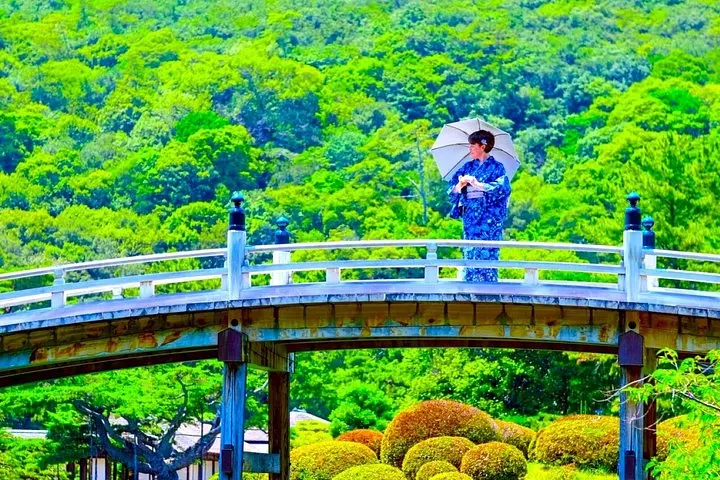
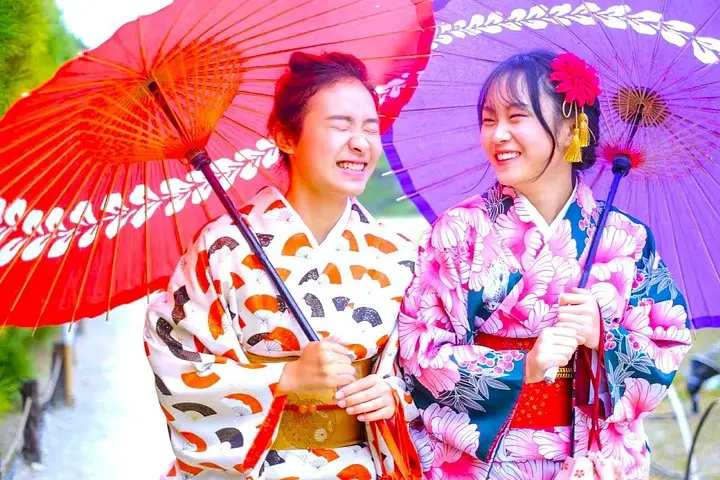
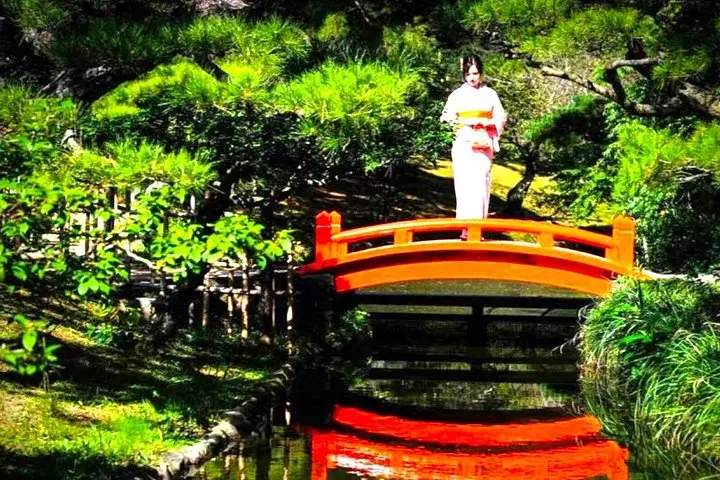
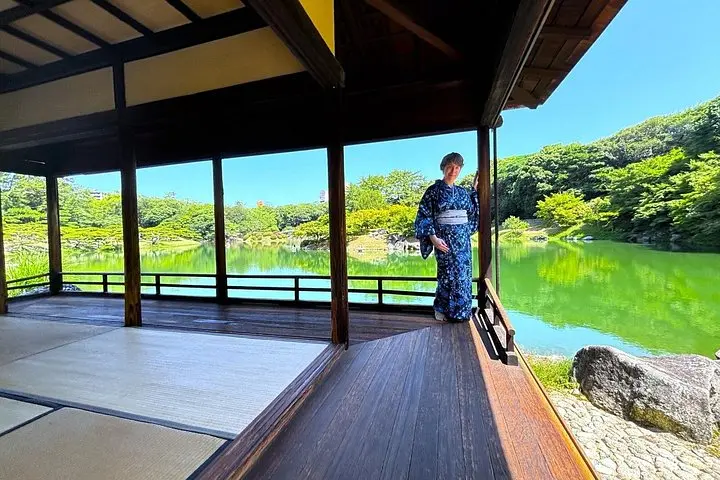
You step out of a small dressing room into a ribbon of silk, straps snug at the waist, and the gravel path of Ritsurin Garden calls. Ponds mirror pines trimmed into architectural shapes; a distant hill frames the Seto Inland Sea like a soft horizon. In a kimono, every step feels deliberate — hems whisper on stone bridges, and the garden’s ponds seem to dare you to move quietly.
You step out of a small dressing room into a ribbon of silk, straps snug at the waist, and the gravel path of Ritsurin Garden calls. Ponds mirror pines trimmed into architectural shapes; a distant hill frames the Seto Inland Sea like a soft horizon. In a kimono, every step feels deliberate — hems whisper on stone bridges, and the garden’s ponds seem to dare you to move quietly.
Ritsurin Park dates back to the Edo period and was expanded over generations by Takamatsu’s feudal lords; the layout blends manmade hills, carefully placed rock, and borrowed scenery that takes advantage of nearby peaks and sea views. The garden’s carp-filled ponds, arched bridges, and teahouses reflect classical Japanese landscape design more than natural geology — the artistry is in crafted perspective rather than raw rock.
Culturally this is a place for reflective walking and seasonal display: cherry blossoms in spring, deep green pines in summer, color in autumn, and stark structural lines in winter. Local staff fluent in English help fit kimonos and advise on seasonal styles; dressing takes about 30 minutes and the park walk can last from one to three+ hours depending on how many photos you take.
Practical notes: park admission (about ¥410 adult) is paid separately; a professional photographer can be arranged for roughly ¥5,000/hour. Wear footwear that’s easy to remove or compatible with kimono movement, guard your sleeves near ponds, and carry cash for matcha or boat rides. Arrive early for softer light and fewer crowds — the garden rewards slow, patient wandering.