THE ADVENTURE COLLECTIVE® · Independent discovery and booking for outdoor travel

Dress in kimono and walk the storied lanes of Kyoto: a three-hour private tour that links Fushimi Inari’s thousand torii gates with the long wooden corridor of Sanjusangendo and sweeping views from Kyoto Tower. Ideal for short stays that want rich cultural hits.
Dress in kimono and walk the storied lanes of Kyoto: a three-hour private tour that links Fushimi Inari’s thousand torii gates with the long wooden corridor of Sanjusangendo and sweeping views from Kyoto Tower. Ideal for short stays that want rich cultural hits.
You step out of Kyoto Station into a corridor of sound—train announcements, suitcases on tile—and within minutes are wrapped in a kimono at a small rental shop tucked along an old alley. The fabric settles around your shoulders, the obi clicks tight, and the city shifts: the modern hum gives way to low wooden eaves and the red-orange line of torii gates that wind up Inari Mountain.
Verified experiences and guided adventures in the surrounding area.
Operated by OTOMO Travel Guide · Kyoto, Kyoto Prefecture
You step out of Kyoto Station into a corridor of sound—train announcements, suitcases on tile—and within minutes are wrapped in a kimono at a small rental shop tucked along an old alley. The fabric settles around your shoulders, the obi clicks tight, and the city shifts: the modern hum gives way to low wooden eaves and the red-orange line of torii gates that wind up Inari Mountain.
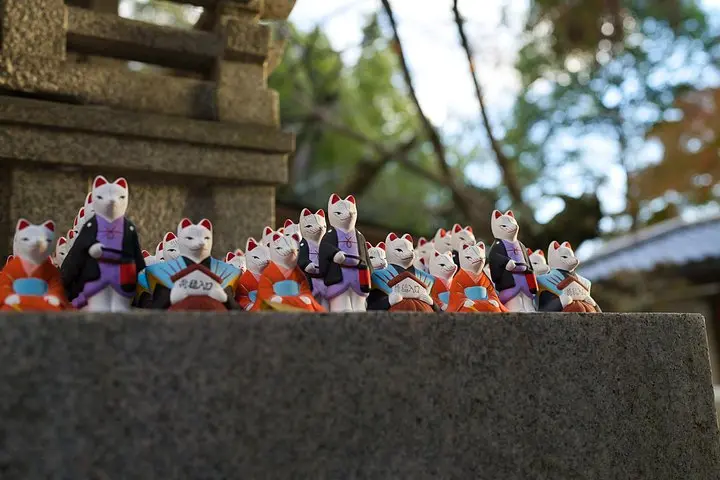
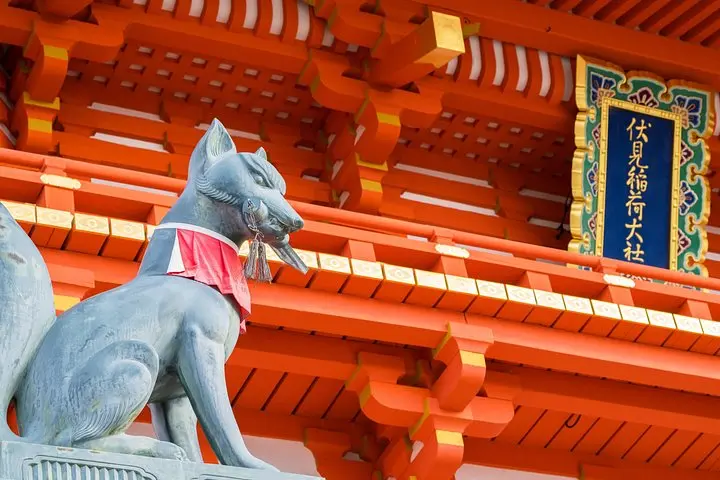
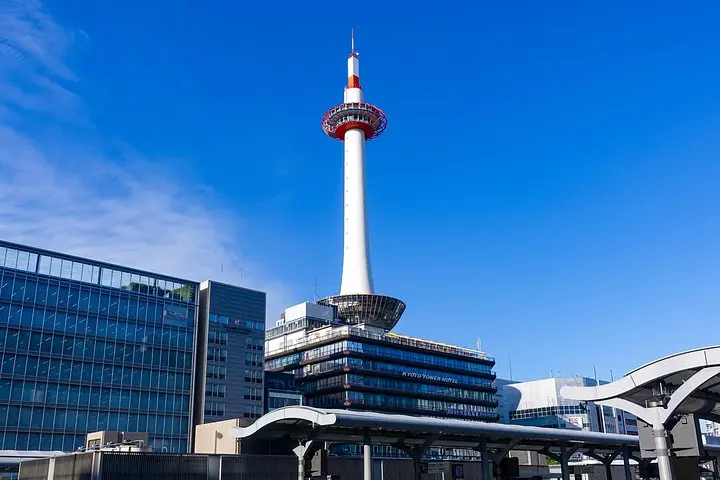
Fushimi Inari Taisha dates to the 8th century, a Shinto complex dedicated to the fox-messenger deity of rice and prosperity. Walking beneath thousand torii gates, you feel the stones and wood that have borne pilgrims, merchants, and samurai for centuries. A short ride away, Sanjusangendo’s long wooden corridor holds 1,001 statues of the Thousand-Armed Kannon—an architectural and spiritual feat from the Kamakura and Muromachi periods. Kyoto Tower, meanwhile, offers a modern counterpoint: a panoramic vantage on a city shaped by rivers, temple roofs, and time.
Practical guidance: this private, three-hour loop begins near Kyoto Station Hachijo Exit; expect light walking, uneven steps in temple precincts, and crowded approaches around midday. Entrance fees and transport are paid by the traveler; return the kimono to the shop by 6 p.m. Wear easy-to-remove shoes for kimono fittings, carry a small water bottle, and plan for photography stops along Fushimi Inari Sando. If you want quieter photos, aim for early morning or late afternoon when sunlight angles through the gates and the crowds thin.
Respect shrine etiquette—bow, remove hats, and avoid climbing on shrine structures—and you’ll leave with sharper photographs and a clearer sense of Kyoto’s layered history.
Yes — the tour includes kimono rental and dressing at the start; accessories and footwear are provided according to the shop’s options.
All transportation costs, entrance fees, and food are paid by the traveler; the tour guide can advise but does not cover admissions.
You can wear compatible footwear, but traditional geta or zori are usually provided; slip-on shoes that come off easily are best for fittings.
Temples have steps and uneven surfaces; while the tour is easy paced, some areas are not wheelchair-friendly—contact the operator with requirements.
OTOMO Travel Guide operates guided outdoor trips and adventures with an emphasis on safety, stewardship, and memorable experiences.
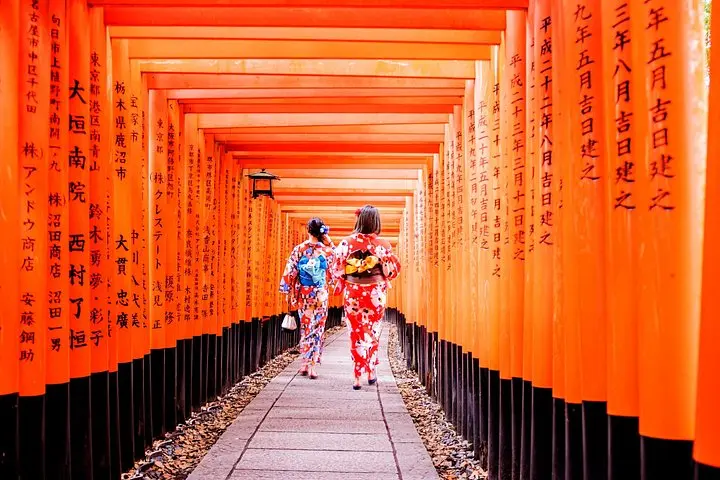
You step out of Kyoto Station into a corridor of sound—train announcements, suitcases on tile—and within minutes are wrapped in a kimono at a small rental shop tucked along an old alley. The fabric settles around your shoulders, the obi clicks tight, and the city shifts: the modern hum gives way to low wooden eaves and the red-orange line of torii gates that wind up Inari Mountain.
You step out of Kyoto Station into a corridor of sound—train announcements, suitcases on tile—and within minutes are wrapped in a kimono at a small rental shop tucked along an old alley. The fabric settles around your shoulders, the obi clicks tight, and the city shifts: the modern hum gives way to low wooden eaves and the red-orange line of torii gates that wind up Inari Mountain.
Fushimi Inari Taisha dates to the 8th century, a Shinto complex dedicated to the fox-messenger deity of rice and prosperity. Walking beneath thousand torii gates, you feel the stones and wood that have borne pilgrims, merchants, and samurai for centuries. A short ride away, Sanjusangendo’s long wooden corridor holds 1,001 statues of the Thousand-Armed Kannon—an architectural and spiritual feat from the Kamakura and Muromachi periods. Kyoto Tower, meanwhile, offers a modern counterpoint: a panoramic vantage on a city shaped by rivers, temple roofs, and time.
Practical guidance: this private, three-hour loop begins near Kyoto Station Hachijo Exit; expect light walking, uneven steps in temple precincts, and crowded approaches around midday. Entrance fees and transport are paid by the traveler; return the kimono to the shop by 6 p.m. Wear easy-to-remove shoes for kimono fittings, carry a small water bottle, and plan for photography stops along Fushimi Inari Sando. If you want quieter photos, aim for early morning or late afternoon when sunlight angles through the gates and the crowds thin.
Respect shrine etiquette—bow, remove hats, and avoid climbing on shrine structures—and you’ll leave with sharper photographs and a clearer sense of Kyoto’s layered history.