THE ADVENTURE COLLECTIVE® · Independent discovery and booking for outdoor travel

Cycle and boat through the iconic Kinderdijk windmills on a 3–4 hour guided tour from Rotterdam—includes bike, waterbus option, pastry, and entrance to an authentic windmill. Learn local water‑management history and visit a biological cheese farm.
Cycle and boat through the iconic Kinderdijk windmills on a 3–4 hour guided tour from Rotterdam—includes bike, waterbus option, pastry, and entrance to an authentic windmill. Learn local water‑management history and visit a biological cheese farm.
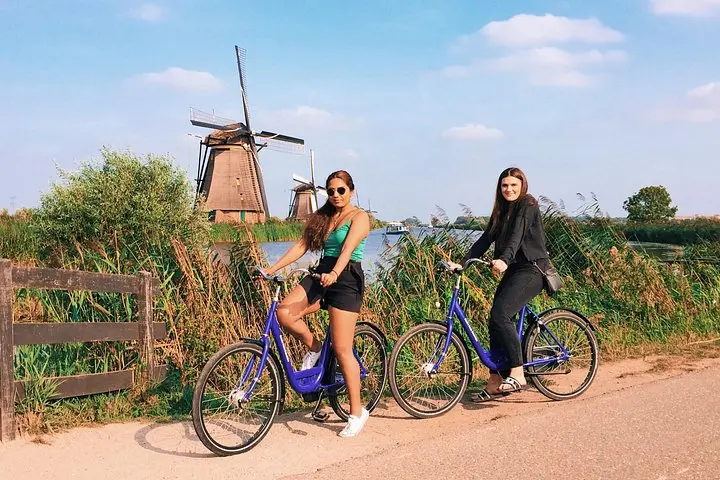
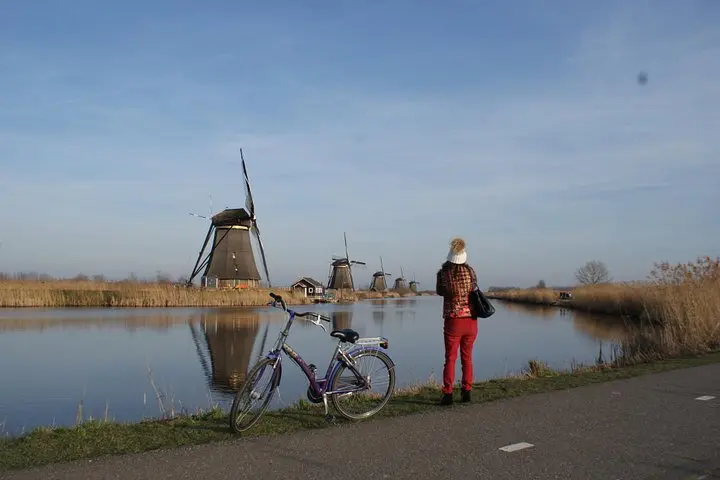
You push off from the quay and the water answers with a soft slap against the hull; windmills rotate like slow wooden metronomes under a high northern sky. The tour folds Dutch engineering and everyday life together—pedaling along low dikes, slipping onto a waterbus, and stepping into an 18th‑century working windmill whose gears still creak with purpose.
Verified experiences and guided adventures in the surrounding area.
Operated by Travel Kinderdijk · Kinderdijk, South Holland
You push off from the quay and the water answers with a soft slap against the hull; windmills rotate like slow wooden metronomes under a high northern sky. The tour folds Dutch engineering and everyday life together—pedaling along low dikes, slipping onto a waterbus, and stepping into an 18th‑century working windmill whose gears still creak with purpose.
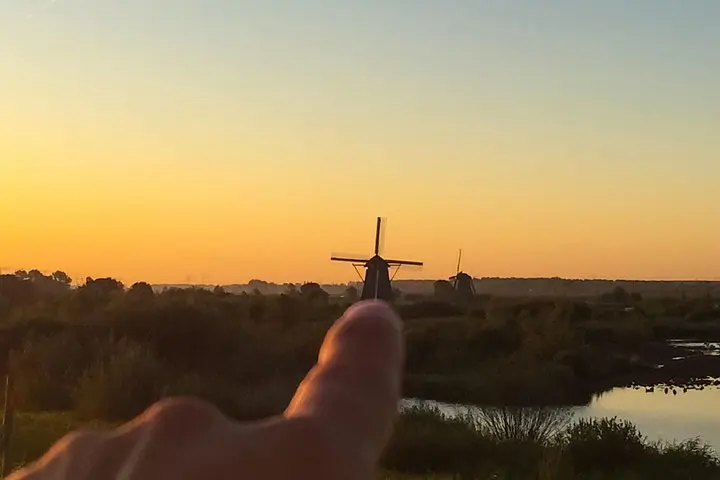
Kinderdijk sits in the Alblasserwaard polder, a carved landscape of reclaimed peat and clay kept dry for centuries by wind-driven pumps. The row of 19 windmills, built mostly in the 1740s, marks a local solution to a national problem: water that will not be denied. The area became a UNESCO World Heritage site in 1997, celebrated as much for its living water management as for its timber-and-thatch architecture. Expect wide skies, flat horizons, and the scent of river and meadow; culture here is quiet—small farms, cheese makers, and boatmen who read the tides like pages.
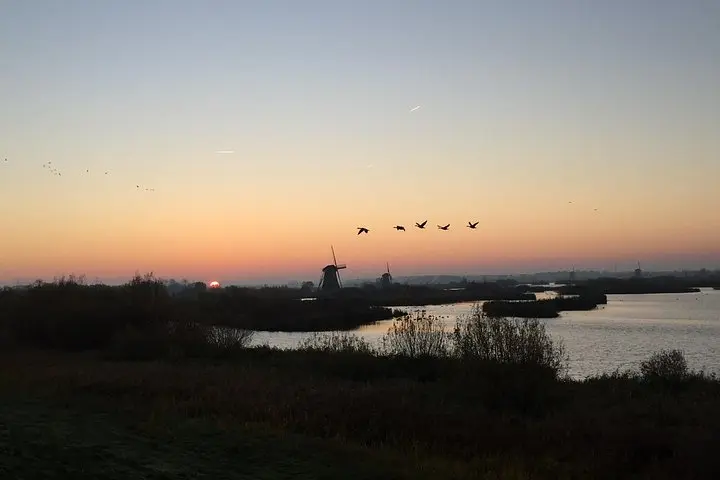
Practically, the route is short but active: 3–4 hours of easy paved and gravel towpaths with several short stops for photos, a local pastry and coffee, and an optional visit to a biological cheese farm (cash or PIN only). The boat segment gives you a different angle—mills framed by canal reflections—and entrance to an official mill is included. Bring layered rain protection, a sturdy saddle, and a camera with fast shutter speed for birds and windmill blades. If you prefer less cycling, opt for the waterbus add‑on from Rotterdam; it’s an easy, scenic way to arrive. By the end of the afternoon you’ll have seen how the Dutch keep the water out—and how they turned that battle into a landscape worth cycling.
The full experience lasts 3–4 hours; cycling time is about 60–90 minutes over flat terrain with short stops—total distance depends on route but plan for roughly 10–15 km.
A return waterbus ticket can be included for an additional fee (around EUR 10–13); check booking options—some departures include pickup at Rotterdam by waterbus.
Children aged 4–12 have reduced pricing; infant seats are available—confirm during booking and mention ages so guides can prepare.
No—bicycle use is included in the tour price, and basic helmets and child seats can be provided on request.
Travel Kinderdijk operates guided outdoor trips and adventures with an emphasis on safety, stewardship, and memorable experiences.
You push off from the quay and the water answers with a soft slap against the hull; windmills rotate like slow wooden metronomes under a high northern sky. The tour folds Dutch engineering and everyday life together—pedaling along low dikes, slipping onto a waterbus, and stepping into an 18th‑century working windmill whose gears still creak with purpose.
You push off from the quay and the water answers with a soft slap against the hull; windmills rotate like slow wooden metronomes under a high northern sky. The tour folds Dutch engineering and everyday life together—pedaling along low dikes, slipping onto a waterbus, and stepping into an 18th‑century working windmill whose gears still creak with purpose.
Kinderdijk sits in the Alblasserwaard polder, a carved landscape of reclaimed peat and clay kept dry for centuries by wind-driven pumps. The row of 19 windmills, built mostly in the 1740s, marks a local solution to a national problem: water that will not be denied. The area became a UNESCO World Heritage site in 1997, celebrated as much for its living water management as for its timber-and-thatch architecture. Expect wide skies, flat horizons, and the scent of river and meadow; culture here is quiet—small farms, cheese makers, and boatmen who read the tides like pages.
Practically, the route is short but active: 3–4 hours of easy paved and gravel towpaths with several short stops for photos, a local pastry and coffee, and an optional visit to a biological cheese farm (cash or PIN only). The boat segment gives you a different angle—mills framed by canal reflections—and entrance to an official mill is included. Bring layered rain protection, a sturdy saddle, and a camera with fast shutter speed for birds and windmill blades. If you prefer less cycling, opt for the waterbus add‑on from Rotterdam; it’s an easy, scenic way to arrive. By the end of the afternoon you’ll have seen how the Dutch keep the water out—and how they turned that battle into a landscape worth cycling.