THE ADVENTURE COLLECTIVE® · Independent discovery and booking for outdoor travel

Experience Bali’s highland contrasts in one long day: ceremonial Barong dance, artisan villages, the smoking rim of Mount Batur, and sculpted rice terraces at Tegalalang. This practical guide outlines what to expect and how to prepare for the full-day Kintamani circuit.
Experience Bali’s highland contrasts in one long day: ceremonial Barong dance, artisan villages, the smoking rim of Mount Batur, and sculpted rice terraces at Tegalalang. This practical guide outlines what to expect and how to prepare for the full-day Kintamani circuit.
A warm morning in Bali opens with temple incense and the low roar of a volcano. Visitors step from an air-conditioned minivan into a highland breeze at Kintamani, where Mount Batur’s smoking crater frames a glassy lake and terraced hills drop away like folded green maps.
Verified experiences and guided adventures in the surrounding area.
Operated by Bali Sightseeing · Kintamani, Bali
A warm morning in Bali opens with temple incense and the low roar of a volcano. Visitors step from an air-conditioned minivan into a highland breeze at Kintamani, where Mount Batur’s smoking crater frames a glassy lake and terraced hills drop away like folded green maps.
The day begins with the Barong dance in Batubulan — a dramatic ritual rooted in Balinese Hindu cosmology that stages the struggle between Barong (spirit of good) and Rangda (demon queen). From there the route threads through Mas, a village known for finely carved masks and woodwork, and passes silversmiths in Celuk before widening onto the caldera rim at Kintamani. Geologically, the Batur caldera is a young volcanic bowl nested inside a larger, older collapse; eruptions and geothermal activity still shape the land and local livelihoods.
Tegalalang’s rice terraces show Bali’s traditional subak irrigation, terraces that require seasonally timed labor and community management. A final stop at Tirta Empul offers a window into purification rituals, with cold spring water that has fed ceremonies for centuries.
Practical guidance: expect a 10–11 hour day with many short walks, photo stops, and temple steps. Wear sturdy shoes and modest clothing for temples, bring sun protection, and carry local cash for small purchases or offerings. The light is clearest in the dry season (May–October); mornings give the best views and cooler temperatures. Guides provide transport and local context, but allow time to linger at viewpoints and village workshops to get the most from the day.
The tour includes private air-conditioned transport, an English-speaking driver/guide, and listed fees and taxes; check your booking confirmation for specific inclusions.
No — this day tour views Mount Batur from the Kintamani rim; the sunrise trek is a separate, early-morning hike requiring a guide and additional time.
Expect a 10–11 hour day with pickup from Kuta, Ubud, or nearby areas; exact pickup point is confirmed at booking.
Some temples offer sarong rentals, but bringing your own speeds entry and ensures proper fit and comfort.
Bali Sightseeing operates guided outdoor trips and adventures with an emphasis on safety, stewardship, and memorable experiences.
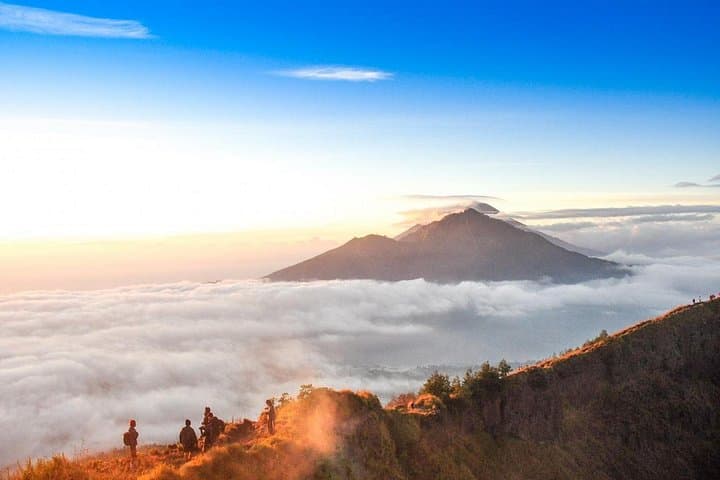


A warm morning in Bali opens with temple incense and the low roar of a volcano. Visitors step from an air-conditioned minivan into a highland breeze at Kintamani, where Mount Batur’s smoking crater frames a glassy lake and terraced hills drop away like folded green maps.
A warm morning in Bali opens with temple incense and the low roar of a volcano. Visitors step from an air-conditioned minivan into a highland breeze at Kintamani, where Mount Batur’s smoking crater frames a glassy lake and terraced hills drop away like folded green maps.
The day begins with the Barong dance in Batubulan — a dramatic ritual rooted in Balinese Hindu cosmology that stages the struggle between Barong (spirit of good) and Rangda (demon queen). From there the route threads through Mas, a village known for finely carved masks and woodwork, and passes silversmiths in Celuk before widening onto the caldera rim at Kintamani. Geologically, the Batur caldera is a young volcanic bowl nested inside a larger, older collapse; eruptions and geothermal activity still shape the land and local livelihoods.
Tegalalang’s rice terraces show Bali’s traditional subak irrigation, terraces that require seasonally timed labor and community management. A final stop at Tirta Empul offers a window into purification rituals, with cold spring water that has fed ceremonies for centuries.
Practical guidance: expect a 10–11 hour day with many short walks, photo stops, and temple steps. Wear sturdy shoes and modest clothing for temples, bring sun protection, and carry local cash for small purchases or offerings. The light is clearest in the dry season (May–October); mornings give the best views and cooler temperatures. Guides provide transport and local context, but allow time to linger at viewpoints and village workshops to get the most from the day.