THE ADVENTURE COLLECTIVE® · Independent discovery and booking for outdoor travel

Walk the famous Kirstenbosch Gardens and ride the rotating cable car to Table Mountain’s summit in one efficient, scenic half-day. This private tour blends plant-focused interpretation with sweeping city and coastline views—ideal for visitors short on time but hungry for context.
Walk the famous Kirstenbosch Gardens and ride the rotating cable car to Table Mountain’s summit in one efficient, scenic half-day. This private tour blends plant-focused interpretation with sweeping city and coastline views—ideal for visitors short on time but hungry for context.
A damp breeze from the Atlantic slides down the shoulder of Table Mountain as the minivan eases into the gate at Kirstenbosch. The air smells of crushed fynbos and damp earth; leaves glint with the last of morning light. A guide points toward a canopy walkway arcing like a wooden eyebrow over indigenous scrub, and the group moves through a living field guide— proteas, ericas and restios stepping into clear view.
Verified experiences and guided adventures in the surrounding area.
Operated by Arrive & Explore Tours · Cape Town, Western Cape
A damp breeze from the Atlantic slides down the shoulder of Table Mountain as the minivan eases into the gate at Kirstenbosch. The air smells of crushed fynbos and damp earth; leaves glint with the last of morning light. A guide points toward a canopy walkway arcing like a wooden eyebrow over indigenous scrub, and the group moves through a living field guide— proteas, ericas and restios stepping into clear view.
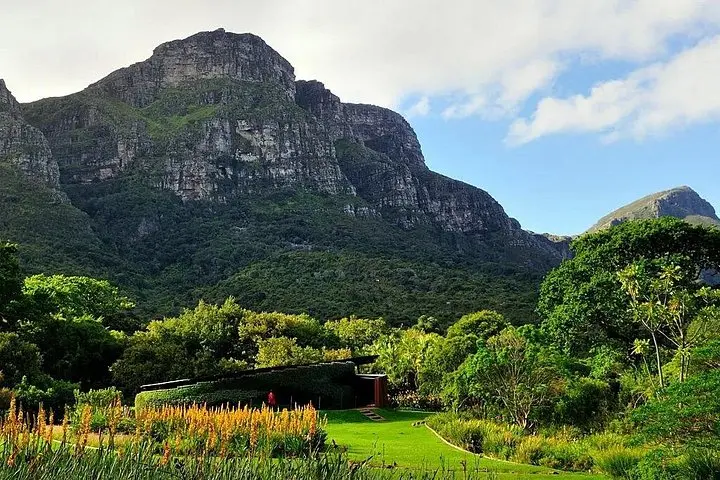
Kirstenbosch is more than a public garden; it’s a curated cross-section of the Cape Floristic Region, a UNESCO site that conserves thousands of species unique to this stretch of South Africa. The estate—part of a larger 528-hectare conservation area—was created in 1913 to protect local flora and to showcase plants that evolved under a harsh Mediterranean climate of wet winters and arid summers. In geological terms, the nearby Table Mountain is a slab of ancient sandstone that rises abruptly from Cape Town, its sheer cliffs shaped by erosion and weather over deep time.
The tour routes from cultivated beds to wild mountain edge. Guides usually spend an hour and a half in Kirstenbosch, explaining plant uses, pollinators and fire ecology—the way many fynbos species require periodic burns to regenerate. Then the van drives up to the Table Mountain cableway station. The cable car’s rotating cabin takes five minutes to lift visitors onto the flat, wind-scraped summit where the city opens beneath you; on clear days the view stretches to Robben Island and False Bay.
Culture here is layered: Khoi and San people were the region’s first stewards; colonial botanical efforts later catalogued species while also reshaping land use. Today the gardens balance public access with conservation, and the cableway operates with sensitivity to conditions—if winds are too strong or visibility poor, the ascent is cancelled.
Practical details: plan four hours for the combined experience; admissions and round-trip transfers are included on this private tour. Wear sturdy walking shoes for uneven paths and a lightweight wind layer—Table Mountain’s summit often demands one. Hydrate before the cable car and keep sunscreen handy; shade is limited on the mountain. Photographers should aim for late afternoon light when the city’s geometry softens.
For travelers who want a low-effort, high-payoff introduction to Cape Town’s landscapes, this pairing is efficient and intimate—botanical storytelling followed by a quick alpine ascent that leaves you with a clearer sense of how the city fits into its wild, geological backdrop.
The rotating cable car takes roughly five minutes to ascend from the base station to the summit; cabins rotate for panoramic views.
Yes—this tour includes admission to both Kirstenbosch and the Table Mountain cableway, as noted in the itinerary.
If the cableway is closed for safety, operators typically reschedule or refund that portion; the provider’s cancellation policy allows refunds if weather cancels the activity.
Kirstenbosch and the transport provided are wheelchair accessible; however, summit access depends on cableway policies and current conditions—check with the operator in advance.
Expect light to moderate walking—paved garden paths and some steps; the mountain summit visit is mostly flat but uneven in places.
Yes—this family-friendly tour suits children, but supervise them near steep lookouts on Table Mountain and keep them hydrated.
Arrive & Explore Tours operates guided outdoor trips and adventures with an emphasis on safety, stewardship, and memorable experiences.
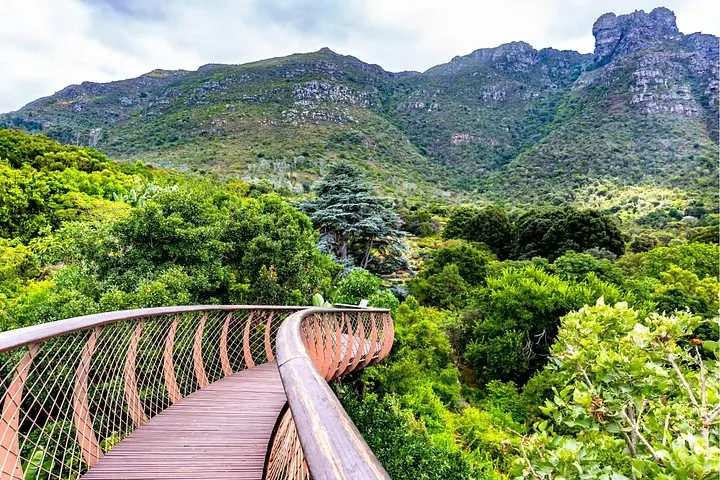
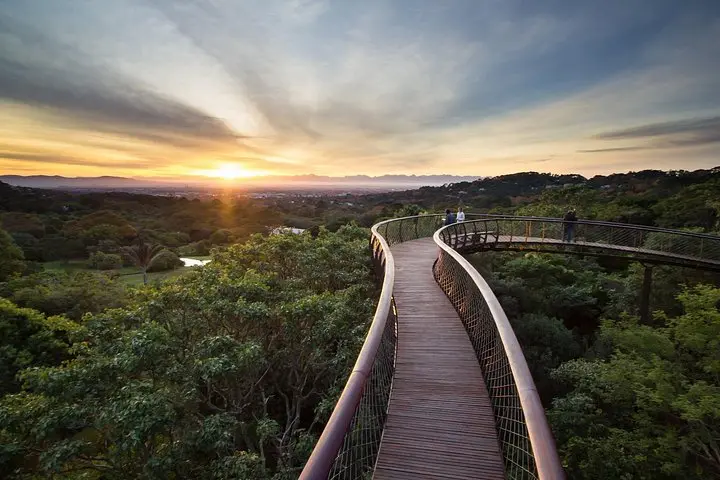
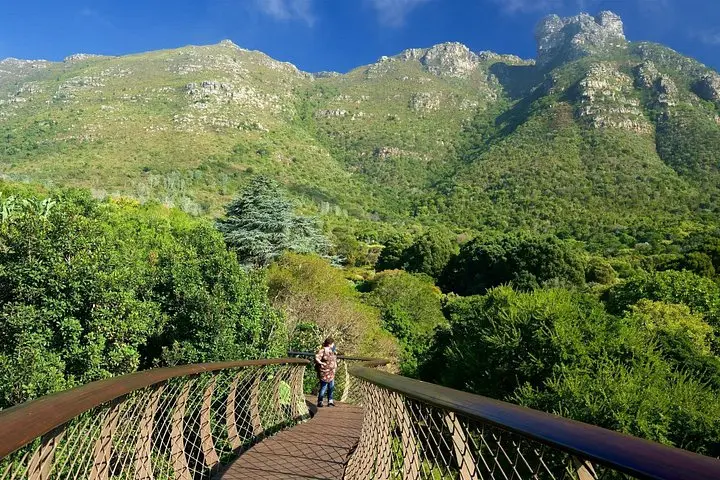
A damp breeze from the Atlantic slides down the shoulder of Table Mountain as the minivan eases into the gate at Kirstenbosch. The air smells of crushed fynbos and damp earth; leaves glint with the last of morning light. A guide points toward a canopy walkway arcing like a wooden eyebrow over indigenous scrub, and the group moves through a living field guide— proteas, ericas and restios stepping into clear view.
A damp breeze from the Atlantic slides down the shoulder of Table Mountain as the minivan eases into the gate at Kirstenbosch. The air smells of crushed fynbos and damp earth; leaves glint with the last of morning light. A guide points toward a canopy walkway arcing like a wooden eyebrow over indigenous scrub, and the group moves through a living field guide— proteas, ericas and restios stepping into clear view.
Kirstenbosch is more than a public garden; it’s a curated cross-section of the Cape Floristic Region, a UNESCO site that conserves thousands of species unique to this stretch of South Africa. The estate—part of a larger 528-hectare conservation area—was created in 1913 to protect local flora and to showcase plants that evolved under a harsh Mediterranean climate of wet winters and arid summers. In geological terms, the nearby Table Mountain is a slab of ancient sandstone that rises abruptly from Cape Town, its sheer cliffs shaped by erosion and weather over deep time.
The tour routes from cultivated beds to wild mountain edge. Guides usually spend an hour and a half in Kirstenbosch, explaining plant uses, pollinators and fire ecology—the way many fynbos species require periodic burns to regenerate. Then the van drives up to the Table Mountain cableway station. The cable car’s rotating cabin takes five minutes to lift visitors onto the flat, wind-scraped summit where the city opens beneath you; on clear days the view stretches to Robben Island and False Bay.
Culture here is layered: Khoi and San people were the region’s first stewards; colonial botanical efforts later catalogued species while also reshaping land use. Today the gardens balance public access with conservation, and the cableway operates with sensitivity to conditions—if winds are too strong or visibility poor, the ascent is cancelled.
Practical details: plan four hours for the combined experience; admissions and round-trip transfers are included on this private tour. Wear sturdy walking shoes for uneven paths and a lightweight wind layer—Table Mountain’s summit often demands one. Hydrate before the cable car and keep sunscreen handy; shade is limited on the mountain. Photographers should aim for late afternoon light when the city’s geometry softens.
For travelers who want a low-effort, high-payoff introduction to Cape Town’s landscapes, this pairing is efficient and intimate—botanical storytelling followed by a quick alpine ascent that leaves you with a clearer sense of how the city fits into its wild, geological backdrop.