THE ADVENTURE COLLECTIVE® · Independent discovery and booking for outdoor travel

Walk the palace corridors where Minoan frescoes still hold color, then move into Cretan countryside vineyards to taste Vilana and Kotsifali. This six-hour tour pairs archaeology, olive oil insights and a family-style tavern meal for a grounded day of history and flavors.
Walk the palace corridors where Minoan frescoes still hold color, then move into Cretan countryside vineyards to taste Vilana and Kotsifali. This six-hour tour pairs archaeology, olive oil insights and a family-style tavern meal for a grounded day of history and flavors.
You step out of the van into dry Cretan air and the stones of the Palace of Knossos meet you like an argument from the past—masonry flung into modern light, frescoes still clinging to color. The site hums with the hush of tourists and the keening wind over olive terraces; the ruins open in tiers, the Throne Room’s carved stones guiding a natural cadence through myths of bulls and kings.
Verified experiences and guided adventures in the surrounding area.
Operated by Cretan Vioma · Heraklion, Crete
You step out of the van into dry Cretan air and the stones of the Palace of Knossos meet you like an argument from the past—masonry flung into modern light, frescoes still clinging to color. The site hums with the hush of tourists and the keening wind over olive terraces; the ruins open in tiers, the Throne Room’s carved stones guiding a natural cadence through myths of bulls and kings.
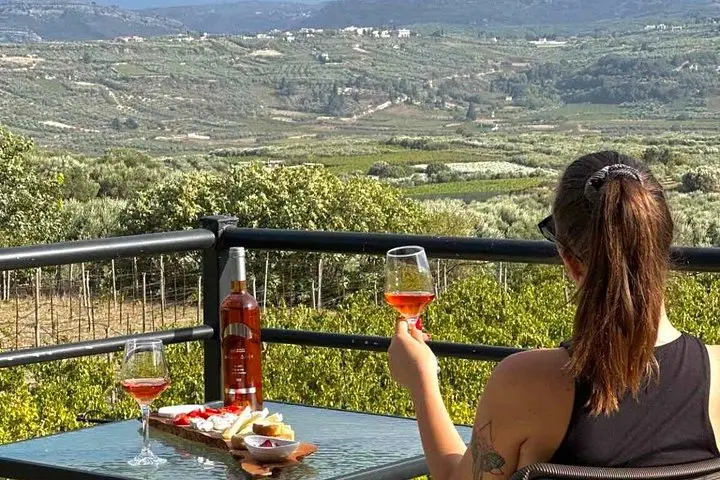
Built on limestone and alluvial terraces, Knossos is the largest Bronze Age archaeological site on Crete and the ceremonial center of the Minoan civilization. Nearby vineyards sit on gentle slopes where ancient viticulture meets modern organic practice; local varieties such as Vilana and Kotsifali produce wines that trade in earth and sun rather than oak. Meals in family-run taverns are practical celebrations—bread, grilled vegetables, robust raki—served at long tables under plane trees.
Practical guidance: expect a full-day outing of roughly 6–7 hours with 1–2 hours of walking at Knossos over uneven ruins. Wear sturdy, closed-toe shoes, sun protection, and carry water; parts of the site are exposed with limited shade. The winery visit includes cellar and olive grove tours and tastings—ask for smaller pours if you plan to drive. If you need reduced mobility access, check pickup details and confirm any site assistance ahead of time. Timing mid-morning to late afternoon avoids the harshest sun and gives the vineyard a cooler window for tasting. This is a pragmatic cultural day: bring curiosity, comfortable gear, and an appetite for history and local flavors.
Admission to the Palace of Knossos is typically not included in the basic tour price—check booking details; some operators offer an option to include skip-the-line tickets.
Family-run taverns are accustomed to simple substitutions—inform your booking of allergies or restrictions and the guide will relay them to the kitchen ahead of time.
Most tours provide air-conditioned vehicle pickup from central Heraklion locations or specified meeting points; confirm your pickup point and time when you book.
The itinerary notes stroller accessibility for short distances, but the palace has uneven ground—infants are manageable, but parents should expect limited stroller mobility around ruins.
Cretan Vioma operates guided outdoor trips and adventures with an emphasis on safety, stewardship, and memorable experiences.
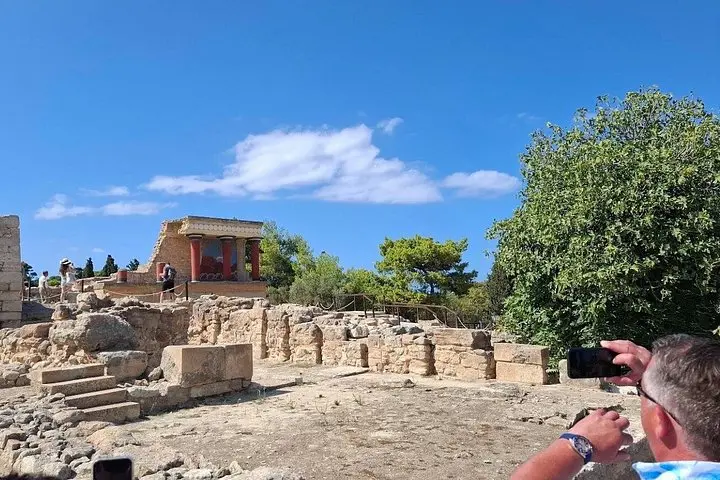

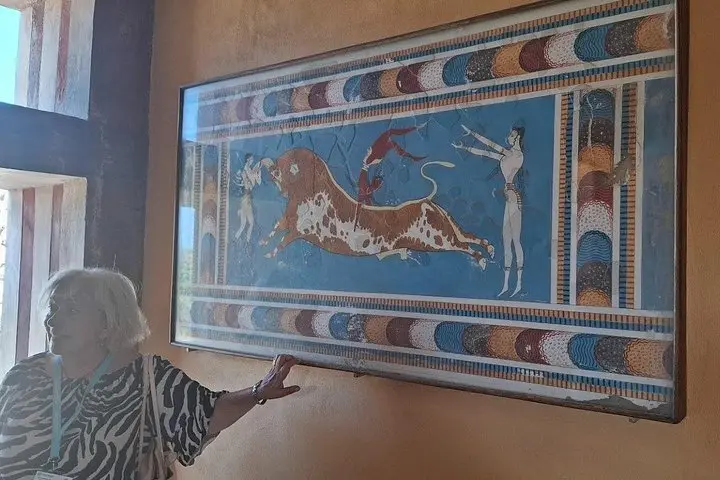
You step out of the van into dry Cretan air and the stones of the Palace of Knossos meet you like an argument from the past—masonry flung into modern light, frescoes still clinging to color. The site hums with the hush of tourists and the keening wind over olive terraces; the ruins open in tiers, the Throne Room’s carved stones guiding a natural cadence through myths of bulls and kings.
You step out of the van into dry Cretan air and the stones of the Palace of Knossos meet you like an argument from the past—masonry flung into modern light, frescoes still clinging to color. The site hums with the hush of tourists and the keening wind over olive terraces; the ruins open in tiers, the Throne Room’s carved stones guiding a natural cadence through myths of bulls and kings.
Built on limestone and alluvial terraces, Knossos is the largest Bronze Age archaeological site on Crete and the ceremonial center of the Minoan civilization. Nearby vineyards sit on gentle slopes where ancient viticulture meets modern organic practice; local varieties such as Vilana and Kotsifali produce wines that trade in earth and sun rather than oak. Meals in family-run taverns are practical celebrations—bread, grilled vegetables, robust raki—served at long tables under plane trees.
Practical guidance: expect a full-day outing of roughly 6–7 hours with 1–2 hours of walking at Knossos over uneven ruins. Wear sturdy, closed-toe shoes, sun protection, and carry water; parts of the site are exposed with limited shade. The winery visit includes cellar and olive grove tours and tastings—ask for smaller pours if you plan to drive. If you need reduced mobility access, check pickup details and confirm any site assistance ahead of time. Timing mid-morning to late afternoon avoids the harshest sun and gives the vineyard a cooler window for tasting. This is a pragmatic cultural day: bring curiosity, comfortable gear, and an appetite for history and local flavors.