THE ADVENTURE COLLECTIVE® · Independent discovery and booking for outdoor travel

Spend a five‑hour morning moving from the gilded terrace of Big Buddha to coastal lookouts, the famously quirky Hin Ta Hin Yai rocks and the contemplative shrine of the Mummy Monk. This compact tour gives first‑time visitors a clear sense of Koh Samui’s landscape, culture and geology.
Spend a five‑hour morning moving from the gilded terrace of Big Buddha to coastal lookouts, the famously quirky Hin Ta Hin Yai rocks and the contemplative shrine of the Mummy Monk. This compact tour gives first‑time visitors a clear sense of Koh Samui’s landscape, culture and geology.
The minivan eases off the ring road and the air shifts: salty, warm, and threaded with incense. You step out at Wat Phra Yai and a 12‑meter golden Buddha watches over the northern shore, its terrace offering a wide view where Koh Phangan sits like a distant thought on the horizon. The guide moves you through the temple courtyard with a short explanation of the statue’s modern construction and devotional rituals, then points toward the east—Lat Ko Viewpoint—where the road slices along jade water and palms bow to the sea.
Verified experiences and guided adventures in the surrounding area.
Operated by Way to Bangkok · Ko Samui, Surat Thani
The minivan eases off the ring road and the air shifts: salty, warm, and threaded with incense. You step out at Wat Phra Yai and a 12‑meter golden Buddha watches over the northern shore, its terrace offering a wide view where Koh Phangan sits like a distant thought on the horizon. The guide moves you through the temple courtyard with a short explanation of the statue’s modern construction and devotional rituals, then points toward the east—Lat Ko Viewpoint—where the road slices along jade water and palms bow to the sea.
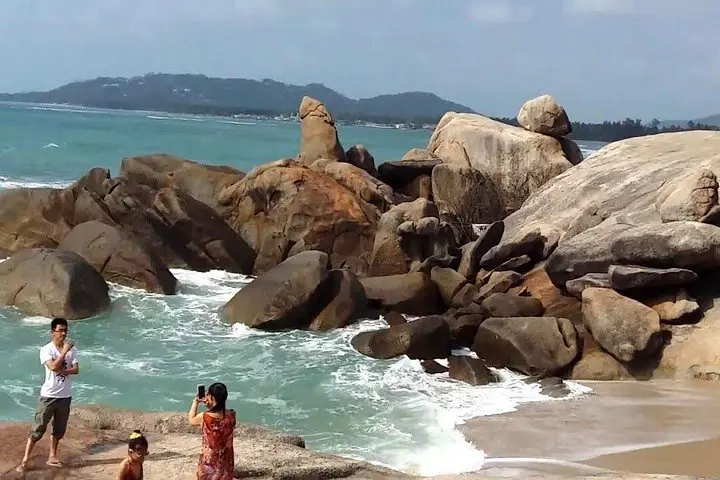
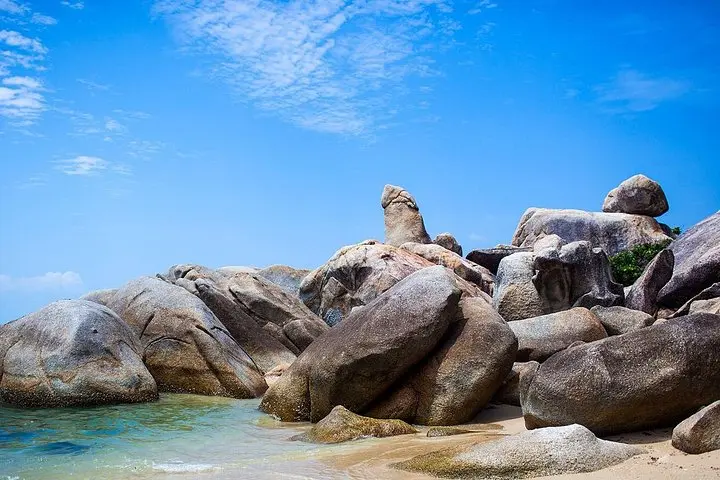
This half‑day excursion reads like an island primer. Koh Samui’s volcanic underpinnings raised its granite head from the Gulf of Thailand; erosion and tide have since shaped the coast into beds of smooth boulders and sculpted stack formations like Hin Ta Hin Yai—known locally as Grandfather and Grandmother rocks—whose blunt, humorous silhouettes have been a roadside curiosity for generations. Wat Khunaram houses the preserved body of Luang Pho Daeng, the mummified monk whose calm expression and incense-filled shrine remind visitors of Buddhist teachings on impermanence.
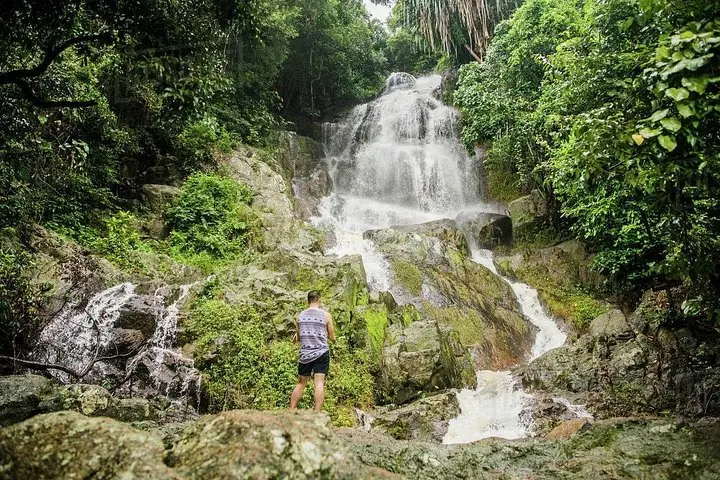
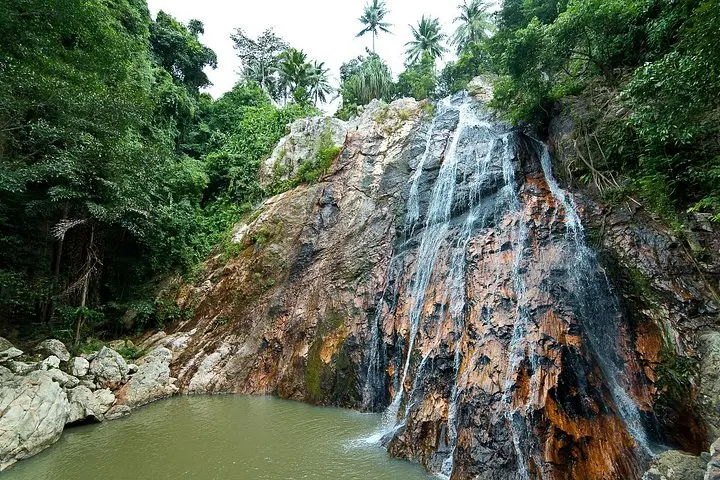
The tour stitches together natural viewpoints, religious sites and a short stop at Na Muang waterfall if time allows: purple‑brown rock steps and a plunge pool where the jungle nearly swallows the path. The route is short on strenuous hiking and long on observation—perfect for travelers who want texture and context without a full day of trekking.
Practical guide: the trip runs about five hours with door‑to‑door pickup from central Samui hotels. Wear comfortable shoes for temple staircases and paved lookouts; modest clothing is required in religious sites (shoulders and knees covered). Bring sun protection and a small towel if you plan to dip a toe at Na Muang. Expect open‑air stops with time to photograph the coast—if you want fewer crowds, choose a morning slot when light is softer and temple visitors are fewer.
Cultural note: the islands have a living mix of Thai Buddhist devotion and a tourist infrastructure; guides often explain local customs, and vendors near attractions sell coconut snacks and grilled seafood. Sustainability tip: stick to marked paths at waterfalls and avoid single‑use plastics—coastal ecosystems here respond quickly to litter and runoff.
Who this tour suits: visitors who want a compact orientation to Koh Samui’s highlights—spiritual sites, scenic lookouts and quirky geology—without committing to a full‑day itinerary. It’s an efficient, sensory way to read the island’s coastline, culture and geology in a single morning.
The tour is approximately five hours (about 300 minutes), typically running from morning until early afternoon.
Yes—round‑trip door‑to‑door pickup is included within a 3 km radius of central Ko Samui; confirm the exact pickup point 24 hours ahead.
All admission fees listed in the itinerary are included; bring small cash for optional purchases or donations.
Yes—infants are welcome but must sit on an adult’s lap; the tour is stroller accessible but has some short walks and temple stairs.
For temple visits you should cover shoulders and knees—bring a sarong or lightweight layer to comply with local customs.
This tour operates in most weather; cancellations for a full refund are available if you cancel at least 24 hours in advance.
Way to Bangkok operates guided outdoor trips and adventures with an emphasis on safety, stewardship, and memorable experiences.
The minivan eases off the ring road and the air shifts: salty, warm, and threaded with incense. You step out at Wat Phra Yai and a 12‑meter golden Buddha watches over the northern shore, its terrace offering a wide view where Koh Phangan sits like a distant thought on the horizon. The guide moves you through the temple courtyard with a short explanation of the statue’s modern construction and devotional rituals, then points toward the east—Lat Ko Viewpoint—where the road slices along jade water and palms bow to the sea.
The minivan eases off the ring road and the air shifts: salty, warm, and threaded with incense. You step out at Wat Phra Yai and a 12‑meter golden Buddha watches over the northern shore, its terrace offering a wide view where Koh Phangan sits like a distant thought on the horizon. The guide moves you through the temple courtyard with a short explanation of the statue’s modern construction and devotional rituals, then points toward the east—Lat Ko Viewpoint—where the road slices along jade water and palms bow to the sea.
This half‑day excursion reads like an island primer. Koh Samui’s volcanic underpinnings raised its granite head from the Gulf of Thailand; erosion and tide have since shaped the coast into beds of smooth boulders and sculpted stack formations like Hin Ta Hin Yai—known locally as Grandfather and Grandmother rocks—whose blunt, humorous silhouettes have been a roadside curiosity for generations. Wat Khunaram houses the preserved body of Luang Pho Daeng, the mummified monk whose calm expression and incense-filled shrine remind visitors of Buddhist teachings on impermanence.
The tour stitches together natural viewpoints, religious sites and a short stop at Na Muang waterfall if time allows: purple‑brown rock steps and a plunge pool where the jungle nearly swallows the path. The route is short on strenuous hiking and long on observation—perfect for travelers who want texture and context without a full day of trekking.
Practical guide: the trip runs about five hours with door‑to‑door pickup from central Samui hotels. Wear comfortable shoes for temple staircases and paved lookouts; modest clothing is required in religious sites (shoulders and knees covered). Bring sun protection and a small towel if you plan to dip a toe at Na Muang. Expect open‑air stops with time to photograph the coast—if you want fewer crowds, choose a morning slot when light is softer and temple visitors are fewer.
Cultural note: the islands have a living mix of Thai Buddhist devotion and a tourist infrastructure; guides often explain local customs, and vendors near attractions sell coconut snacks and grilled seafood. Sustainability tip: stick to marked paths at waterfalls and avoid single‑use plastics—coastal ecosystems here respond quickly to litter and runoff.
Who this tour suits: visitors who want a compact orientation to Koh Samui’s highlights—spiritual sites, scenic lookouts and quirky geology—without committing to a full‑day itinerary. It’s an efficient, sensory way to read the island’s coastline, culture and geology in a single morning.