THE ADVENTURE COLLECTIVE® · Independent discovery and booking for outdoor travel

Experience true dark-sky stargazing from Kodachadri’s forest clearing—one of the Western Ghats’ least light-polluted spots. Plan for an evening-to-early-morning outing on new-moon nights; bring warm layers and a red headlamp for the best viewing.
Experience true dark-sky stargazing from Kodachadri’s forest clearing—one of the Western Ghats’ least light-polluted spots. Plan for an evening-to-early-morning outing on new-moon nights; bring warm layers and a red headlamp for the best viewing.
A late-afternoon haze lifts off the Western Ghats as you climb the narrow trail toward Kodachadri. Pine-scented air thins with elevation; by dusk the forest clearing at Wildhills becomes a small island of human light in a sea of true darkness. The sky here is unpolluted—constellations wheel overhead and the Milky Way cuts a bright swath from horizon to horizon.
Verified experiences and guided adventures in the surrounding area.
Operated by PlaceXplore · Kollur, Karnataka
A late-afternoon haze lifts off the Western Ghats as you climb the narrow trail toward Kodachadri. Pine-scented air thins with elevation; by dusk the forest clearing at Wildhills becomes a small island of human light in a sea of true darkness. The sky here is unpolluted—constellations wheel overhead and the Milky Way cuts a bright swath from horizon to horizon.
Kodachadri sits inside Mookambika National Park and is part of the Western Ghats’ medicinal-plant zone; the slopes are volcanic-basalt and laterite, carved by monsoon rains into steep ridgelines. The area has religious and cultural ties to nearby Kollur and Sagara towns and has been protected as a natural heritage landscape. Local communities historically used the forest for herbal traditions; today the peak draws trekkers, birdwatchers, and astronomy enthusiasts.
Practical guidance: plan this as an evening-to-early-morning outing (roughly eight hours on-site), arrive in daylight to hike and orient yourself, and watch for sudden temperature drops after midnight. New-moon nights give the best views; bring a headlamp with a red filter, warm layers, and a small telescope or binoculars if you have one—shared optics may be available on-site. Expect uneven forest trails, damp ground in the shoulder seasons, and basic accommodation arranged by the operator. Respect marked clearings, avoid bright screens during viewing, and leave no trace—this dark-sky quality depends on limited light and careful behavior. For anyone who wants the Milky Way without a city’s glare, Kodachadri delivers a clear, raw encounter between night and mountain.
The on-site activity runs about eight hours—arrive in the afternoon to explore trails, then return to the clearing for an evening stargazing session that can continue into the early morning.
Operators typically bring a small selection of community binoculars and telescopes; bringing your own optics will improve viewing and reduce sharing waits.
Yes—this activity is rated easy and suitable for most fitness levels, but plan for low temperatures and bring warm clothing for children and seniors.
Stargazing is weather dependent: sessions are canceled for poor sky conditions or heavy rain; check operator policies—full refund typically if canceled 24+ hours ahead.
PlaceXplore operates guided outdoor trips and adventures with an emphasis on safety, stewardship, and memorable experiences.
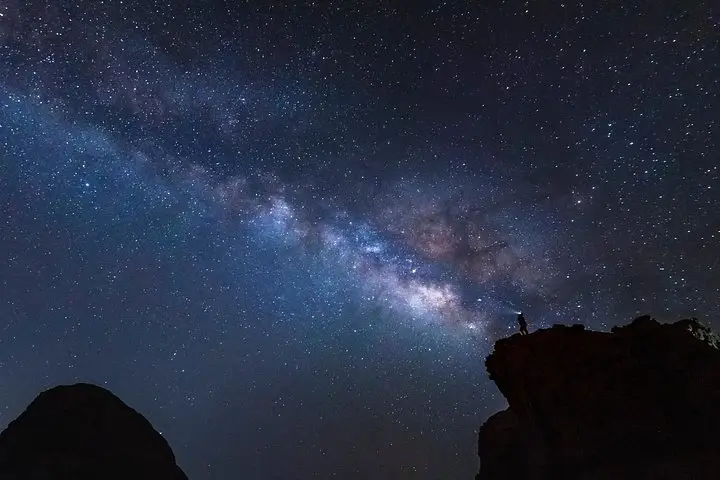
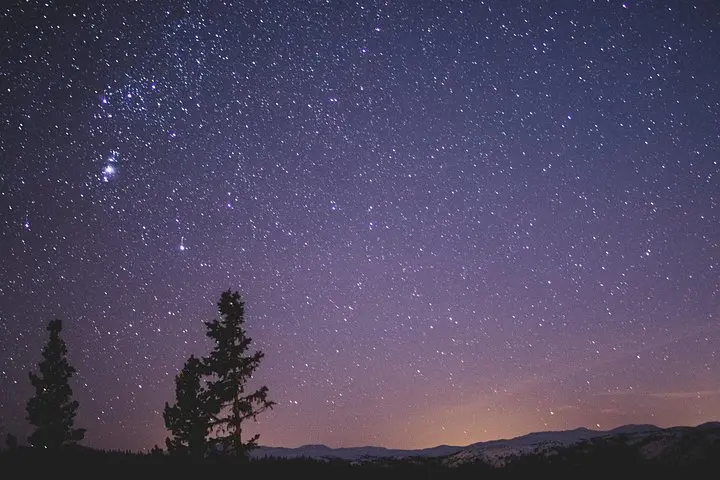
A late-afternoon haze lifts off the Western Ghats as you climb the narrow trail toward Kodachadri. Pine-scented air thins with elevation; by dusk the forest clearing at Wildhills becomes a small island of human light in a sea of true darkness. The sky here is unpolluted—constellations wheel overhead and the Milky Way cuts a bright swath from horizon to horizon.
A late-afternoon haze lifts off the Western Ghats as you climb the narrow trail toward Kodachadri. Pine-scented air thins with elevation; by dusk the forest clearing at Wildhills becomes a small island of human light in a sea of true darkness. The sky here is unpolluted—constellations wheel overhead and the Milky Way cuts a bright swath from horizon to horizon.
Kodachadri sits inside Mookambika National Park and is part of the Western Ghats’ medicinal-plant zone; the slopes are volcanic-basalt and laterite, carved by monsoon rains into steep ridgelines. The area has religious and cultural ties to nearby Kollur and Sagara towns and has been protected as a natural heritage landscape. Local communities historically used the forest for herbal traditions; today the peak draws trekkers, birdwatchers, and astronomy enthusiasts.
Practical guidance: plan this as an evening-to-early-morning outing (roughly eight hours on-site), arrive in daylight to hike and orient yourself, and watch for sudden temperature drops after midnight. New-moon nights give the best views; bring a headlamp with a red filter, warm layers, and a small telescope or binoculars if you have one—shared optics may be available on-site. Expect uneven forest trails, damp ground in the shoulder seasons, and basic accommodation arranged by the operator. Respect marked clearings, avoid bright screens during viewing, and leave no trace—this dark-sky quality depends on limited light and careful behavior. For anyone who wants the Milky Way without a city’s glare, Kodachadri delivers a clear, raw encounter between night and mountain.