THE ADVENTURE COLLECTIVE® · Independent discovery and booking for outdoor travel

Venture beyond Angkor’s main circuit to Koh Ker’s stepped pyramids and the jungle-woven corridors of Beng Mealea. This full-day tour mixes off-the-beaten-path exploration with local market stops and archeological context.
Venture beyond Angkor’s main circuit to Koh Ker’s stepped pyramids and the jungle-woven corridors of Beng Mealea. This full-day tour mixes off-the-beaten-path exploration with local market stops and archeological context.
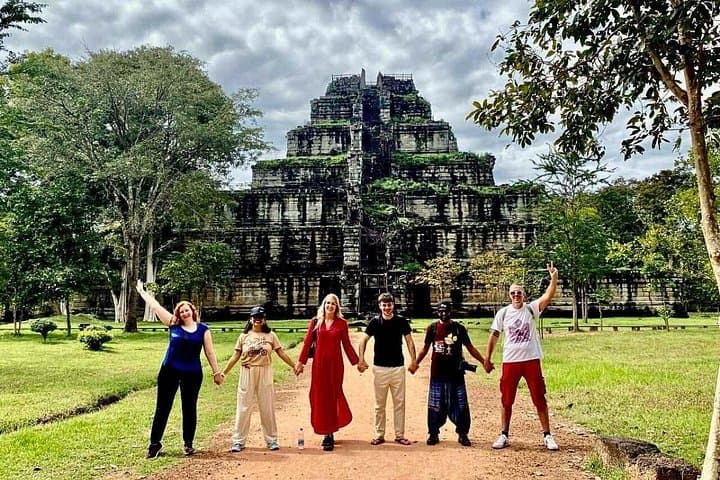
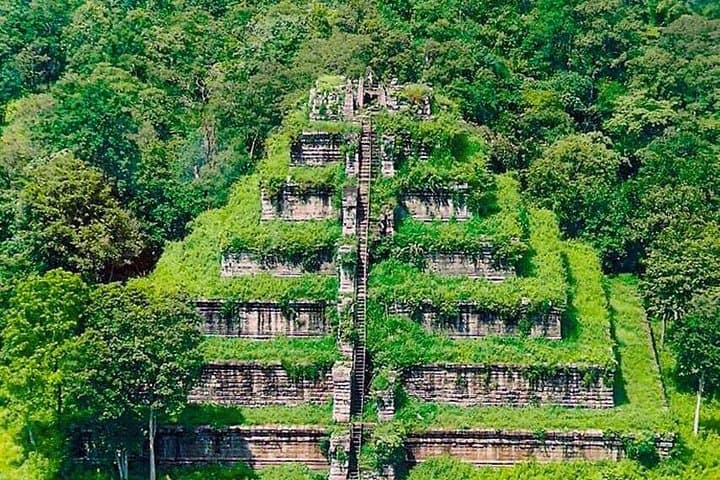
A thin road pulls away from Siem Reap and, within an hour, the forest changes its tone — drier red soil, tangles of fig roots, stone blocks half-swallowed by vines. You stand on a low terrace at Koh Ker and the heat and silence make the ruined pyramidal towers feel deliberate, almost defiant, as if the jungle is testing whether you belong.
Verified experiences and guided adventures in the surrounding area.
Operated by Bayon Tabi Tour · Siem Reap, Siem Reap Province
A thin road pulls away from Siem Reap and, within an hour, the forest changes its tone — drier red soil, tangles of fig roots, stone blocks half-swallowed by vines. You stand on a low terrace at Koh Ker and the heat and silence make the ruined pyramidal towers feel deliberate, almost defiant, as if the jungle is testing whether you belong.
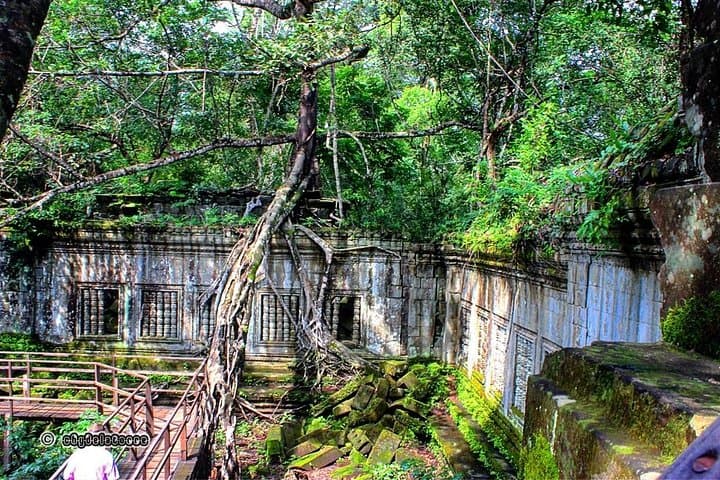
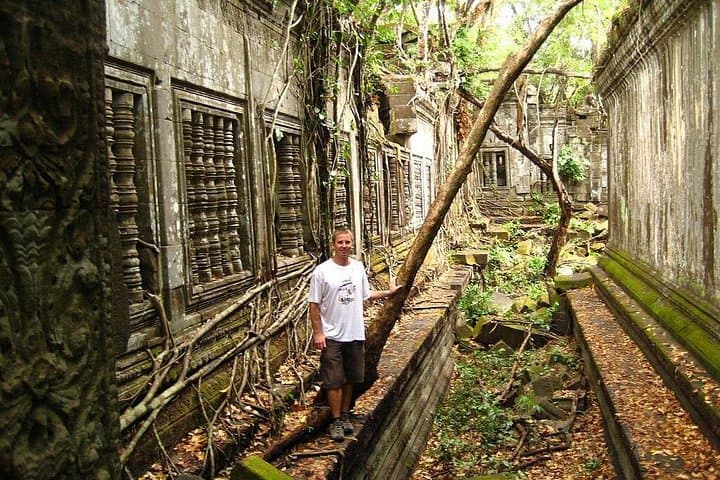
Koh Ker was briefly the Khmer capital in the 10th–11th centuries under Jayavarman IV; its Prasat Thom pyramid is a rare tall, stepped mass of laterite and sandstone. Beng Mealea, built around the Angkor period, feels different: broad galleries and collapsed aisles create a maze where tree roots pry at carved lintels. Geologically the region sits on sandstone plates deposited millions of years ago, now fractured and softened by monsoon cycles — that is why blocks shift and corridors crumble.
Local villages still run markets along the route; expect roadside stalls selling sticky rice, fried banana, and bottled water. Guides will point out inscriptions, lintel motifs and the difference between royal and provincial temple plans.
Practical guidance: this is a full-day outing (about 8 hours) with hotel pickup, bottled water and an English-speaking guide. Wear sturdy shoes for uneven stone and mud, carry sun protection and insect repellent, and bring cash for entrance fees, snacks and donations. Start early to avoid the midday heat; mornings offer better light for photography and fewer crowds at Beng Mealea. Respect fragile carvings, follow your guide’s safety directions around loose masonry, and allow extra time at the local market to meet artisans and taste regional snacks.
The tour is approximately 8 hours with hotel pickup and drop-off in Siem Reap; daily departures vary by operator.
Beng Mealea admission is typically included on this tour; Koh Ker may require a separate ticket — confirm with your operator before departure.
Yes — the operator lists it as suitable for all fitness levels, but expect uneven terrain; assistance may be needed for steep or loose sections.
Yes — vendors and a small local market are on the route, and bottled water is usually provided by the tour; bring small cash for purchases.
Bayon Tabi Tour operates guided outdoor trips and adventures with an emphasis on safety, stewardship, and memorable experiences.
A thin road pulls away from Siem Reap and, within an hour, the forest changes its tone — drier red soil, tangles of fig roots, stone blocks half-swallowed by vines. You stand on a low terrace at Koh Ker and the heat and silence make the ruined pyramidal towers feel deliberate, almost defiant, as if the jungle is testing whether you belong.
A thin road pulls away from Siem Reap and, within an hour, the forest changes its tone — drier red soil, tangles of fig roots, stone blocks half-swallowed by vines. You stand on a low terrace at Koh Ker and the heat and silence make the ruined pyramidal towers feel deliberate, almost defiant, as if the jungle is testing whether you belong.
Koh Ker was briefly the Khmer capital in the 10th–11th centuries under Jayavarman IV; its Prasat Thom pyramid is a rare tall, stepped mass of laterite and sandstone. Beng Mealea, built around the Angkor period, feels different: broad galleries and collapsed aisles create a maze where tree roots pry at carved lintels. Geologically the region sits on sandstone plates deposited millions of years ago, now fractured and softened by monsoon cycles — that is why blocks shift and corridors crumble.
Local villages still run markets along the route; expect roadside stalls selling sticky rice, fried banana, and bottled water. Guides will point out inscriptions, lintel motifs and the difference between royal and provincial temple plans.
Practical guidance: this is a full-day outing (about 8 hours) with hotel pickup, bottled water and an English-speaking guide. Wear sturdy shoes for uneven stone and mud, carry sun protection and insect repellent, and bring cash for entrance fees, snacks and donations. Start early to avoid the midday heat; mornings offer better light for photography and fewer crowds at Beng Mealea. Respect fragile carvings, follow your guide’s safety directions around loose masonry, and allow extra time at the local market to meet artisans and taste regional snacks.