THE ADVENTURE COLLECTIVE® · Independent discovery and booking for outdoor travel

Spend a full day exploring Koh Ker’s remote stepped temples, Beng Mealea’s jungle-swallowed courtyards and the early Roluos brick temples on a private tour from Siem Reap. This route pairs dramatic ruins with rural Cambodian landscape and practical, all-day logistics.
Spend a full day exploring Koh Ker’s remote stepped temples, Beng Mealea’s jungle-swallowed courtyards and the early Roluos brick temples on a private tour from Siem Reap. This route pairs dramatic ruins with rural Cambodian landscape and practical, all-day logistics.
You step off the air-conditioned minivan into humid Khmer air and the world narrows to stone and root: toppled lintels, vine-wrapped bas-reliefs and sun-pocked courtyards where trees push through roofs. The day tour from Siem Reap threads three different moods of Angkor-era architecture — the remote pyramid-temples of Koh Ker, the half-swallowed courtyards of Beng Mealea, and the brick-and-laterite remnants of the Roluos group.
Verified experiences and guided adventures in the surrounding area.
Operated by Angkor Doors · Siem Reap, Siem Reap Province
You step off the air-conditioned minivan into humid Khmer air and the world narrows to stone and root: toppled lintels, vine-wrapped bas-reliefs and sun-pocked courtyards where trees push through roofs. The day tour from Siem Reap threads three different moods of Angkor-era architecture — the remote pyramid-temples of Koh Ker, the half-swallowed courtyards of Beng Mealea, and the brick-and-laterite remnants of the Roluos group.
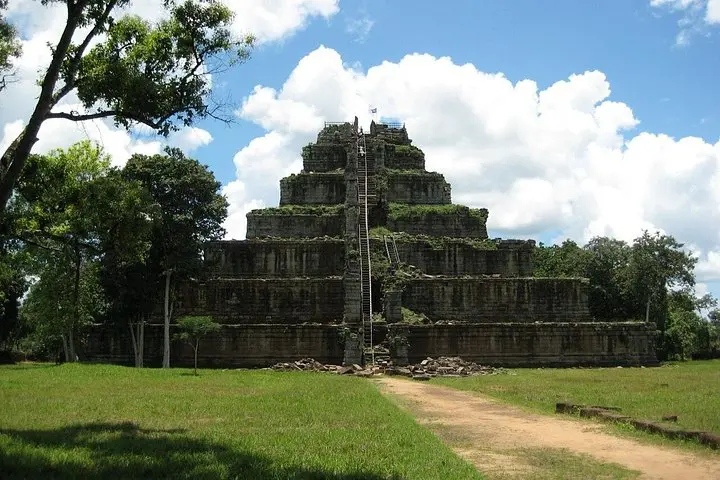
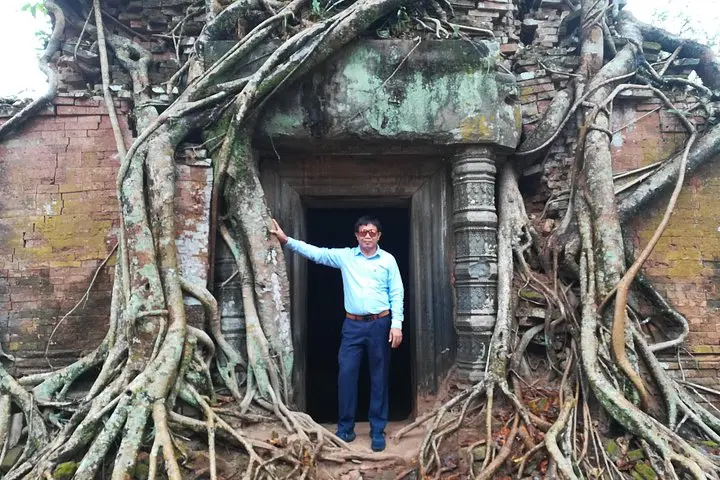
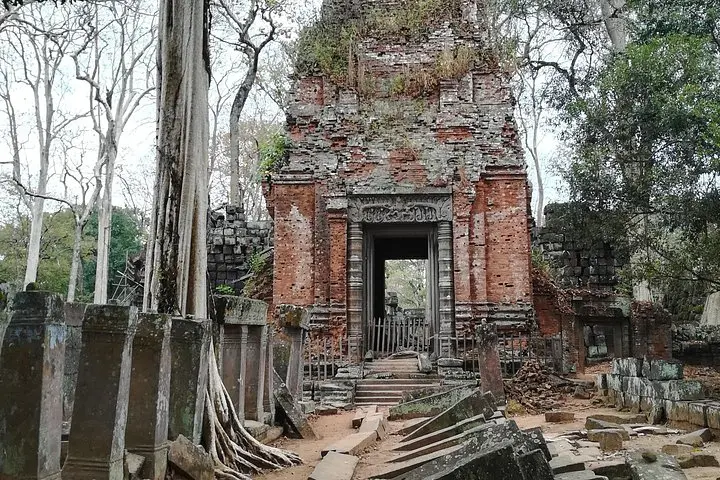
Koh Ker sits alone on a limestone ridge, an 10th-century capital whose stepped towers read oddly modern and geometric against the horizon. Beng Mealea feels wilder: much of it remains unrestored, so you walk through corridors where roots tug at stones and birds flit through broken windows. Roluos delivers the earliest Angkorian experimentation with brick and laterite that would evolve into the sandstone classics.
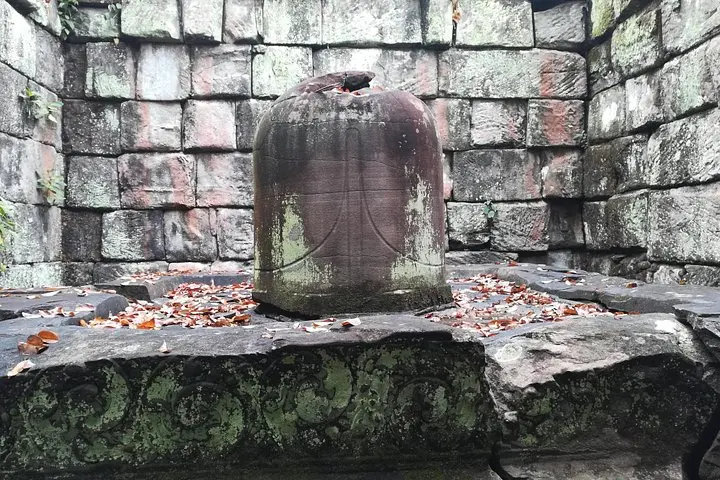
The geology is plain — sandstone and laterite quarried and set into massive, interlocking forms — but the cultural imprint is deep: you’re following routes of a civilization expanding central authority and religious expression.
Practical notes: expect 8–9 hours away from Siem Reap in a private vehicle, with long stretches on bumpy provincial roads. Wear sturdy shoes for uneven, slippery stone; bring sun protection and at least 1–2 liters of water. Temples require modest dress (shoulders and knees covered). Entrance fees are typically paid on site, so carry cash in local currency. Aim to start early to avoid midday heat; guides can enrich the ruins with archaeological and historical context, but be prepared for minimal restoration and lots of nature reclaiming stone.
No—site admissions are generally not included in the tour price and are paid on arrival, so bring cash in small denominations.
The tour lasts about 8–9 hours and typically uses an air-conditioned car, minivan or minibus with private transport included by the operator.
Children can join but must sit on laps if infants; many temple areas have uneven steps and loose stones, so mobility limitations may restrict access to inner courtyards.
Photography is allowed for personal use, but drone regulations vary and often require permits—check local rules and the tour operator before flying.
Angkor Doors operates guided outdoor trips and adventures with an emphasis on safety, stewardship, and memorable experiences.
You step off the air-conditioned minivan into humid Khmer air and the world narrows to stone and root: toppled lintels, vine-wrapped bas-reliefs and sun-pocked courtyards where trees push through roofs. The day tour from Siem Reap threads three different moods of Angkor-era architecture — the remote pyramid-temples of Koh Ker, the half-swallowed courtyards of Beng Mealea, and the brick-and-laterite remnants of the Roluos group.
You step off the air-conditioned minivan into humid Khmer air and the world narrows to stone and root: toppled lintels, vine-wrapped bas-reliefs and sun-pocked courtyards where trees push through roofs. The day tour from Siem Reap threads three different moods of Angkor-era architecture — the remote pyramid-temples of Koh Ker, the half-swallowed courtyards of Beng Mealea, and the brick-and-laterite remnants of the Roluos group.
Koh Ker sits alone on a limestone ridge, an 10th-century capital whose stepped towers read oddly modern and geometric against the horizon. Beng Mealea feels wilder: much of it remains unrestored, so you walk through corridors where roots tug at stones and birds flit through broken windows. Roluos delivers the earliest Angkorian experimentation with brick and laterite that would evolve into the sandstone classics.
The geology is plain — sandstone and laterite quarried and set into massive, interlocking forms — but the cultural imprint is deep: you’re following routes of a civilization expanding central authority and religious expression.
Practical notes: expect 8–9 hours away from Siem Reap in a private vehicle, with long stretches on bumpy provincial roads. Wear sturdy shoes for uneven, slippery stone; bring sun protection and at least 1–2 liters of water. Temples require modest dress (shoulders and knees covered). Entrance fees are typically paid on site, so carry cash in local currency. Aim to start early to avoid midday heat; guides can enrich the ruins with archaeological and historical context, but be prepared for minimal restoration and lots of nature reclaiming stone.