THE ADVENTURE COLLECTIVE® · Independent discovery and booking for outdoor travel

Head off Siem Reap’s beaten path to explore Beng Mealea’s collapsed galleries and Koh Ker’s raw pyramid towers. This full-day join-in tour offers remote temples, jungle-strewn ruins and a taste of northern Cambodia’s history and landscape.
Head off Siem Reap’s beaten path to explore Beng Mealea’s collapsed galleries and Koh Ker’s raw pyramid towers. This full-day join-in tour offers remote temples, jungle-strewn ruins and a taste of northern Cambodia’s history and landscape.
Morning dust lifts off the highway as the minivan turns inland, and the landscape changes from irrigated rice paddies to scrubby forest that seems to be reclaiming stone. By the time the guide drops you at Beng Mealea, stones and roots have already staged a quiet takeover—tower blocks topple into piles that dare you to climb and explore.
Verified experiences and guided adventures in the surrounding area.
Operated by Angkor Dynasty Travel · Siem Reap, Siem Reap Province
Morning dust lifts off the highway as the minivan turns inland, and the landscape changes from irrigated rice paddies to scrubby forest that seems to be reclaiming stone. By the time the guide drops you at Beng Mealea, stones and roots have already staged a quiet takeover—tower blocks topple into piles that dare you to climb and explore.
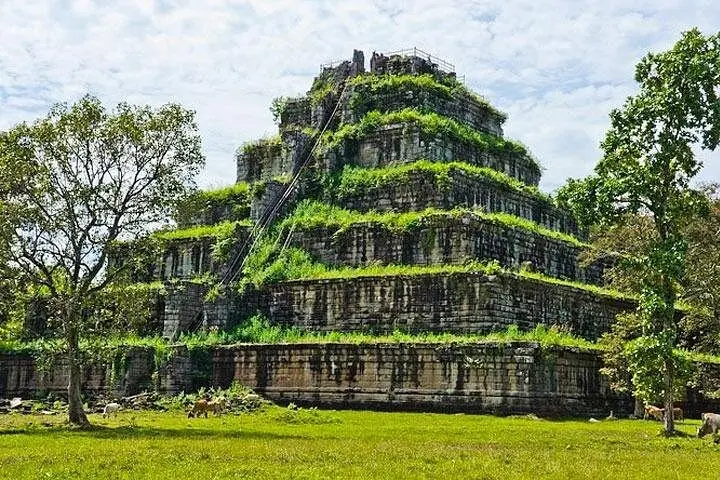
Beng Mealea was built in the 12th century in the Angkor Wat style and remains largely unrestored; its collapsed galleries and lichen-dark walls read like pages of Khmer history. Koh Ker, farther north, is an earlier 10th-century capital with abrupt pyramidal towers and a raw, exposed quality that marks a different political moment in the Khmer empire. Both sites are sandstone architecture carved from the same Cambrian deposits that produce fragile lintels, bas-reliefs and crumbling blocks.
Cultural echoes are constant: French explorers first mapped these ruins in the 19th century, and the surrounding countryside later played a role in Cambodia’s turbulent 20th-century history. Local communities still practice rice cultivation and traditional crafts along the route, offering brief glimpses of village life.
Practical side: expect an 8-hour day with 1–2 hours driving each way depending on road conditions. Admission fees and small donations are typically paid on site; bring cash. Trails are uneven—sturdy shoes, sun protection and plenty of water are non-negotiable. Respect areas that are closed for safety, follow your guide, and plan to arrive early to avoid heat and mid-day crowds. The trip is ideal for travelers who want raw archaeological atmosphere rather than restored monuments.
No — admission to Beng Mealea and Koh Ker is not included in most join-in tours; you usually pay on arrival with cash.
Expect 1–2 hours driving depending on traffic and road conditions; the full excursion is typically an 8-hour day with hotel pickup.
Yes — the tour is rated easy, but uneven ground and short climbs make sturdy shoes and supervision advisable for young children and mobility-limited guests.
Yes — tours usually allow free time to wander key galleries, but always follow your guide’s timing and safety directions.
Angkor Dynasty Travel operates guided outdoor trips and adventures with an emphasis on safety, stewardship, and memorable experiences.
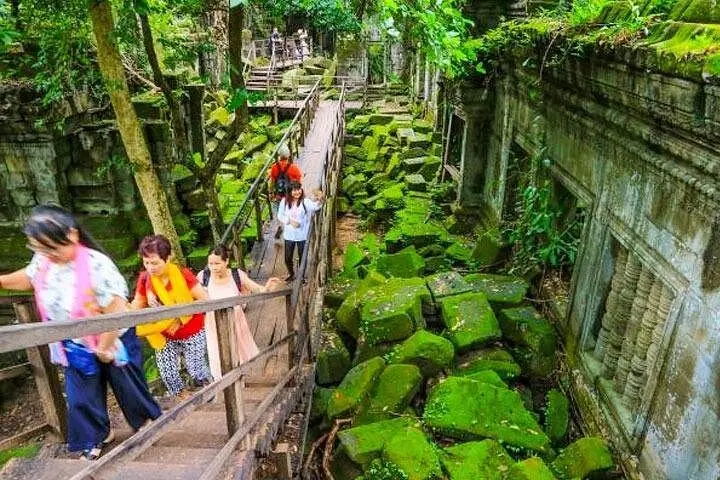
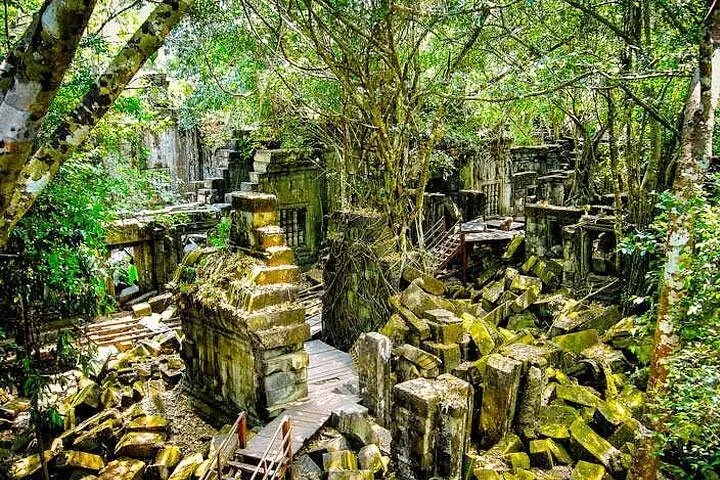

Morning dust lifts off the highway as the minivan turns inland, and the landscape changes from irrigated rice paddies to scrubby forest that seems to be reclaiming stone. By the time the guide drops you at Beng Mealea, stones and roots have already staged a quiet takeover—tower blocks topple into piles that dare you to climb and explore.
Morning dust lifts off the highway as the minivan turns inland, and the landscape changes from irrigated rice paddies to scrubby forest that seems to be reclaiming stone. By the time the guide drops you at Beng Mealea, stones and roots have already staged a quiet takeover—tower blocks topple into piles that dare you to climb and explore.
Beng Mealea was built in the 12th century in the Angkor Wat style and remains largely unrestored; its collapsed galleries and lichen-dark walls read like pages of Khmer history. Koh Ker, farther north, is an earlier 10th-century capital with abrupt pyramidal towers and a raw, exposed quality that marks a different political moment in the Khmer empire. Both sites are sandstone architecture carved from the same Cambrian deposits that produce fragile lintels, bas-reliefs and crumbling blocks.
Cultural echoes are constant: French explorers first mapped these ruins in the 19th century, and the surrounding countryside later played a role in Cambodia’s turbulent 20th-century history. Local communities still practice rice cultivation and traditional crafts along the route, offering brief glimpses of village life.
Practical side: expect an 8-hour day with 1–2 hours driving each way depending on road conditions. Admission fees and small donations are typically paid on site; bring cash. Trails are uneven—sturdy shoes, sun protection and plenty of water are non-negotiable. Respect areas that are closed for safety, follow your guide, and plan to arrive early to avoid heat and mid-day crowds. The trip is ideal for travelers who want raw archaeological atmosphere rather than restored monuments.