THE ADVENTURE COLLECTIVE® · Independent discovery and booking for outdoor travel

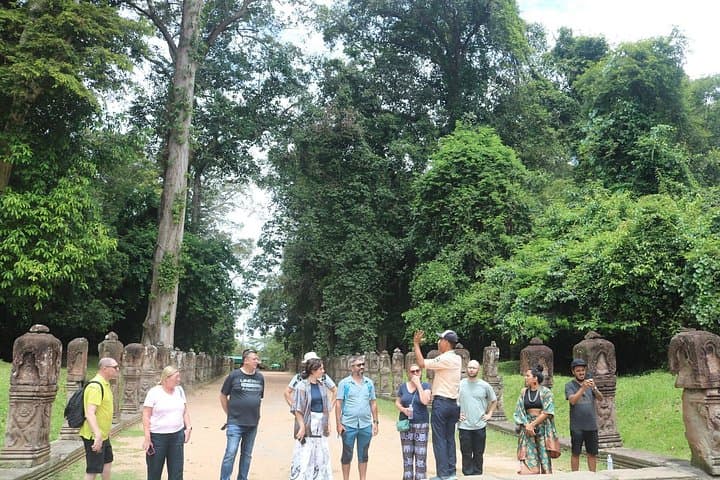
Venture beyond Angkor’s crowds to Koh Ker’s stepped pyramid and the root-entwined galleries of Boeng Mealea. This off-grid day trip pairs a scenic country drive with hands-on temple exploration and rich Khmer history.
Venture beyond Angkor’s crowds to Koh Ker’s stepped pyramid and the root-entwined galleries of Boeng Mealea. This off-grid day trip pairs a scenic country drive with hands-on temple exploration and rich Khmer history.
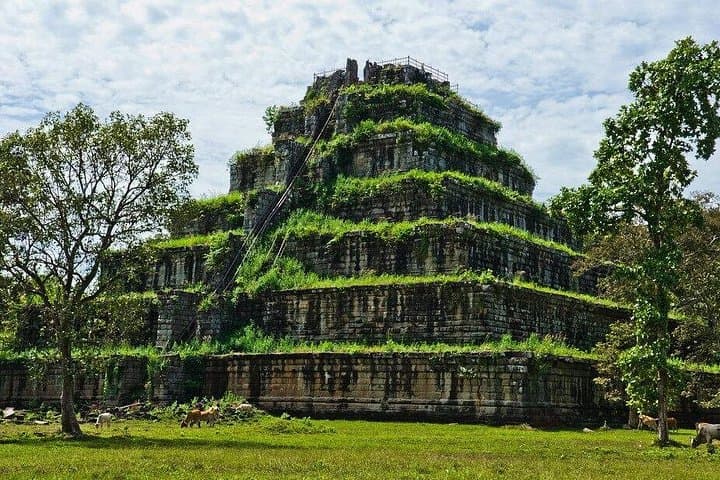
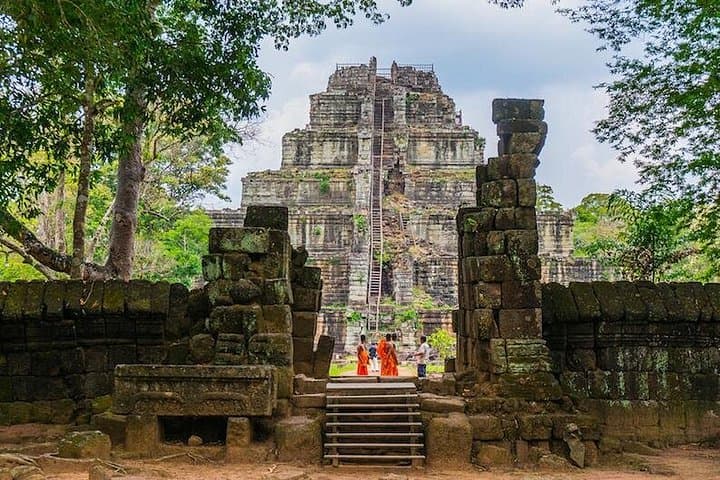
Morning light slices across rice paddies as your van threads narrow dirt roads out of Siem Reap and into Cambodia’s quieter north. After roughly two-and-a-half hours you arrive at Koh Ker, where a 10th‑century stepped pyramid rises like a deliberate mistake in the forest—a seven-tiered temple mountain about 30 meters high that demands a short, steep climb and rewards you with a wide, wind-pressed view over the plain.
Verified experiences and guided adventures in the surrounding area.
Operated by Journey Cambodia · Siem Reap, Siem Reap Province
Morning light slices across rice paddies as your van threads narrow dirt roads out of Siem Reap and into Cambodia’s quieter north. After roughly two-and-a-half hours you arrive at Koh Ker, where a 10th‑century stepped pyramid rises like a deliberate mistake in the forest—a seven-tiered temple mountain about 30 meters high that demands a short, steep climb and rewards you with a wide, wind-pressed view over the plain.
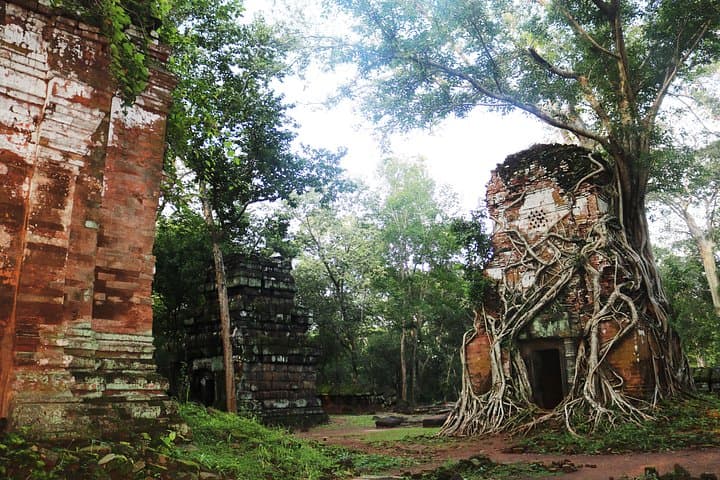
Koh Ker was briefly the Khmer capital under Jayavarman IV; its sandstone blocks carry weathered carvings and the red hue of Prasat Krahom. Nearby Prasat Pram wears strangler figs like armor, roots threading through lintels and lending a deliberate chaos to the geometry of stone.
After lunch, the trip continues to Boeng Mealea, a vast, partly collapsed complex bypassed by mass tourism and recently cleared of wartime hazards. Here galleries and doorways are half-swallowed by roots, and the single central tower and concentric enclosures echo Angkor Wat at a quieter, more tactile scale—where every step is an encounter with the slow work of nature reclaiming architecture.
Expect uneven footing, dusty access tracks, and occasional mud in the rains. The guide handles permits and the drive, but you’ll want closed, grippy shoes, full water, sun and insect protection, and modest clothing that covers shoulders and knees. Entrance fees are typically paid on the day. This is an eight-hour, low‑impact day trip that pairs cultural depth with hands-on exploration: temples to read with your hands and countryside to feel underfoot.
The transfer takes about 2–2.5 hours each way, depending on traffic and road conditions.
Koh Ker entrance fee is listed as included in the tour inclusions; small additional fees may be paid on the day at some sites—confirm with your guide.
Yes—it's rated easy, but uneven steps and some climbing are required; mobility limitations should be discussed when booking.
Sites are visited with a guide on this tour for navigation, local history, and permit handling, but some areas allow self-paced exploration under guide supervision.
Journey Cambodia operates guided outdoor trips and adventures with an emphasis on safety, stewardship, and memorable experiences.
Morning light slices across rice paddies as your van threads narrow dirt roads out of Siem Reap and into Cambodia’s quieter north. After roughly two-and-a-half hours you arrive at Koh Ker, where a 10th‑century stepped pyramid rises like a deliberate mistake in the forest—a seven-tiered temple mountain about 30 meters high that demands a short, steep climb and rewards you with a wide, wind-pressed view over the plain.
Morning light slices across rice paddies as your van threads narrow dirt roads out of Siem Reap and into Cambodia’s quieter north. After roughly two-and-a-half hours you arrive at Koh Ker, where a 10th‑century stepped pyramid rises like a deliberate mistake in the forest—a seven-tiered temple mountain about 30 meters high that demands a short, steep climb and rewards you with a wide, wind-pressed view over the plain.
Koh Ker was briefly the Khmer capital under Jayavarman IV; its sandstone blocks carry weathered carvings and the red hue of Prasat Krahom. Nearby Prasat Pram wears strangler figs like armor, roots threading through lintels and lending a deliberate chaos to the geometry of stone.
After lunch, the trip continues to Boeng Mealea, a vast, partly collapsed complex bypassed by mass tourism and recently cleared of wartime hazards. Here galleries and doorways are half-swallowed by roots, and the single central tower and concentric enclosures echo Angkor Wat at a quieter, more tactile scale—where every step is an encounter with the slow work of nature reclaiming architecture.
Expect uneven footing, dusty access tracks, and occasional mud in the rains. The guide handles permits and the drive, but you’ll want closed, grippy shoes, full water, sun and insect protection, and modest clothing that covers shoulders and knees. Entrance fees are typically paid on the day. This is an eight-hour, low‑impact day trip that pairs cultural depth with hands-on exploration: temples to read with your hands and countryside to feel underfoot.