THE ADVENTURE COLLECTIVE® · Independent discovery and booking for outdoor travel

Spend six hours circling Koh Samui’s most recognisable sights—from the towering Big Buddha to the ribald Hin Ta and Hin Yai rock formations and the solemn Wat Khunaram. This half‑day tour pairs cultural stops with natural viewpoints for a practical island primer.
Spend six hours circling Koh Samui’s most recognisable sights—from the towering Big Buddha to the ribald Hin Ta and Hin Yai rock formations and the solemn Wat Khunaram. This half‑day tour pairs cultural stops with natural viewpoints for a practical island primer.
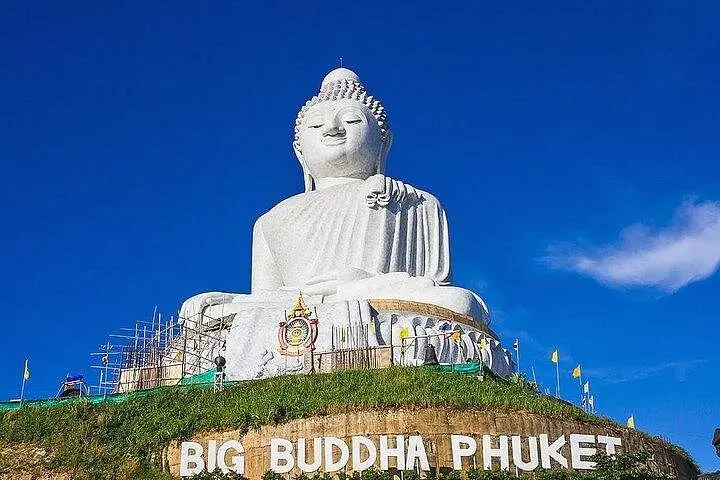
You arrive by minivan to the foot of a 12‑metre gilded silhouette—Big Buddha—its calm gaze turning the morning glare into a soft halo over the Gulf of Thailand. The sea smells of salt and coconut; tuk‑tuks hum and vendors rearrange trays of jasmine garlands. This half‑day loop around Koh Samui moves with a local rhythm: a short climb for a panoramic lookout, a quick stop to laugh at wind‑shaped rocks, then a quiet, slightly awkward moment before the glass case housing the island’s famed mummified monk.
Verified experiences and guided adventures in the surrounding area.
Operated by Travel Asia Experiences · Bophut, Surat Thani
You arrive by minivan to the foot of a 12‑metre gilded silhouette—Big Buddha—its calm gaze turning the morning glare into a soft halo over the Gulf of Thailand. The sea smells of salt and coconut; tuk‑tuks hum and vendors rearrange trays of jasmine garlands. This half‑day loop around Koh Samui moves with a local rhythm: a short climb for a panoramic lookout, a quick stop to laugh at wind‑shaped rocks, then a quiet, slightly awkward moment before the glass case housing the island’s famed mummified monk.
The island is compact but layered. Geologically, Samui is a hunk of granite and sandstone shoved up by tectonics and slowly shaped by tropical weathering; the rounded outcrops at Hin Ta and Hin Yai are the weathered punctuation of that process. Historically, fishing and coconut plantations defined island life until the 1970s and ’80s when tourism remade coasts such as Chaweng into busy strips of hotels and seafood stalls. Local culture still threads through the tour: Buddhist temples perform daily rituals, small shrines dot roadside curves, and the names—Wat Phra Yai, Wat Khunaram, Na Muang—tell a story of devotion, practical belief and island identity.
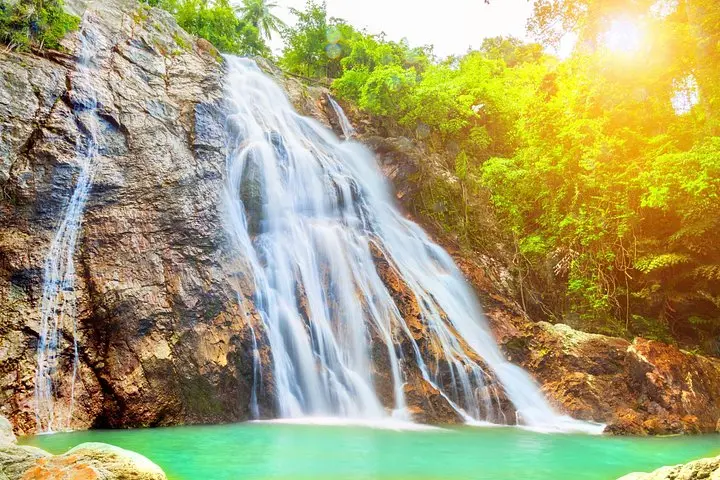
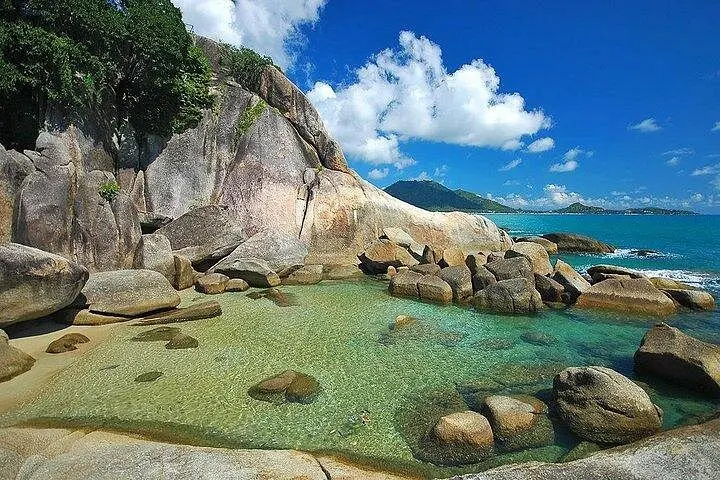
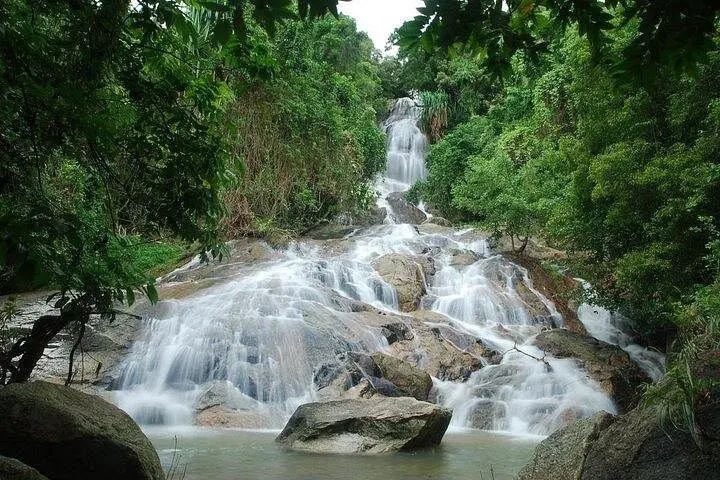
The itinerary is efficient: Big Buddha’s plaza and causeway; a drive-by glimpse of Chaweng’s palm‑lined crescent; the cheeky natural sculptures of Hin Ta and Hin Yai; Wat Khunaram and the preserved body of Luang Pho Daeng; and a stroll to Lad Koh (Lad Ko) viewpoint before cooling off near Na Muang waterfall.
Practicalities matter on a coastal half‑day: wear modest clothing for temple visits (shoulders and knees covered), slip‑resistant shoes for wet rock at Na Muang, and bring cash for small entrance donations and street food. The tour is rated easy—short walks, mostly paved or well‑maintained tracks—but humidity can turn a short climb into sweaty work, so hydrate and pace yourself. Photographers will find contrast everywhere: the burnished gold of temple statues, the rounded silhouettes of Hin Ta/Hin Yai against blue sea, and the deep green pool beneath Na Muang’s cascade. Time your visit early to avoid mid‑day heat and the busiest coach arrivals.
For travelers wanting a quick, culturally textured sample of Koh Samui, this loop is practical and evocative: a mix of religious architecture, goofy geology, and a reminder that even small islands hold both quiet corners and popular stages. Plan for 6 hours, expect easy walking with a few slippery steps, and leave room in your schedule for a late lunch in Bophut or Chaweng to extend the island’s flavors after the tour ends.
The tour runs approximately 6 hours, typically starting mid‑morning and returning to your pickup point in the afternoon.
Admission fees mentioned on the itinerary are generally included; small donations or optional offerings at temples are not included.
Yes — free door‑to‑door pickup is offered within a 3 km radius of Ko Samui city center; confirm pickup details 24 hours in advance by phone.
Yes — the tour is suitable for families and infants must sit on an adult’s lap; light walking is involved.
Dress modestly—no sleeveless tops or short shorts. A sarong or shawl is a convenient option for quick coverage.
Stops focus on viewpoints and cultural sites; while beaches are visible, the schedule does not include a dedicated swimming stop.
Travel Asia Experiences operates guided outdoor trips and adventures with an emphasis on safety, stewardship, and memorable experiences.
You arrive by minivan to the foot of a 12‑metre gilded silhouette—Big Buddha—its calm gaze turning the morning glare into a soft halo over the Gulf of Thailand. The sea smells of salt and coconut; tuk‑tuks hum and vendors rearrange trays of jasmine garlands. This half‑day loop around Koh Samui moves with a local rhythm: a short climb for a panoramic lookout, a quick stop to laugh at wind‑shaped rocks, then a quiet, slightly awkward moment before the glass case housing the island’s famed mummified monk.
You arrive by minivan to the foot of a 12‑metre gilded silhouette—Big Buddha—its calm gaze turning the morning glare into a soft halo over the Gulf of Thailand. The sea smells of salt and coconut; tuk‑tuks hum and vendors rearrange trays of jasmine garlands. This half‑day loop around Koh Samui moves with a local rhythm: a short climb for a panoramic lookout, a quick stop to laugh at wind‑shaped rocks, then a quiet, slightly awkward moment before the glass case housing the island’s famed mummified monk.
The island is compact but layered. Geologically, Samui is a hunk of granite and sandstone shoved up by tectonics and slowly shaped by tropical weathering; the rounded outcrops at Hin Ta and Hin Yai are the weathered punctuation of that process. Historically, fishing and coconut plantations defined island life until the 1970s and ’80s when tourism remade coasts such as Chaweng into busy strips of hotels and seafood stalls. Local culture still threads through the tour: Buddhist temples perform daily rituals, small shrines dot roadside curves, and the names—Wat Phra Yai, Wat Khunaram, Na Muang—tell a story of devotion, practical belief and island identity.
The itinerary is efficient: Big Buddha’s plaza and causeway; a drive-by glimpse of Chaweng’s palm‑lined crescent; the cheeky natural sculptures of Hin Ta and Hin Yai; Wat Khunaram and the preserved body of Luang Pho Daeng; and a stroll to Lad Koh (Lad Ko) viewpoint before cooling off near Na Muang waterfall.
Practicalities matter on a coastal half‑day: wear modest clothing for temple visits (shoulders and knees covered), slip‑resistant shoes for wet rock at Na Muang, and bring cash for small entrance donations and street food. The tour is rated easy—short walks, mostly paved or well‑maintained tracks—but humidity can turn a short climb into sweaty work, so hydrate and pace yourself. Photographers will find contrast everywhere: the burnished gold of temple statues, the rounded silhouettes of Hin Ta/Hin Yai against blue sea, and the deep green pool beneath Na Muang’s cascade. Time your visit early to avoid mid‑day heat and the busiest coach arrivals.
For travelers wanting a quick, culturally textured sample of Koh Samui, this loop is practical and evocative: a mix of religious architecture, goofy geology, and a reminder that even small islands hold both quiet corners and popular stages. Plan for 6 hours, expect easy walking with a few slippery steps, and leave room in your schedule for a late lunch in Bophut or Chaweng to extend the island’s flavors after the tour ends.