THE ADVENTURE COLLECTIVE® · Independent discovery and booking for outdoor travel

Take a five-hour loop around Koh Samui to see Big Buddha, the cheeky Hin Ta and Hin Yai rocks, and the shaded pools of Namuang Waterfall. This accessible tour blends coastal panoramas, temple culture, and short jungle walks—ideal for a first-day island overview.
Take a five-hour loop around Koh Samui to see Big Buddha, the cheeky Hin Ta and Hin Yai rocks, and the shaded pools of Namuang Waterfall. This accessible tour blends coastal panoramas, temple culture, and short jungle walks—ideal for a first-day island overview.
Morning spreads like warm tea across Chaweng’s crescent beach as the minivan eases away from the strip and the island reveals itself — a stitched line of palms, white sand and limestone outcrops edging the Gulf of Thailand. On a five-hour round-island sightseeing tour you move at a rhythm that lets the sea and the jungle take turns leading: the coastline dares you with panoramic bays while the interior pushes back with shaded climbs and waterfalls.
Verified experiences and guided adventures in the surrounding area.
Operated by Tour East Thailand · Ko Samui, Surat Thani
Morning spreads like warm tea across Chaweng’s crescent beach as the minivan eases away from the strip and the island reveals itself — a stitched line of palms, white sand and limestone outcrops edging the Gulf of Thailand. On a five-hour round-island sightseeing tour you move at a rhythm that lets the sea and the jungle take turns leading: the coastline dares you with panoramic bays while the interior pushes back with shaded climbs and waterfalls.
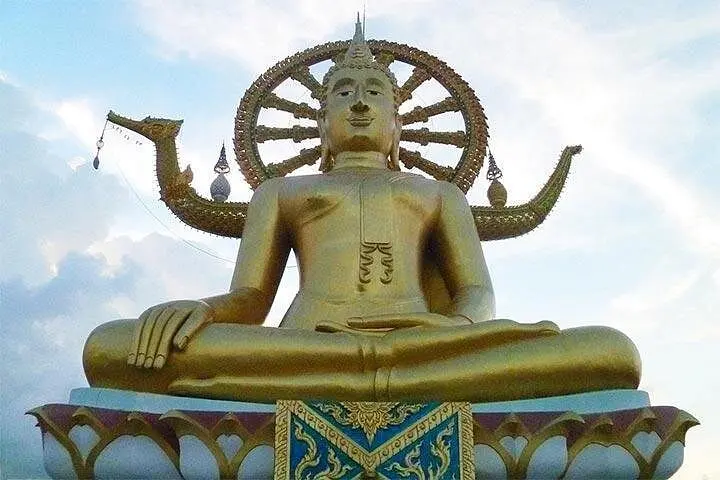
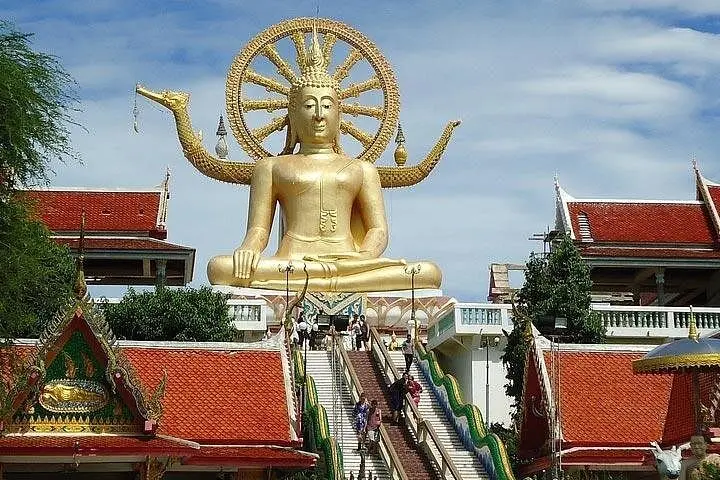
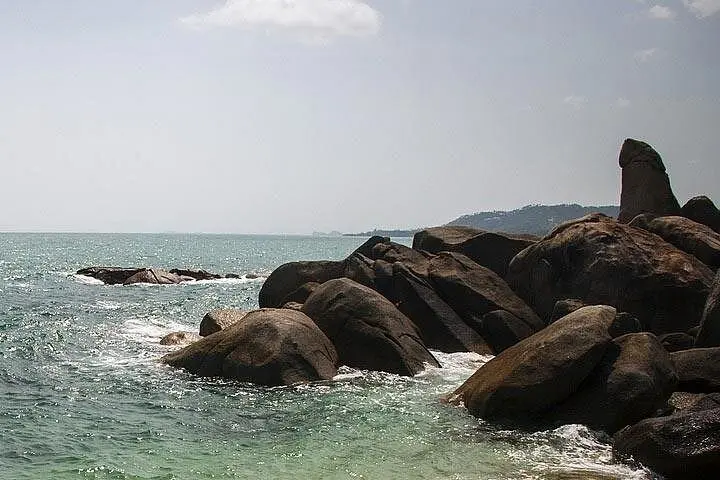
The circuit around Koh Samui is short — roughly a 50 km drive if you follow the coastal ring road — but richly varied. Stops include Wat Phra Yai’s 15-meter Big Buddha on the north coast, where the statue sits on a promontory watching fishing boats come and go; the comic, oddly intimate Grandpa and Grandma Rocks (Hin Ta and Hin Yai) on the southeast shore; and Namuang Waterfall inland, where a short, sometimes-slick trail and a flight of steps lead to layered pools set into volcanic rock.
Koh Samui’s landscape is geologically young: granite and sandstone offshore, with pockets of volcanic rock inland forming the island’s small ridges. Historically the island grew from rubber and coconut plantations into a resort economy over the last half-century; temples and fishing villages still keep character in places like Nathon and Bophut’s Fisherman’s Village, where Chinese-Thai merchant houses line narrow lanes.
Culture here is straightforward and practical: dress modestly at temples, offer a small donation if you take photos at shrines, and always remove shoes where required. Locals are accustomed to tourism but appreciate patience during busy pickup windows — tour operators typically confirm pickup the evening before.
Practical guidance: wear grippy walking shoes for short waterfall approaches and temple steps; bring a refillable water bottle and sun protection; carry small bills for temple contributions and snacks. The tour is low-impact physically — most stops require brief walks under 500 meters — but humidity and stairs can make those stretches feel like a workout.
Timing matters. Start in the morning to avoid midday crowds and the monsoon squalls that can arrive in the rainy season. If you want photos, aim for early light at coastal viewpoints and late afternoon at Big Buddha when the light wraps around the statue. Finally, be mindful of the environment: stick to paths around waterfall pools, avoid feeding wildlife, and support local vendors rather than single-use plastic sellers.
This is a sightseeing loop designed for travelers who want a compact introduction to Samui: a handful of iconic stops, a stretch of coastline that begs to be photographed, and a few moments under jungle canopy where the island’s quieter rhythms are easy to find.
Yes—pickup and drop-off are included for hotels in Bo Phut, Chaweng and nearby areas; exact pickup time is confirmed the evening before the tour.
The tour lasts about five hours and typically includes Big Buddha, Hin Ta/Hin Yai, Namuang waterfall and a drive-through of Nathon and other coastal viewpoints.
No—lunch is not listed as included; there are local restaurants and stalls at several stops if you want to buy food.
Many temple sites have steps and uneven surfaces; full wheelchair access is limited—contact the operator for specific accessibility needs.
Modest clothing that covers shoulders and knees is required at most temples; bring a wrap if visiting in light tourist clothing.
Full refund available if you cancel at least 24 hours before departure; tours may be canceled for bad weather.
Tour East Thailand operates guided outdoor trips and adventures with an emphasis on safety, stewardship, and memorable experiences.
Morning spreads like warm tea across Chaweng’s crescent beach as the minivan eases away from the strip and the island reveals itself — a stitched line of palms, white sand and limestone outcrops edging the Gulf of Thailand. On a five-hour round-island sightseeing tour you move at a rhythm that lets the sea and the jungle take turns leading: the coastline dares you with panoramic bays while the interior pushes back with shaded climbs and waterfalls.
Morning spreads like warm tea across Chaweng’s crescent beach as the minivan eases away from the strip and the island reveals itself — a stitched line of palms, white sand and limestone outcrops edging the Gulf of Thailand. On a five-hour round-island sightseeing tour you move at a rhythm that lets the sea and the jungle take turns leading: the coastline dares you with panoramic bays while the interior pushes back with shaded climbs and waterfalls.
The circuit around Koh Samui is short — roughly a 50 km drive if you follow the coastal ring road — but richly varied. Stops include Wat Phra Yai’s 15-meter Big Buddha on the north coast, where the statue sits on a promontory watching fishing boats come and go; the comic, oddly intimate Grandpa and Grandma Rocks (Hin Ta and Hin Yai) on the southeast shore; and Namuang Waterfall inland, where a short, sometimes-slick trail and a flight of steps lead to layered pools set into volcanic rock.
Koh Samui’s landscape is geologically young: granite and sandstone offshore, with pockets of volcanic rock inland forming the island’s small ridges. Historically the island grew from rubber and coconut plantations into a resort economy over the last half-century; temples and fishing villages still keep character in places like Nathon and Bophut’s Fisherman’s Village, where Chinese-Thai merchant houses line narrow lanes.
Culture here is straightforward and practical: dress modestly at temples, offer a small donation if you take photos at shrines, and always remove shoes where required. Locals are accustomed to tourism but appreciate patience during busy pickup windows — tour operators typically confirm pickup the evening before.
Practical guidance: wear grippy walking shoes for short waterfall approaches and temple steps; bring a refillable water bottle and sun protection; carry small bills for temple contributions and snacks. The tour is low-impact physically — most stops require brief walks under 500 meters — but humidity and stairs can make those stretches feel like a workout.
Timing matters. Start in the morning to avoid midday crowds and the monsoon squalls that can arrive in the rainy season. If you want photos, aim for early light at coastal viewpoints and late afternoon at Big Buddha when the light wraps around the statue. Finally, be mindful of the environment: stick to paths around waterfall pools, avoid feeding wildlife, and support local vendors rather than single-use plastic sellers.
This is a sightseeing loop designed for travelers who want a compact introduction to Samui: a handful of iconic stops, a stretch of coastline that begs to be photographed, and a few moments under jungle canopy where the island’s quieter rhythms are easy to find.