THE ADVENTURE COLLECTIVE® · Independent discovery and booking for outdoor travel

Trek the original Kokoda route in a guided 8-day crossing of the Owen Stanley Range. Expect steep ridgelines, river crossings and WWII battlefield sites, with local PNG teams providing logistics and food.
Trek the original Kokoda route in a guided 8-day crossing of the Owen Stanley Range. Expect steep ridgelines, river crossings and WWII battlefield sites, with local PNG teams providing logistics and food.
Dawn finds you on a ridge, humid air pressing against your face as the rainforest seems to breathe and push you forward. The track drops into a river valley, climbs again in a wet, root-choked scramble and opens onto the Isurava memorial where silence holds the ridge like an old watch. This is the Kokoda Trail: raw, direct and stubbornly physical.
Verified experiences and guided adventures in the surrounding area.
Operated by Adventure Kokoda · Kokoda, Oro Province
Dawn finds you on a ridge, humid air pressing against your face as the rainforest seems to breathe and push you forward. The track drops into a river valley, climbs again in a wet, root-choked scramble and opens onto the Isurava memorial where silence holds the ridge like an old watch. This is the Kokoda Trail: raw, direct and stubbornly physical.
The route itself follows the original WWII supply line across the Owen Stanley Range—roughly 96 km (about 60 miles) of single-track, river crossings and steep ridge climbs. Geologically the range is steep, weathered volcanic and metamorphic bedrock; heavy tropical rainfall turns clay soils into fast mud and floods creek beds. Culturally the trail threads Koiari and Orokaiva villages where local carriers, guides and cooks remain central to every trek; Bomana War Cemetery and the Isurava Memorial anchor the route in wartime history and daily remembrance.
Expect full-days of hiking with repeated ascents of several hundred metres; total elevation change over the trek is measured in thousands of metres rather than a single summit. Terrain alternates muddy steps, narrow ridge-lines and swollen creek crossings; footwear with aggressive tread and ankle support matters. Hydration, steady pacing and early starts are practical necessities—heat builds fast and rain can arrive suddenly.
Operated treks typically include local PNG trek leaders, a medic, satellite and VHF communications, village campsites, cooked meals and a permit. Plan for limited creature comforts, respect village protocols, carry lightweight waterproof layers and a good headlamp. The reward is elemental: tough days, vivid jungle light and a deep sense of place that comes from walking history on its own ground.
Yes—official Kokoda Track Authority permits are required and typically arranged by the operator and included in guided packages.
It’s challenging—expect sustained steep climbs, muddy terrain and long days; prior multi-day hiking experience and good fitness are strongly recommended.
Accommodation is basic village or campsite tents with PNG-guides erecting and dismantling tents; pre- and post-trek hotel stays in Port Moresby are usually included.
The drier months (roughly May–October) offer more stable tracks and fewer leech and mosquito issues, but rain can still occur year-round.
Adventure Kokoda operates guided outdoor trips and adventures with an emphasis on safety, stewardship, and memorable experiences.
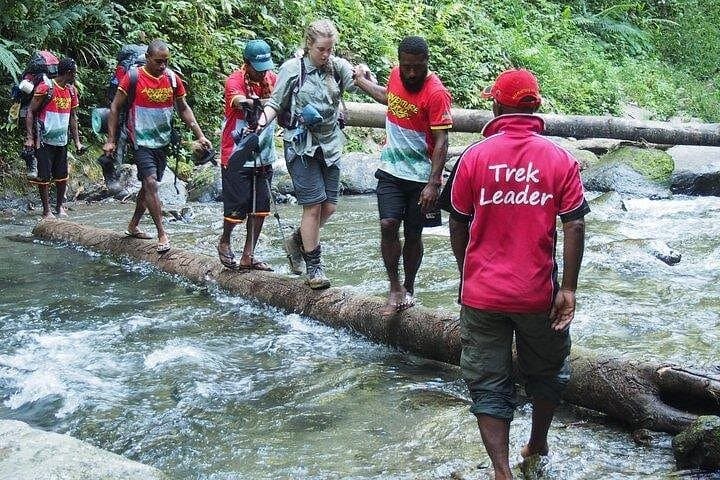


Dawn finds you on a ridge, humid air pressing against your face as the rainforest seems to breathe and push you forward. The track drops into a river valley, climbs again in a wet, root-choked scramble and opens onto the Isurava memorial where silence holds the ridge like an old watch. This is the Kokoda Trail: raw, direct and stubbornly physical.
Dawn finds you on a ridge, humid air pressing against your face as the rainforest seems to breathe and push you forward. The track drops into a river valley, climbs again in a wet, root-choked scramble and opens onto the Isurava memorial where silence holds the ridge like an old watch. This is the Kokoda Trail: raw, direct and stubbornly physical.
The route itself follows the original WWII supply line across the Owen Stanley Range—roughly 96 km (about 60 miles) of single-track, river crossings and steep ridge climbs. Geologically the range is steep, weathered volcanic and metamorphic bedrock; heavy tropical rainfall turns clay soils into fast mud and floods creek beds. Culturally the trail threads Koiari and Orokaiva villages where local carriers, guides and cooks remain central to every trek; Bomana War Cemetery and the Isurava Memorial anchor the route in wartime history and daily remembrance.
Expect full-days of hiking with repeated ascents of several hundred metres; total elevation change over the trek is measured in thousands of metres rather than a single summit. Terrain alternates muddy steps, narrow ridge-lines and swollen creek crossings; footwear with aggressive tread and ankle support matters. Hydration, steady pacing and early starts are practical necessities—heat builds fast and rain can arrive suddenly.
Operated treks typically include local PNG trek leaders, a medic, satellite and VHF communications, village campsites, cooked meals and a permit. Plan for limited creature comforts, respect village protocols, carry lightweight waterproof layers and a good headlamp. The reward is elemental: tough days, vivid jungle light and a deep sense of place that comes from walking history on its own ground.