THE ADVENTURE COLLECTIVE® · Independent discovery and booking for outdoor travel

Board a small RHIB from Keauhou Harbor for a focused, 50–80 minute night snorkel that brings manta rays close using underwater lights. Confident swimmers only; free reride offered if no sightings.
Board a small RHIB from Keauhou Harbor for a focused, 50–80 minute night snorkel that brings manta rays close using underwater lights. Confident swimmers only; free reride offered if no sightings.
The harbor light blinks as you step toward the boat and the ocean breathes in the dark — warm air carrying salt and the distant hum of Kona. Before long the zodiac slips from Keauhou Harbor into glassy black water; beneath the surface, beams from dive lights cut columns into the night and attract plankton that, in turn, draw the mantas.
Verified experiences and guided adventures in the surrounding area.
Operated by My Kona Adventures · Kailua-Kona, HI
The harbor light blinks as you step toward the boat and the ocean breathes in the dark — warm air carrying salt and the distant hum of Kona. Before long the zodiac slips from Keauhou Harbor into glassy black water; beneath the surface, beams from dive lights cut columns into the night and attract plankton that, in turn, draw the mantas.
Manta rays here are part of a living coastal system shaped by lava flows and reef channels. Ancient pā (coastal settlements) and historic fishing practices dot the Kona shore, and modern guides combine local knowledge with marine science to place lights and platforms where mantas feed. Geologically, the west-facing reefs are built on relatively young volcanic substrate with pockets of coral that support the plankton blooms mantas follow.
Expect a compact, focused experience: a 23-foot RHIB carries up to 11 guests, with roughly 25–30 minutes in the water and a full tour window of about 50–80 minutes. Guides use underwater lights to concentrate plankton and encourage mantas to glide close; these animals are curious, not aggressive, and will often flip and fly inches above your mask.
Practical notes: arrive 20 minutes early to Keauhou Harbor (check-in at the Outrigger Kona sign), be a confident swimmer comfortable treading water in the dark, and pack a towel and warm layers for the return. Masks, snorkels and optional wetsuits are available; stow valuables in your vehicle before boarding. If you don’t see mantas, the operator offers a free reride rather than a refund — a policy that keeps groups small and wildlife interactions low-impact.
Timing your trip around calm seas and a moonless sky improves sightings and keeps conditions steady. Respect the animals’ space, listen to briefings, and this short, nocturnal swim becomes one of Kona’s most memorable marine encounters.
No; sightings depend on conditions. If there are no sightings this operator offers a free reride rather than a refund.
Expect about 25–30 minutes of actual water time within a roughly 50–80 minute tour window including boat transfers.
Yes, participants must be able to swim and tread water independently and be comfortable snorkeling at night.
Wetsuits are optional and available to rent at check-in, but you may bring your own for better fit and comfort.
My Kona Adventures operates guided outdoor trips and adventures with an emphasis on safety, stewardship, and memorable experiences.
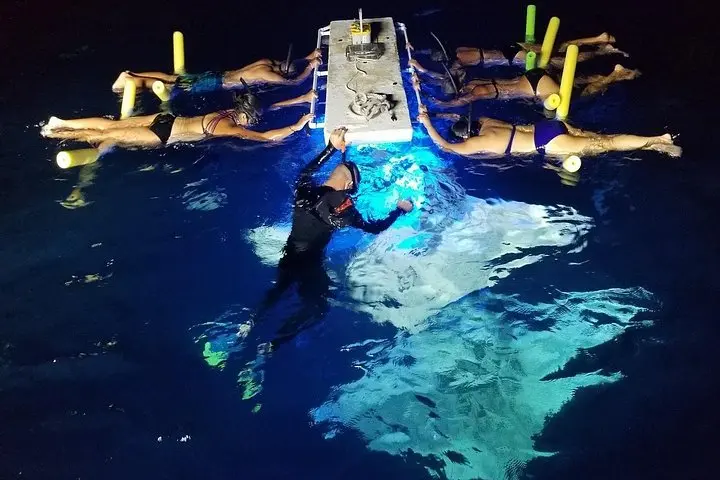
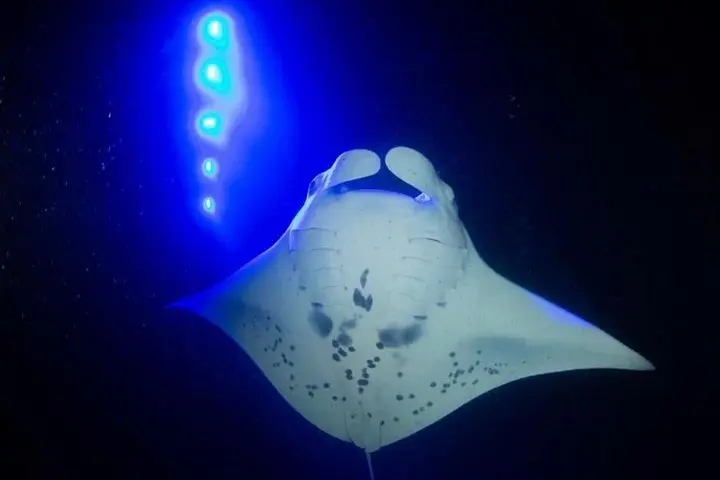
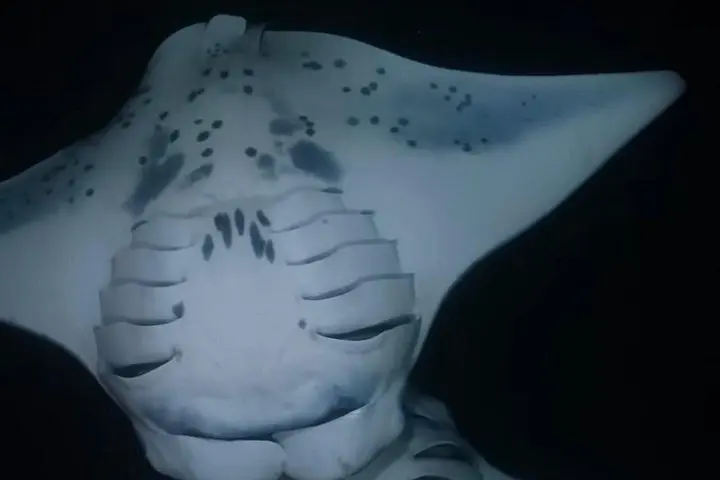
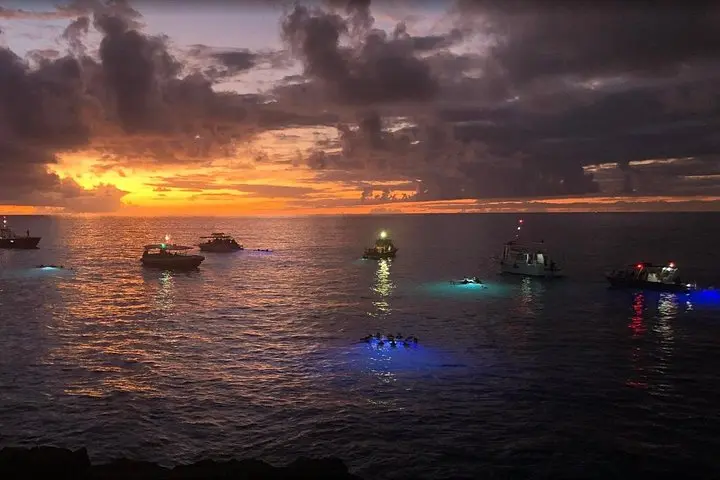
The harbor light blinks as you step toward the boat and the ocean breathes in the dark — warm air carrying salt and the distant hum of Kona. Before long the zodiac slips from Keauhou Harbor into glassy black water; beneath the surface, beams from dive lights cut columns into the night and attract plankton that, in turn, draw the mantas.
The harbor light blinks as you step toward the boat and the ocean breathes in the dark — warm air carrying salt and the distant hum of Kona. Before long the zodiac slips from Keauhou Harbor into glassy black water; beneath the surface, beams from dive lights cut columns into the night and attract plankton that, in turn, draw the mantas.
Manta rays here are part of a living coastal system shaped by lava flows and reef channels. Ancient pā (coastal settlements) and historic fishing practices dot the Kona shore, and modern guides combine local knowledge with marine science to place lights and platforms where mantas feed. Geologically, the west-facing reefs are built on relatively young volcanic substrate with pockets of coral that support the plankton blooms mantas follow.
Expect a compact, focused experience: a 23-foot RHIB carries up to 11 guests, with roughly 25–30 minutes in the water and a full tour window of about 50–80 minutes. Guides use underwater lights to concentrate plankton and encourage mantas to glide close; these animals are curious, not aggressive, and will often flip and fly inches above your mask.
Practical notes: arrive 20 minutes early to Keauhou Harbor (check-in at the Outrigger Kona sign), be a confident swimmer comfortable treading water in the dark, and pack a towel and warm layers for the return. Masks, snorkels and optional wetsuits are available; stow valuables in your vehicle before boarding. If you don’t see mantas, the operator offers a free reride rather than a refund — a policy that keeps groups small and wildlife interactions low-impact.
Timing your trip around calm seas and a moonless sky improves sightings and keeps conditions steady. Respect the animals’ space, listen to briefings, and this short, nocturnal swim becomes one of Kona’s most memorable marine encounters.