THE ADVENTURE COLLECTIVE® · Independent discovery and booking for outdoor travel

Float face-down beneath a slab of light as giant mantas wheel and feed in Kona’s warm night seas. This small-boat, 12-person experience from Honokohau Harbor prioritizes active viewing areas and a close but respectful encounter with these gentle giants.
Float face-down beneath a slab of light as giant mantas wheel and feed in Kona’s warm night seas. This small-boat, 12-person experience from Honokohau Harbor prioritizes active viewing areas and a close but respectful encounter with these gentle giants.
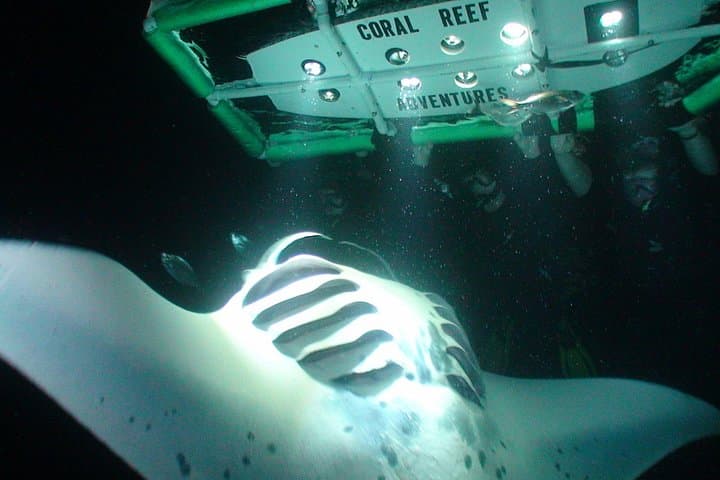
The boat slips away from the Honokohau Small Boat Harbor and the shorelights thin into a low, golden smear. Out here the ocean takes over—cool air, the thud of an outboard, and a single bright LED board casting a pancake of light into the black. That rectangle of illumination pulls plankton like a magnet, and as the raft of tiny organisms gathers, the sea answers: long-winged manta rays begin to appear, gliding into the light with slow, deliberate turns.
Verified experiences and guided adventures in the surrounding area.
Operated by Coral Reef Snorkel Adventures · Kailua-Kona, Hawaii
The boat slips away from the Honokohau Small Boat Harbor and the shorelights thin into a low, golden smear. Out here the ocean takes over—cool air, the thud of an outboard, and a single bright LED board casting a pancake of light into the black. That rectangle of illumination pulls plankton like a magnet, and as the raft of tiny organisms gathers, the sea answers: long-winged manta rays begin to appear, gliding into the light with slow, deliberate turns.
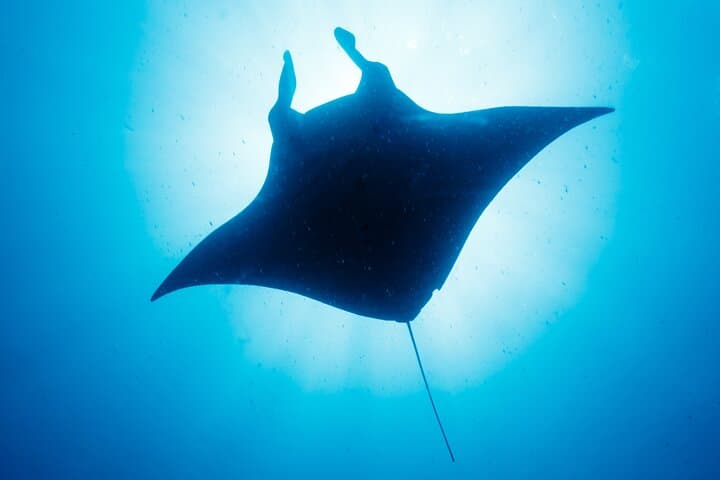
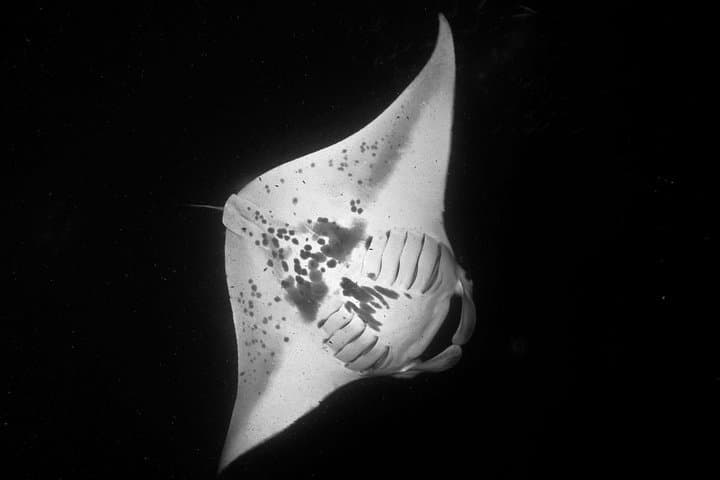
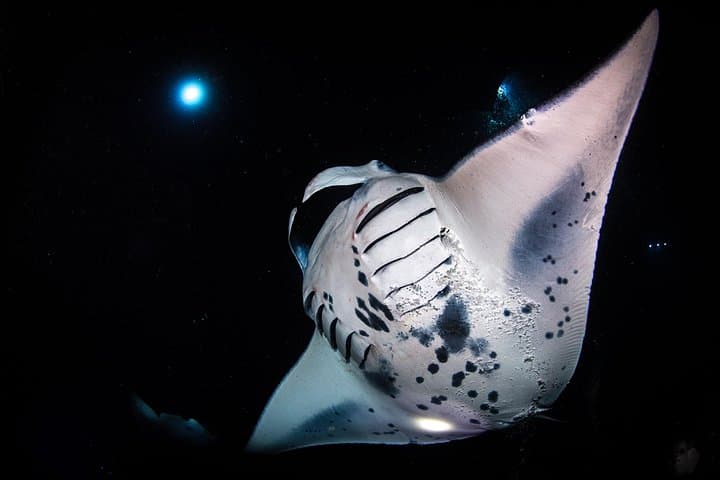
This is Kona’s nighttime show—wild mantas feeding inches below you, rolling and sifting through bioluminescent clouds. The species here can reach up to 16 feet across; they move with a quiet authority that makes the ocean feel alive in an almost theatrical way. Local guides have honed the route and timing for decades, using reef contours and current cones to find the same congregation sites that mantas have frequented for generations.
Geologically, you’re off the southwest flank of the island where lava flows drop to deep water and currents funnel nutrient-rich upwellings toward the coast. Historically, these waters supported native fishing communities and remain culturally important—light and water were used by Kāhuna (practitioners) to read sea conditions and know where life gathered.
The operator runs small groups—maximum 12 passengers—to chase the best activity patches rather than stay parked next to a big boat. Your guide tows the lightboard to concentrate feeding zones, and you hold on at the surface, face in the dark, watching mantas barrel roll and feed in an almost choreographed pattern. Expect non-alcoholic refreshments and snacks; bring a towel and a warm cover-up for the ride back.
Practical details: the trip runs about 90 minutes on the water, and you must be able to swim without a flotation device. Water temps hover roughly mid-70s°F in summer and dip into lower 70s in winter—shortie wetsuits or rashguards are common. There’s a strict 280 lb weight limit and some physical health restrictions (spinal, neck, cardiac concerns). Plan to arrive 15 minutes early and follow harbor signage to the north-side boat-launch pavilion.
For a successful night snorkel: go with a small-boat operator (more active areas, less crowding), listen to your guide’s briefing, and avoid touching mantas or entering their path. Cameras are fine—use wide-angle lenses and steady low-light settings—but don’t use flash. If weather cancels, operators generally refund with 24-hour notice; winter swells and trade winds increase cancellations, so keep flexibility in your itinerary.
This is a brief, intense encounter: equal parts marine biology lesson and primal spectacle. You come away with salt still drying on your skin and a new sense of how the ocean arranges its own nightly life.
The entire activity is about 90 minutes on the water, plus brief check-in at Honokohau Harbor—plan for roughly 2 hours total including boarding.
Kona’s night manta encounters are highly consistent—operators report more than 90% success—though sightings can’t be guaranteed and are weather-dependent.
Wetsuits are not required in summer but a shortie wetsuit or rashguard is recommended for cooler nights and added comfort.
No—participants must be able to swim without a flotation device and be comfortable in open water at night.
Yes—use wide-angle, low-light settings and no flash; follow guide instructions to avoid disturbing the mantas.
For a full refund cancel at least 24 hours before departure; operators may cancel for weather or insufficient passengers and issue refunds.
Coral Reef Snorkel Adventures operates guided outdoor trips and adventures with an emphasis on safety, stewardship, and memorable experiences.
The boat slips away from the Honokohau Small Boat Harbor and the shorelights thin into a low, golden smear. Out here the ocean takes over—cool air, the thud of an outboard, and a single bright LED board casting a pancake of light into the black. That rectangle of illumination pulls plankton like a magnet, and as the raft of tiny organisms gathers, the sea answers: long-winged manta rays begin to appear, gliding into the light with slow, deliberate turns.
The boat slips away from the Honokohau Small Boat Harbor and the shorelights thin into a low, golden smear. Out here the ocean takes over—cool air, the thud of an outboard, and a single bright LED board casting a pancake of light into the black. That rectangle of illumination pulls plankton like a magnet, and as the raft of tiny organisms gathers, the sea answers: long-winged manta rays begin to appear, gliding into the light with slow, deliberate turns.
This is Kona’s nighttime show—wild mantas feeding inches below you, rolling and sifting through bioluminescent clouds. The species here can reach up to 16 feet across; they move with a quiet authority that makes the ocean feel alive in an almost theatrical way. Local guides have honed the route and timing for decades, using reef contours and current cones to find the same congregation sites that mantas have frequented for generations.
Geologically, you’re off the southwest flank of the island where lava flows drop to deep water and currents funnel nutrient-rich upwellings toward the coast. Historically, these waters supported native fishing communities and remain culturally important—light and water were used by Kāhuna (practitioners) to read sea conditions and know where life gathered.
The operator runs small groups—maximum 12 passengers—to chase the best activity patches rather than stay parked next to a big boat. Your guide tows the lightboard to concentrate feeding zones, and you hold on at the surface, face in the dark, watching mantas barrel roll and feed in an almost choreographed pattern. Expect non-alcoholic refreshments and snacks; bring a towel and a warm cover-up for the ride back.
Practical details: the trip runs about 90 minutes on the water, and you must be able to swim without a flotation device. Water temps hover roughly mid-70s°F in summer and dip into lower 70s in winter—shortie wetsuits or rashguards are common. There’s a strict 280 lb weight limit and some physical health restrictions (spinal, neck, cardiac concerns). Plan to arrive 15 minutes early and follow harbor signage to the north-side boat-launch pavilion.
For a successful night snorkel: go with a small-boat operator (more active areas, less crowding), listen to your guide’s briefing, and avoid touching mantas or entering their path. Cameras are fine—use wide-angle lenses and steady low-light settings—but don’t use flash. If weather cancels, operators generally refund with 24-hour notice; winter swells and trade winds increase cancellations, so keep flexibility in your itinerary.
This is a brief, intense encounter: equal parts marine biology lesson and primal spectacle. You come away with salt still drying on your skin and a new sense of how the ocean arranges its own nightly life.