THE ADVENTURE COLLECTIVE® · Independent discovery and booking for outdoor travel

A single-day escape from Munich that pairs a short, atmospheric hike through the Zauberwald and Hintersee with a classic boat ride across Königssee to St. Bartholomew’s Church. Expect glacier-carved scenery, steep limestone walls, and practical, well-paced guiding.
A single-day escape from Munich that pairs a short, atmospheric hike through the Zauberwald and Hintersee with a classic boat ride across Königssee to St. Bartholomew’s Church. Expect glacier-carved scenery, steep limestone walls, and practical, well-paced guiding.
The morning bus peels away from Munich’s train station and trades city glass for slate peaks; by midmorning the roofs shrink, farms open into hay-scented meadows and the road threads into the Berchtesgaden valley. You step out at a parking spit beneath steep, forested ridges and walk into the Zauberwald — a compact, old-growth patch where a half-hour hike folds into a larger day of water and rock. The Zauberwald’s paths run on loam and root, low and immediate; the air tastes like spruce and river.
Verified experiences and guided adventures in the surrounding area.
Operated by Kaytrip · Schönau am Königssee, Bavaria
The morning bus peels away from Munich’s train station and trades city glass for slate peaks; by midmorning the roofs shrink, farms open into hay-scented meadows and the road threads into the Berchtesgaden valley. You step out at a parking spit beneath steep, forested ridges and walk into the Zauberwald — a compact, old-growth patch where a half-hour hike folds into a larger day of water and rock. The Zauberwald’s paths run on loam and root, low and immediate; the air tastes like spruce and river.
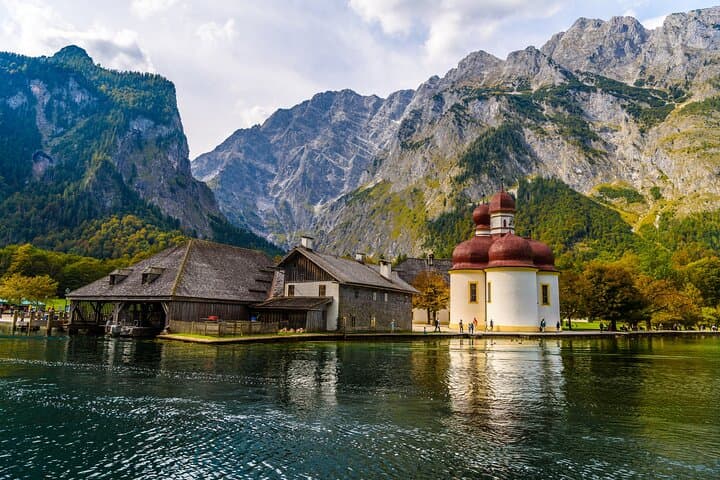
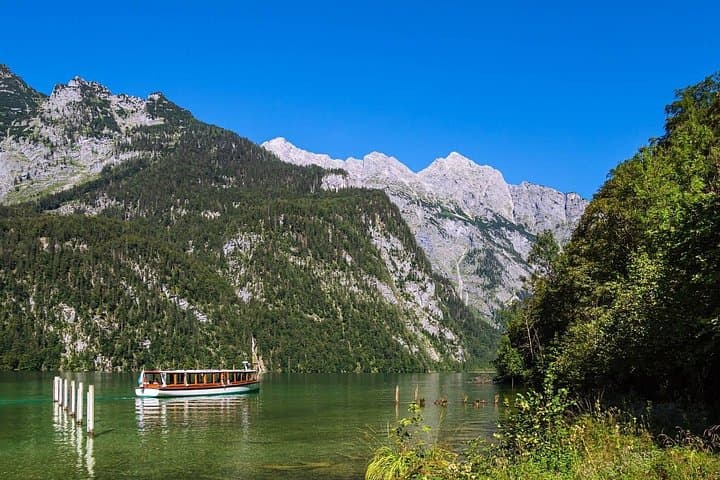
This corner of Bavaria reads like a geological field guide. Königssee is a fjord-like trough gouged by retreating Alpine glaciers; the water keeps a deep, cool green because of suspended rock flour and the lake’s narrow basin, hemmed on three sides by vertical walls. The Watzmann massif looms to the east, its jagged skyline a reminder of relentless uplift and erosion. Human history here is layered too: St. Bartholomew's Church, with its red onion domes, marks centuries of pilgrimage and local fishing culture, while the nearby town networks grew around salt extraction and alpine transit routes.
The tour’s rhythm is simple and efficient. A guided, well-paced 30–40 minute walk through the Zauberwald and along Hintersee lets you feel the national park at human pace — expect roughly 1.5–3 km of trail with 50–120 m of elevation change on firm but occasionally wet terrain. Then the lake: a scheduled boat runs across Königssee to the small peninsula where St. Bartholomew's sits—an atmospheric 30–45 minute glide, often accompanied by the boatman’s echo demonstration against limestone walls.
Culturally, the area is quietly Bavarian: mountain farms, salt-era hamlets, and a tourism ethos that favors restraint over spectacle. Guides tend to fold in local lore—how ice shaped the shoreline, and how the Jennerbahn cable car serves as the winter backup if boats don’t operate.
Practical guide: this is an all-day outing of about 10 hours including travel from Munich. Wear sturdy walking shoes with good tread; trails can be muddy after rain. Bring a waterproof layer, snacks, and a small daypack—there’s limited time at lakeside cafés and the boat accepts limited cash/cards. If you’re prone to motion sickness, plan meds; the boat is steady but the narrow lake can be choppy in wind. Weather can close the boat service, and the operator may swap a Jenner cable-car visit in winter — book at least four days ahead and allow 3–4 extra travel hours if you have connections. For photographers, keep polarizing filters ready: the angle of sun radically alters the lake’s color. The tour is accessible to most walkers, but guests with serious spinal, heart, or pregnancy concerns should seek medical advice; guides set the pace to include most travelers.
The guided walk is short—about 30–40 minutes, roughly 1.5–3 km with minimal elevation gain (50–120 m) on well-marked trails.
Yes, the boat ticket to St. Bartholomew’s is included when the service is running; in winter the operator may substitute a Jennerbahn cable-car visit if boats are canceled.
You can upgrade to a private tour for a personalized itinerary and pickup options—request this at booking and confirm pickup eligibility within 5 km of Munich Central Station.
Children are welcome but infants must sit on an adult’s lap; the operator notes some restrictions for older adults and requires a signed statement for participants over 70 if unaccompanied.
Bring water and snacks; there’s a short lunch window near the lake where cafés accept cards and cash but choice and time are limited.
If weather forces a cancellation, the operator may offer the Jennerbahn cable-car as an alternative (own expense) or adjust the itinerary; refunds follow the tour’s cancellation policy.
Kaytrip operates guided outdoor trips and adventures with an emphasis on safety, stewardship, and memorable experiences.
The morning bus peels away from Munich’s train station and trades city glass for slate peaks; by midmorning the roofs shrink, farms open into hay-scented meadows and the road threads into the Berchtesgaden valley. You step out at a parking spit beneath steep, forested ridges and walk into the Zauberwald — a compact, old-growth patch where a half-hour hike folds into a larger day of water and rock. The Zauberwald’s paths run on loam and root, low and immediate; the air tastes like spruce and river.
The morning bus peels away from Munich’s train station and trades city glass for slate peaks; by midmorning the roofs shrink, farms open into hay-scented meadows and the road threads into the Berchtesgaden valley. You step out at a parking spit beneath steep, forested ridges and walk into the Zauberwald — a compact, old-growth patch where a half-hour hike folds into a larger day of water and rock. The Zauberwald’s paths run on loam and root, low and immediate; the air tastes like spruce and river.
This corner of Bavaria reads like a geological field guide. Königssee is a fjord-like trough gouged by retreating Alpine glaciers; the water keeps a deep, cool green because of suspended rock flour and the lake’s narrow basin, hemmed on three sides by vertical walls. The Watzmann massif looms to the east, its jagged skyline a reminder of relentless uplift and erosion. Human history here is layered too: St. Bartholomew's Church, with its red onion domes, marks centuries of pilgrimage and local fishing culture, while the nearby town networks grew around salt extraction and alpine transit routes.
The tour’s rhythm is simple and efficient. A guided, well-paced 30–40 minute walk through the Zauberwald and along Hintersee lets you feel the national park at human pace — expect roughly 1.5–3 km of trail with 50–120 m of elevation change on firm but occasionally wet terrain. Then the lake: a scheduled boat runs across Königssee to the small peninsula where St. Bartholomew's sits—an atmospheric 30–45 minute glide, often accompanied by the boatman’s echo demonstration against limestone walls.
Culturally, the area is quietly Bavarian: mountain farms, salt-era hamlets, and a tourism ethos that favors restraint over spectacle. Guides tend to fold in local lore—how ice shaped the shoreline, and how the Jennerbahn cable car serves as the winter backup if boats don’t operate.
Practical guide: this is an all-day outing of about 10 hours including travel from Munich. Wear sturdy walking shoes with good tread; trails can be muddy after rain. Bring a waterproof layer, snacks, and a small daypack—there’s limited time at lakeside cafés and the boat accepts limited cash/cards. If you’re prone to motion sickness, plan meds; the boat is steady but the narrow lake can be choppy in wind. Weather can close the boat service, and the operator may swap a Jenner cable-car visit in winter — book at least four days ahead and allow 3–4 extra travel hours if you have connections. For photographers, keep polarizing filters ready: the angle of sun radically alters the lake’s color. The tour is accessible to most walkers, but guests with serious spinal, heart, or pregnancy concerns should seek medical advice; guides set the pace to include most travelers.