THE ADVENTURE COLLECTIVE® · Independent discovery and booking for outdoor travel

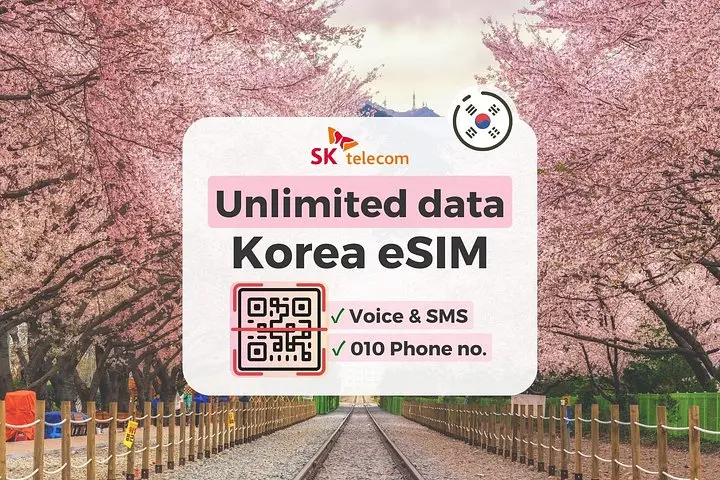
Skip the SIM counter and get instant local data across South Korea. This SKT eSIM delivers unlimited LTE, hotspot sharing, and post-arrival passport verification for easy, reliable connectivity.
Skip the SIM counter and get instant local data across South Korea. This SKT eSIM delivers unlimited LTE, hotspot sharing, and post-arrival passport verification for easy, reliable connectivity.
Arriving at Incheon, you step into a wide, efficient airport and within an hour your phone can be on Korea’s fastest LTE network — no plastic SIM, no counter line. The eSIM hands you immediate connectivity, city maps, and the kind of constant data that turns travel friction into fluid movement.
Verified experiences and guided adventures in the surrounding area.
Operated by Link Korea · Seoul, Seoul
Arriving at Incheon, you step into a wide, efficient airport and within an hour your phone can be on Korea’s fastest LTE network — no plastic SIM, no counter line. The eSIM hands you immediate connectivity, city maps, and the kind of constant data that turns travel friction into fluid movement.
South Korea’s modern telecom story is short and fierce: rapid urbanization, fierce competition, and early adoption of mobile infrastructure have made SK Telecom a national backbone. That network spreads over a peninsula of volcanic peaks and low coastal plains, connecting Jeju’s basalt cliffs to Seoul’s glass-and-steel corridors.
Culture here moves fast — mobile payments, navigation, and translation apps are standard tools for exploring markets, museums, and subway lines. An SKT eSIM keeps you online for mapping to hidden hanok lanes, streaming transit announcements, and calling guesthouses when you arrive late.
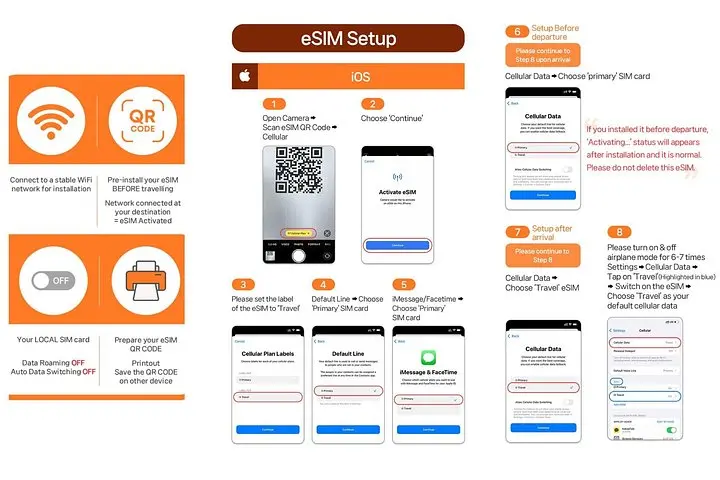
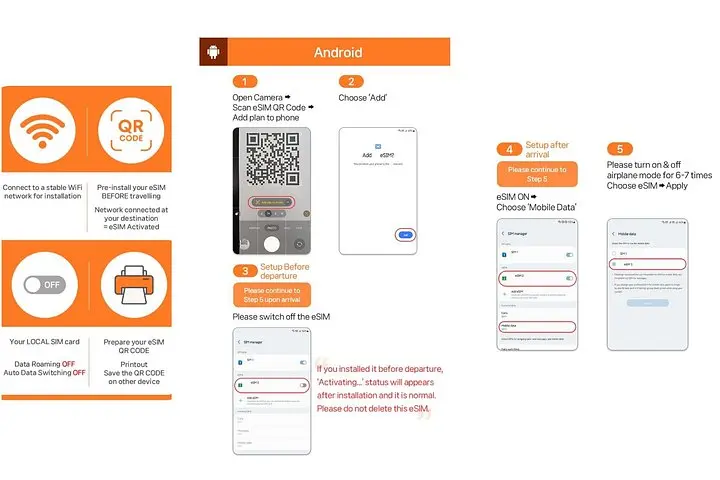
Practical guidance: purchase and activate within 60 days of booking, then verify your passport after landing (verification hours apply). The plan begins when you switch it on; hotspot sharing is available. Expect near-universal coverage in cities and strong reception on most highways; mountain valleys and very remote islands may be patchier.
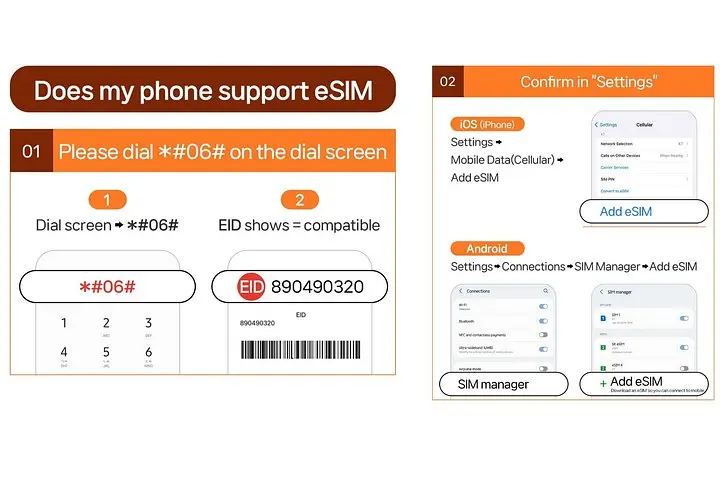
Bring a charged phone that supports eSIMs, keep your passport handy for verification, and monitor data-hungry apps during festivals and rush hours. With a few minutes of setup at the start of your trip, the eSIM removes a persistent travel headache — and leaves you free to move through Korea with reliable, local data at your fingertips.
The plan’s validity begins when you activate the eSIM; time is counted by 24-hour periods from activation (24 hours = 1 day).
Voice/SMS require passport verification after you land and connect to SKT; verification is offered daily between 08:00 and 22:00 and can only occur at least one hour after entry.
Yes — hotspot tethering is available, but keep an eye on battery and app data usage as tethering increases consumption.
Coverage includes all of South Korea including Jeju; urban areas and major highways have strong LTE coverage, though very remote valleys or small islets may be weaker.
Link Korea operates guided outdoor trips and adventures with an emphasis on safety, stewardship, and memorable experiences.
Arriving at Incheon, you step into a wide, efficient airport and within an hour your phone can be on Korea’s fastest LTE network — no plastic SIM, no counter line. The eSIM hands you immediate connectivity, city maps, and the kind of constant data that turns travel friction into fluid movement.
Arriving at Incheon, you step into a wide, efficient airport and within an hour your phone can be on Korea’s fastest LTE network — no plastic SIM, no counter line. The eSIM hands you immediate connectivity, city maps, and the kind of constant data that turns travel friction into fluid movement.
South Korea’s modern telecom story is short and fierce: rapid urbanization, fierce competition, and early adoption of mobile infrastructure have made SK Telecom a national backbone. That network spreads over a peninsula of volcanic peaks and low coastal plains, connecting Jeju’s basalt cliffs to Seoul’s glass-and-steel corridors.
Culture here moves fast — mobile payments, navigation, and translation apps are standard tools for exploring markets, museums, and subway lines. An SKT eSIM keeps you online for mapping to hidden hanok lanes, streaming transit announcements, and calling guesthouses when you arrive late.
Practical guidance: purchase and activate within 60 days of booking, then verify your passport after landing (verification hours apply). The plan begins when you switch it on; hotspot sharing is available. Expect near-universal coverage in cities and strong reception on most highways; mountain valleys and very remote islands may be patchier.
Bring a charged phone that supports eSIMs, keep your passport handy for verification, and monitor data-hungry apps during festivals and rush hours. With a few minutes of setup at the start of your trip, the eSIM removes a persistent travel headache — and leaves you free to move through Korea with reliable, local data at your fingertips.