THE ADVENTURE COLLECTIVE® · Independent discovery and booking for outdoor travel

Paddle quiet mangrove channels in one of South Africa’s most intact estuaries. This two-hour guided tour through Kosi Bay mixes wildlife viewing, Thonga cultural insights, and easy flat-water kayaking suitable for beginners.
Paddle quiet mangrove channels in one of South Africa’s most intact estuaries. This two-hour guided tour through Kosi Bay mixes wildlife viewing, Thonga cultural insights, and easy flat-water kayaking suitable for beginners.
You push off from a narrow sandbank and the estuary takes you—water dark as tea carrying the reflected limbs of five mangrove species. Birdsong stitches the silence as your guide leads the group through a maze of roots and slow-moving tide; every bend reveals a new calm pool, a fish kraal framed by poles, or a pair of marsh herons working the shallows.
Verified experiences and guided adventures in the surrounding area.
Operated by Safari And Surf · Kosi Bay, KwaZulu-Natal
You push off from a narrow sandbank and the estuary takes you—water dark as tea carrying the reflected limbs of five mangrove species. Birdsong stitches the silence as your guide leads the group through a maze of roots and slow-moving tide; every bend reveals a new calm pool, a fish kraal framed by poles, or a pair of marsh herons working the shallows.
Kosi Bay sits at the northern edge of KwaZulu-Natal, part of the greater iSimangaliso Wetland Park. The estuary’s shallow channels were formed by dune movement and tidal exchange, creating protected nursery grounds where Thonga communities have tended fish kraals for generations. Geologically young sand ridges and seasonal inlets shape the current patterns you’ll feel at the paddle.
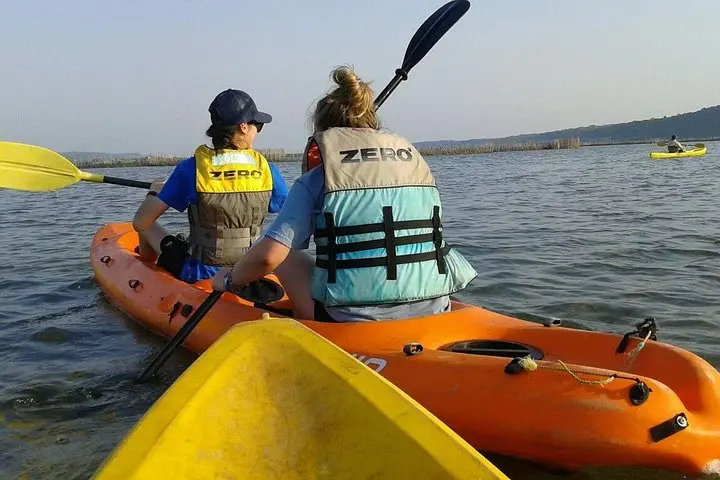
Culturally, trips here connect to local Thonga heritage—guides will point out traditional kraals and explain sustainable harvest practices. Practically, expect a relaxed two-hour guided loop: soft, stable sit-on-top kayaks, life jackets, and short carries between launch points. Water can be glassy in the morning and choppier as winds pick up; crocodiles inhabit the estuary fringes and guides know the safe channels.
Bring sun protection, a dry bag and a camera with a tether. Start early for cooler temperatures and peak bird activity. Stay with the guide, respect marked kraals, and keep noise low to avoid disturbing nesting birds and turtle tracks on nearby beaches. The reward is simple—close-up riverine wildlife, the smell of wet mangrove roots, and the unusual calm of a living estuary that still feels like undiscovered country.
No—this tour uses stable sit-on-top kayaks with a guided route suitable for first-timers; guides offer basic paddling instruction.
Nile crocodiles are present in parts of the estuary; reputable guides keep group routes in safe channels and will brief you on wildlife distances and behavior.
Light, quick-dry clothing, a hat, sunglasses with a strap, and water shoes; bring a light long-sleeve for sun protection and a small waterproof layer if wind is forecast.
Most travelers drive or arrange transfers to the Kosi Bay reserve area near Manguzi; the guide typically meets at a roadside point and directs you to safe parking and the launch.
Safari And Surf operates guided outdoor trips and adventures with an emphasis on safety, stewardship, and memorable experiences.
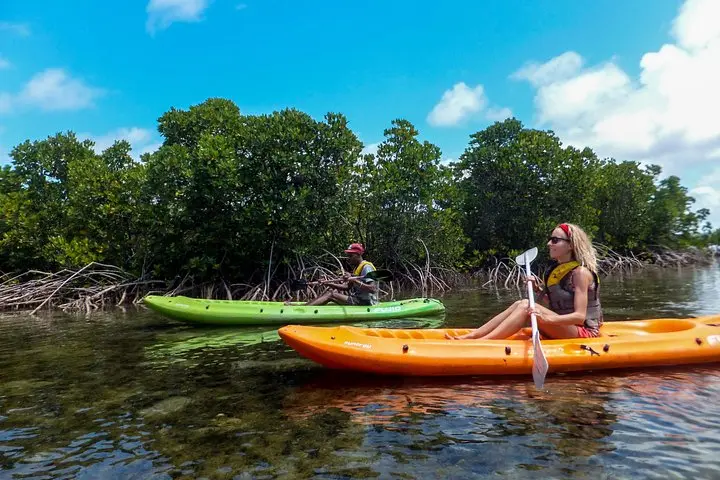
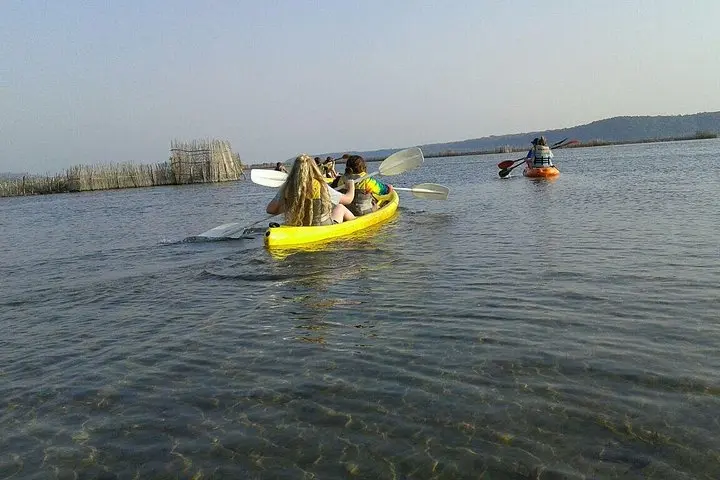
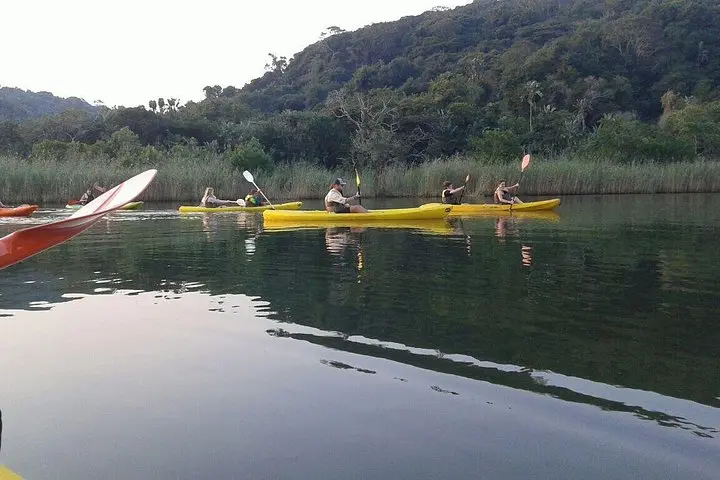
You push off from a narrow sandbank and the estuary takes you—water dark as tea carrying the reflected limbs of five mangrove species. Birdsong stitches the silence as your guide leads the group through a maze of roots and slow-moving tide; every bend reveals a new calm pool, a fish kraal framed by poles, or a pair of marsh herons working the shallows.
You push off from a narrow sandbank and the estuary takes you—water dark as tea carrying the reflected limbs of five mangrove species. Birdsong stitches the silence as your guide leads the group through a maze of roots and slow-moving tide; every bend reveals a new calm pool, a fish kraal framed by poles, or a pair of marsh herons working the shallows.
Kosi Bay sits at the northern edge of KwaZulu-Natal, part of the greater iSimangaliso Wetland Park. The estuary’s shallow channels were formed by dune movement and tidal exchange, creating protected nursery grounds where Thonga communities have tended fish kraals for generations. Geologically young sand ridges and seasonal inlets shape the current patterns you’ll feel at the paddle.
Culturally, trips here connect to local Thonga heritage—guides will point out traditional kraals and explain sustainable harvest practices. Practically, expect a relaxed two-hour guided loop: soft, stable sit-on-top kayaks, life jackets, and short carries between launch points. Water can be glassy in the morning and choppier as winds pick up; crocodiles inhabit the estuary fringes and guides know the safe channels.
Bring sun protection, a dry bag and a camera with a tether. Start early for cooler temperatures and peak bird activity. Stay with the guide, respect marked kraals, and keep noise low to avoid disturbing nesting birds and turtle tracks on nearby beaches. The reward is simple—close-up riverine wildlife, the smell of wet mangrove roots, and the unusual calm of a living estuary that still feels like undiscovered country.