THE ADVENTURE COLLECTIVE® · Independent discovery and booking for outdoor travel

Walk among towering cedars, centuries-old rituals and precise temple gardens on a private half-day tour of Koyasan. Visit Okunoin, Kongobuji and Garan with an English-speaking guide who explains history, temple life and hidden details.
Walk among towering cedars, centuries-old rituals and precise temple gardens on a private half-day tour of Koyasan. Visit Okunoin, Kongobuji and Garan with an English-speaking guide who explains history, temple life and hidden details.
You step off the bus into cool mountain air and the cedars of Koyasan lean like patient guardians, guiding you toward stone lanterns and moss-slick paths. The tour moves deliberately—first into Okunoin’s cathedral of graves where time feels measured in lantern light, then through Kongobuji’s ordered rock garden and the open courts of Garan where a pagoda pins the sky.
Verified experiences and guided adventures in the surrounding area.
Operated by Awesome tours · Koya, Wakayama Prefecture
You step off the bus into cool mountain air and the cedars of Koyasan lean like patient guardians, guiding you toward stone lanterns and moss-slick paths. The tour moves deliberately—first into Okunoin’s cathedral of graves where time feels measured in lantern light, then through Kongobuji’s ordered rock garden and the open courts of Garan where a pagoda pins the sky.
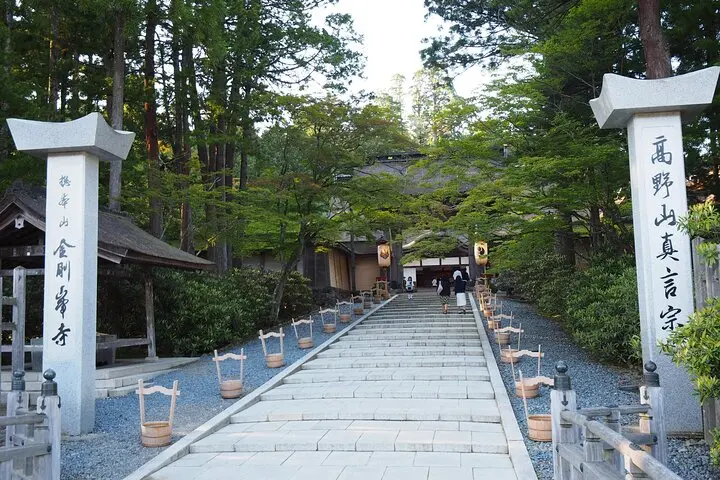
Koyasan was founded by Kobo Daishi (Kukai) in the early 9th century as the center of Shingon esoteric Buddhism; the landscape itself—volcanic highland carved by ancient uplift and erosion—frames a living monastic complex. Expect cultural touchpoints at every turn: Shojingu rituals in Okunoin, Banryutei’s rock formations in Kongobuji, and the Konpon Daito at Garan, each place reflecting temple life, aesthetic restraint, and centuries of pilgrimage.
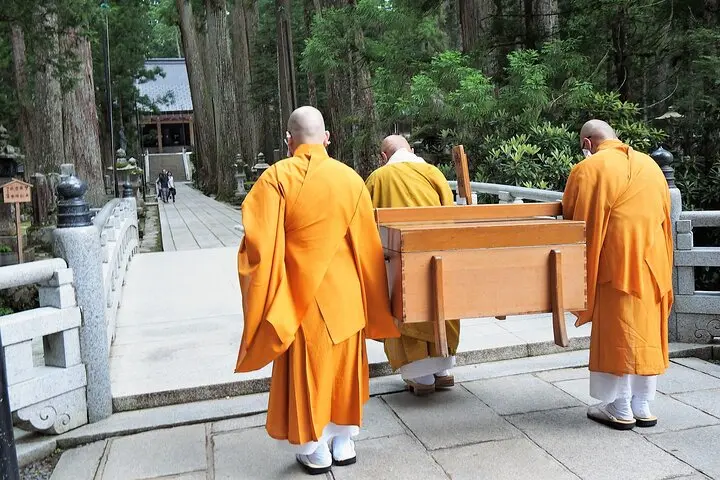
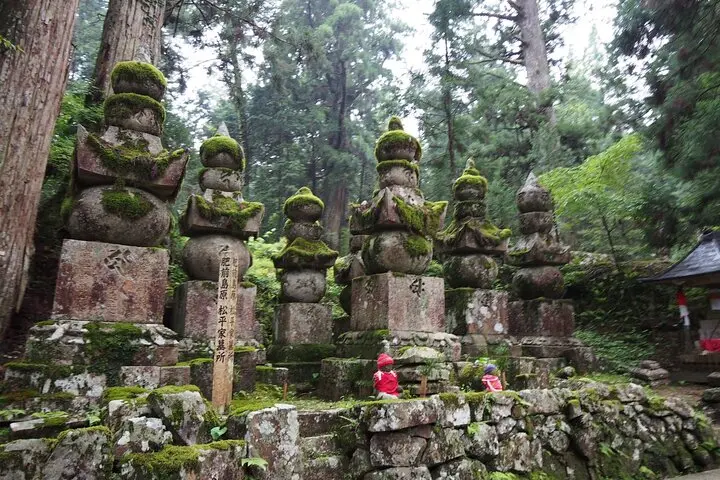
Local life here moves at a quiet, respectful pace—monks in training, temple kitchens preparing shojin ryori, and markers commemorating samurai and poets.
Practical guidance: this private, English-guided circuit covers roughly 3–4 miles of walking on paved and graveled paths with frequent stops for explanation, so wear sturdy shoes and bring a light waterproof layer. Photography is allowed in many areas but follow signs and guide direction; some rooms and rituals restrict cameras. Aim for morning or late afternoon light for the best atmosphere, carry cash for temple stamps and small donations, and leave bulky backpacks at your hotel or bus—narrow temple corridors reward a lighter pack.
The private tour is about 4 hours with 2–4 miles of walking on paved and gravel paths and some steps; the pace includes frequent stops for explanation.
Yes—certain temple rooms and rituals prohibit photography or entry; your guide will indicate where cameras or shoes must be removed.
The tour is rated easy and generally accessible, but Okunoin has uneven ground and steps—ask about alternative routes if mobility is limited.
Yes—the tour listing notes assistance with restaurant and taxi reservations and can provide local recommendations for shukubo (temple lodging) and shojin ryori.
Awesome tours operates guided outdoor trips and adventures with an emphasis on safety, stewardship, and memorable experiences.
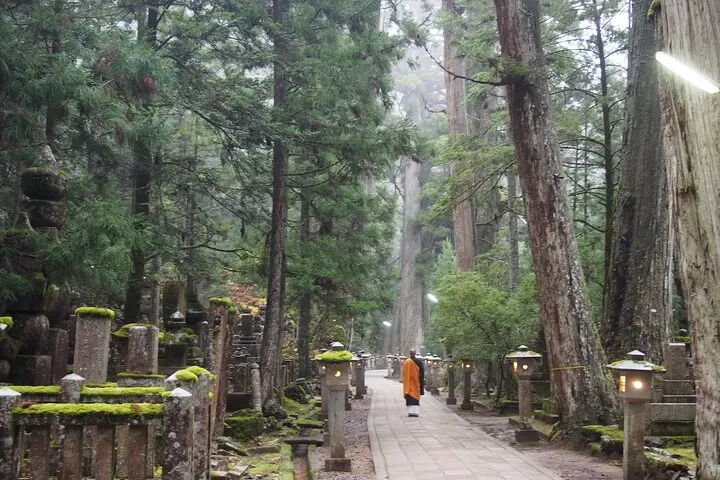
You step off the bus into cool mountain air and the cedars of Koyasan lean like patient guardians, guiding you toward stone lanterns and moss-slick paths. The tour moves deliberately—first into Okunoin’s cathedral of graves where time feels measured in lantern light, then through Kongobuji’s ordered rock garden and the open courts of Garan where a pagoda pins the sky.
You step off the bus into cool mountain air and the cedars of Koyasan lean like patient guardians, guiding you toward stone lanterns and moss-slick paths. The tour moves deliberately—first into Okunoin’s cathedral of graves where time feels measured in lantern light, then through Kongobuji’s ordered rock garden and the open courts of Garan where a pagoda pins the sky.
Koyasan was founded by Kobo Daishi (Kukai) in the early 9th century as the center of Shingon esoteric Buddhism; the landscape itself—volcanic highland carved by ancient uplift and erosion—frames a living monastic complex. Expect cultural touchpoints at every turn: Shojingu rituals in Okunoin, Banryutei’s rock formations in Kongobuji, and the Konpon Daito at Garan, each place reflecting temple life, aesthetic restraint, and centuries of pilgrimage.
Local life here moves at a quiet, respectful pace—monks in training, temple kitchens preparing shojin ryori, and markers commemorating samurai and poets.
Practical guidance: this private, English-guided circuit covers roughly 3–4 miles of walking on paved and graveled paths with frequent stops for explanation, so wear sturdy shoes and bring a light waterproof layer. Photography is allowed in many areas but follow signs and guide direction; some rooms and rituals restrict cameras. Aim for morning or late afternoon light for the best atmosphere, carry cash for temple stamps and small donations, and leave bulky backpacks at your hotel or bus—narrow temple corridors reward a lighter pack.