THE ADVENTURE COLLECTIVE® · Independent discovery and booking for outdoor travel

Climb the cobbled street to Kruja Castle for a compact, 5‑hour immersion in Skanderbeg’s stronghold, Ottoman-era bazaars, and living Albanian traditions—an accessible day trip from Tirana.
Climb the cobbled street to Kruja Castle for a compact, 5‑hour immersion in Skanderbeg’s stronghold, Ottoman-era bazaars, and living Albanian traditions—an accessible day trip from Tirana.
A low stone street climbs and breathes history as you approach Kruja Castle: the air carries dust from the cobbles, resin from scrub pines, and the distant hint of the Adriatic daring you to look beyond the ridge.
Verified experiences and guided adventures in the surrounding area.
Operated by Albania Explorer · Krujë, Durrës County
A low stone street climbs and breathes history as you approach Kruja Castle: the air carries dust from the cobbles, resin from scrub pines, and the distant hint of the Adriatic daring you to look beyond the ridge.
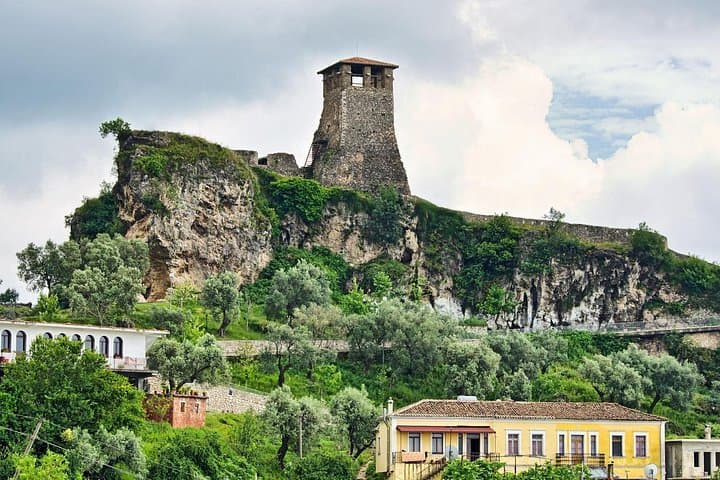
Perched roughly 1,000 meters above sea level, Kruja reads like an open-air chronicle of 15th‑century resistance. The castle was Skanderbeg’s stronghold against Ottoman incursions; inside, the Skanderbeg Museum curates armor, banners, and narratives that have shaped Albanian national memory. Geologically, the town sits on limestone outcrops that throw up narrow terraces and defensive viewpoints—the same rock that preserved the citadel through centuries of weather.
Culture here moves between the stone and the people: a Turkish-style old bazaar channels centuries of trade, while the Ethnographic Museum reconstructs domestic life from wooden tools to woven textiles. Local artisans still hammer metal and trade carved icons; buying a single piece helps keep those skills alive.
Practical guidance: the half-day itinerary runs about five hours and involves short uphill walks on uneven cobbles—sturdy shoes are non-negotiable. Summer heats quickly; bring water and sun protection. The bazaar operates on cash, so carry small bills for souvenirs and snacks. Photography is straightforward but mindful: some religious sites request respectful dress.
Timing matters—early morning or late afternoon light sharpens the castle’s battlements and thins day-trip crowds from Tirana. For travelers who want cultural depth with modest exertion, Kruja delivers layered history, compact geology, and a market that still trades in stories as much as goods.
Admission is typically paid on site and is not included in this tour price; fees support museum operations and conservation.
The excursion is about 5 hours total and normally includes hotel pickup and return by car/minivan according to the itinerary.
The tour is marketed as physically easy, but the cobbled streets and castle terraces can be uneven—parents and mobility-limited guests should plan for short uphill walks and notify guides in advance.
Late spring and early fall offer mild temperatures and fewer crowds; summer is hotter and busier, while winter may be rainy and cooler.
Albania Explorer operates guided outdoor trips and adventures with an emphasis on safety, stewardship, and memorable experiences.
A low stone street climbs and breathes history as you approach Kruja Castle: the air carries dust from the cobbles, resin from scrub pines, and the distant hint of the Adriatic daring you to look beyond the ridge.
A low stone street climbs and breathes history as you approach Kruja Castle: the air carries dust from the cobbles, resin from scrub pines, and the distant hint of the Adriatic daring you to look beyond the ridge.
Perched roughly 1,000 meters above sea level, Kruja reads like an open-air chronicle of 15th‑century resistance. The castle was Skanderbeg’s stronghold against Ottoman incursions; inside, the Skanderbeg Museum curates armor, banners, and narratives that have shaped Albanian national memory. Geologically, the town sits on limestone outcrops that throw up narrow terraces and defensive viewpoints—the same rock that preserved the citadel through centuries of weather.
Culture here moves between the stone and the people: a Turkish-style old bazaar channels centuries of trade, while the Ethnographic Museum reconstructs domestic life from wooden tools to woven textiles. Local artisans still hammer metal and trade carved icons; buying a single piece helps keep those skills alive.
Practical guidance: the half-day itinerary runs about five hours and involves short uphill walks on uneven cobbles—sturdy shoes are non-negotiable. Summer heats quickly; bring water and sun protection. The bazaar operates on cash, so carry small bills for souvenirs and snacks. Photography is straightforward but mindful: some religious sites request respectful dress.
Timing matters—early morning or late afternoon light sharpens the castle’s battlements and thins day-trip crowds from Tirana. For travelers who want cultural depth with modest exertion, Kruja delivers layered history, compact geology, and a market that still trades in stories as much as goods.