THE ADVENTURE COLLECTIVE® · Independent discovery and booking for outdoor travel

Walk the stones where Skanderbeg held off empires and then watch Tirana retool its public life—from fortress ramparts and artisan bazaars to painted boulevards. This day tour pairs history, local craft markets and city highlights into a compact cultural loop.
Walk the stones where Skanderbeg held off empires and then watch Tirana retool its public life—from fortress ramparts and artisan bazaars to painted boulevards. This day tour pairs history, local craft markets and city highlights into a compact cultural loop.
A cool breeze from the Adriatic pushes up the flank of Mount Krujë as visitors step from an air-conditioned minivan onto uneven cobbles. The castle looms above the old bazaar, its stone walls worn by centuries of wind and siege, while below, vendors arrange filigree, hand-woven belts and carved wooden wares. Later, Tirana opens like a different book—bright-painted façades, Skanderbeg Square’s broad plaza, and cafés spilling into sunlit lanes.
Verified experiences and guided adventures in the surrounding area.
Operated by My Albanian tour · Tirana, Tirana
A cool breeze from the Adriatic pushes up the flank of Mount Krujë as visitors step from an air-conditioned minivan onto uneven cobbles. The castle looms above the old bazaar, its stone walls worn by centuries of wind and siege, while below, vendors arrange filigree, hand-woven belts and carved wooden wares. Later, Tirana opens like a different book—bright-painted façades, Skanderbeg Square’s broad plaza, and cafés spilling into sunlit lanes.
Krujë’s significance is immediate: this was the stronghold of Gjergj Kastrioti Skanderbeg, the 15th‑century leader whose resistance shaped Albanian identity. Geologically, the region sits on limestone ridges that give sharp ridgelines and good vantage points; the stony soil favors low scrub and olive terraces. Tirana’s modern layout reflects rapid 20th‑ and 21st‑century urban growth—Soviet-era blocks softened by colorful murales and redesigned public spaces.
Expect a mix of light walking on cobbles and several flights of stairs to reach viewpoints and museums. Time in Krujë concentrates on the castle, the Skanderbeg Museum and the Old Bazaar; Tirana highlights include Skanderbeg Square and the Blloku neighborhood. Practicalities matter: carry small-denomination lek for market purchases, wear closed shoes for uneven surfaces, and schedule the visit outside midday heat in summer.
Visitors who approach the day with steady shoes and a curious appetite will find history, craft traditions and urban energy neatly paired in a single, manageable outing. The tour balances relaxed exploration with pointed cultural stops—ideal for travelers wanting a compact but meaningful introduction to Albania’s past and present.
The tour runs roughly 3–4 hours depending on traffic and stops; expect a relaxed pace with two primary stops—Krujë Castle and central Tirana—plus time for markets and short walks.
Yes; the tour is rated easy, but Krujë’s cobbled streets and castle stairs can be uneven—bring comfortable shoes and consider mobility limits when booking.
Admissions vary by operator; check the booking page or ask the guide—many visits include external viewing of sites and interior museum time but not always entry fees.
Most bookings offer hotel pickup in Tirana or a central meeting point near Skanderbeg Square; confirm your pickup location and time when booking.
My Albanian tour operates guided outdoor trips and adventures with an emphasis on safety, stewardship, and memorable experiences.


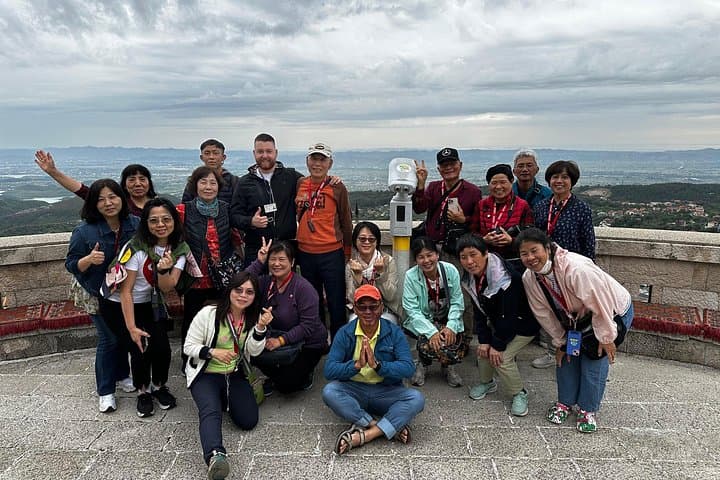
A cool breeze from the Adriatic pushes up the flank of Mount Krujë as visitors step from an air-conditioned minivan onto uneven cobbles. The castle looms above the old bazaar, its stone walls worn by centuries of wind and siege, while below, vendors arrange filigree, hand-woven belts and carved wooden wares. Later, Tirana opens like a different book—bright-painted façades, Skanderbeg Square’s broad plaza, and cafés spilling into sunlit lanes.
A cool breeze from the Adriatic pushes up the flank of Mount Krujë as visitors step from an air-conditioned minivan onto uneven cobbles. The castle looms above the old bazaar, its stone walls worn by centuries of wind and siege, while below, vendors arrange filigree, hand-woven belts and carved wooden wares. Later, Tirana opens like a different book—bright-painted façades, Skanderbeg Square’s broad plaza, and cafés spilling into sunlit lanes.
Krujë’s significance is immediate: this was the stronghold of Gjergj Kastrioti Skanderbeg, the 15th‑century leader whose resistance shaped Albanian identity. Geologically, the region sits on limestone ridges that give sharp ridgelines and good vantage points; the stony soil favors low scrub and olive terraces. Tirana’s modern layout reflects rapid 20th‑ and 21st‑century urban growth—Soviet-era blocks softened by colorful murales and redesigned public spaces.
Expect a mix of light walking on cobbles and several flights of stairs to reach viewpoints and museums. Time in Krujë concentrates on the castle, the Skanderbeg Museum and the Old Bazaar; Tirana highlights include Skanderbeg Square and the Blloku neighborhood. Practicalities matter: carry small-denomination lek for market purchases, wear closed shoes for uneven surfaces, and schedule the visit outside midday heat in summer.
Visitors who approach the day with steady shoes and a curious appetite will find history, craft traditions and urban energy neatly paired in a single, manageable outing. The tour balances relaxed exploration with pointed cultural stops—ideal for travelers wanting a compact but meaningful introduction to Albania’s past and present.