THE ADVENTURE COLLECTIVE® · Independent discovery and booking for outdoor travel

Visit the jade-blue Kuang Si Falls and a nearby Hmong village on a flexible half-day from Luang Prabang. Expect tiered limestone pools, a small cultural museum, and optional stops at a butterfly conservation area and buffalo dairy.
Visit the jade-blue Kuang Si Falls and a nearby Hmong village on a flexible half-day from Luang Prabang. Expect tiered limestone pools, a small cultural museum, and optional stops at a butterfly conservation area and buffalo dairy.
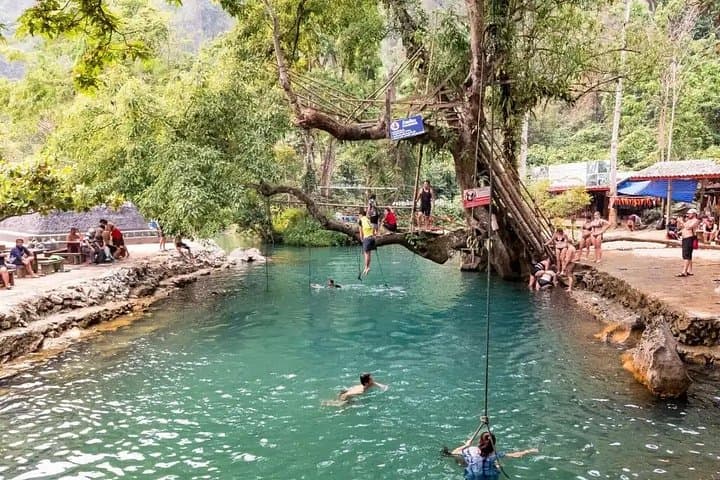
You step from the minivan into humid air threaded with limestone and the distant pulse of falling water. A path carves through native forest and suddenly the falls announce themselves: a 60-meter main cascade dropping into tiers of clear, turquoise basins that invite careful footsteps and quieter breaths.
Verified experiences and guided adventures in the surrounding area.
Operated by Mekong Tourist · Luang Prabang, Luang Prabang Province
You step from the minivan into humid air threaded with limestone and the distant pulse of falling water. A path carves through native forest and suddenly the falls announce themselves: a 60-meter main cascade dropping into tiers of clear, turquoise basins that invite careful footsteps and quieter breaths.
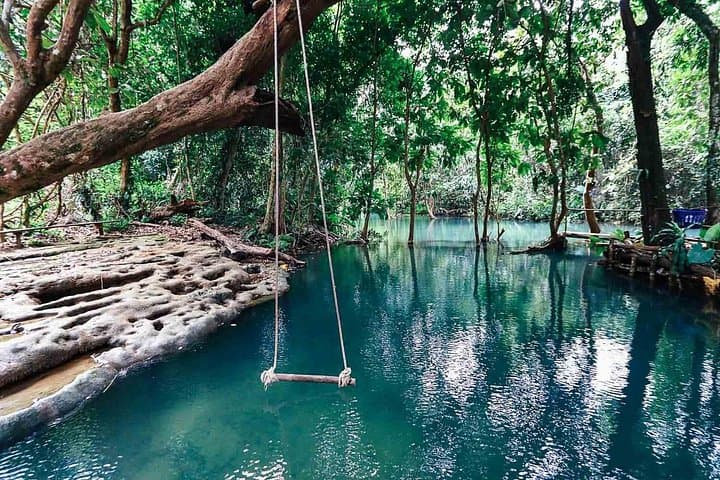
Geology here is plain to read—karst limestone sculpted by centuries of flowing water, forming travertine pools that trap minerals and color the water a jade blue. The river pushes forward, cutting channels and building shelves where water gathers to mirror the surrounding canopy.
The route combines natural spectacle with cultural texture. Close by, a Hmong village and small museum present woven textiles, household artifacts, and conversations about upland farming traditions that persisted through colonial and modern transitions. Nearby initiatives—the butterfly conservation area and a local buffalo dairy—illustrate small-scale community enterprises linking nature and livelihoods.
Practical guidance: plan a morning visit to avoid the largest crowds and bring swimwear if you intend to wade—the pools can be cold and deceptively deep. Trails include stairs and slick limestone; closed-toe shoes with grip are sensible. Cash is useful for local stalls and small admission fees at satellite sites, and modest dress is expected when visiting village spaces.
This half-day loop is compact but layered: a straightforward walk through dramatic geology, a taste of Hmong culture, and a chance to see conservation and social enterprise in practice. It’s accessible for most travelers but rewards attention—watch your footing and let the falls set the pace.
The drive typically takes 30–45 minutes each way depending on traffic and your hotel location in Luang Prabang.
Yes, swimming in designated turquoise pools is allowed in warm, low-water conditions—always check local signage and lifeguard guidance.
The village is a living community with a small museum; interactions vary—opt for respectful visits, buy local handicrafts, and follow guide instructions.
Shared itineraries sometimes include the main falls admission, but smaller attractions like the butterfly park or dairy may require separate fees—carry small local currency.
Mekong Tourist operates guided outdoor trips and adventures with an emphasis on safety, stewardship, and memorable experiences.
You step from the minivan into humid air threaded with limestone and the distant pulse of falling water. A path carves through native forest and suddenly the falls announce themselves: a 60-meter main cascade dropping into tiers of clear, turquoise basins that invite careful footsteps and quieter breaths.
You step from the minivan into humid air threaded with limestone and the distant pulse of falling water. A path carves through native forest and suddenly the falls announce themselves: a 60-meter main cascade dropping into tiers of clear, turquoise basins that invite careful footsteps and quieter breaths.
Geology here is plain to read—karst limestone sculpted by centuries of flowing water, forming travertine pools that trap minerals and color the water a jade blue. The river pushes forward, cutting channels and building shelves where water gathers to mirror the surrounding canopy.
The route combines natural spectacle with cultural texture. Close by, a Hmong village and small museum present woven textiles, household artifacts, and conversations about upland farming traditions that persisted through colonial and modern transitions. Nearby initiatives—the butterfly conservation area and a local buffalo dairy—illustrate small-scale community enterprises linking nature and livelihoods.
Practical guidance: plan a morning visit to avoid the largest crowds and bring swimwear if you intend to wade—the pools can be cold and deceptively deep. Trails include stairs and slick limestone; closed-toe shoes with grip are sensible. Cash is useful for local stalls and small admission fees at satellite sites, and modest dress is expected when visiting village spaces.
This half-day loop is compact but layered: a straightforward walk through dramatic geology, a taste of Hmong culture, and a chance to see conservation and social enterprise in practice. It’s accessible for most travelers but rewards attention—watch your footing and let the falls set the pace.