THE ADVENTURE COLLECTIVE® · Independent discovery and booking for outdoor travel

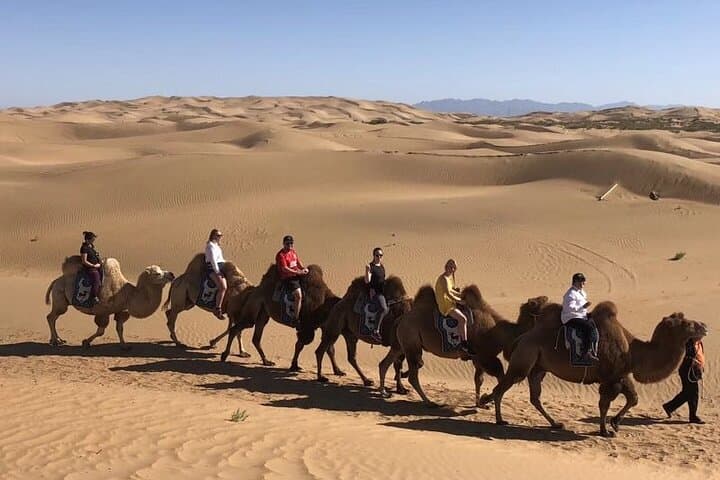
Escape Hohhot for a long-day adventure to the Night Singing Sand area of the Kubuqi Desert. Expect dune walks, optional camel rides, and a stark, wind-shaped landscape shaped by geology and restoration efforts.
Escape Hohhot for a long-day adventure to the Night Singing Sand area of the Kubuqi Desert. Expect dune walks, optional camel rides, and a stark, wind-shaped landscape shaped by geology and restoration efforts.
A ribbon of highway peels away from Hohhot at dawn and the city’s gray blocks give way to low scrub. After a long westward drive you arrive at the Night Singing Sand area of the Kubuqi Desert, where dunes roll like slow waves and the wind seems to speak as it scours the crest. Visitors find themselves trading city noise for a soft, persistent hiss of sand and the sudden kick of open sky.
Verified experiences and guided adventures in the surrounding area.
Operated by SilkRoadTrips · Hohhot, Inner Mongolia
A ribbon of highway peels away from Hohhot at dawn and the city’s gray blocks give way to low scrub. After a long westward drive you arrive at the Night Singing Sand area of the Kubuqi Desert, where dunes roll like slow waves and the wind seems to speak as it scours the crest. Visitors find themselves trading city noise for a soft, persistent hiss of sand and the sudden kick of open sky.
Kubuqi is the seventh-largest desert in China and sits on the edge of the Ordos Plateau. Its dunes are wind-sculpted Quaternary deposits; beneath the surface, layers of compacted sand and ancient loess hint at shifting climates and human attempts to reclaim land. In recent decades the region has been a focus of large-scale restoration projects that combine industry and reforestation to stabilize moving dunes.
Culturally, this landscape sits between Mongolian pastoral traditions and Han agricultural expansion—camp-style tea stops and camel handlers are common, and local guides often share stories about the seasonal lives of herders. Geology and culture meet in practical ways here: the dunes can heat quickly and the wind can change travel plans in an afternoon.
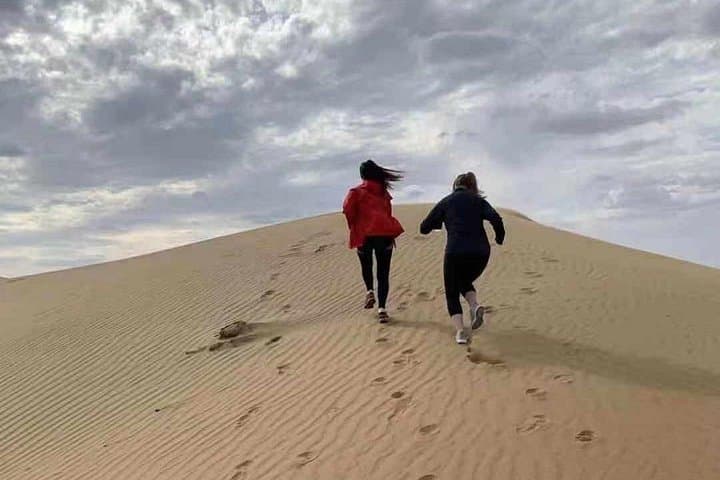
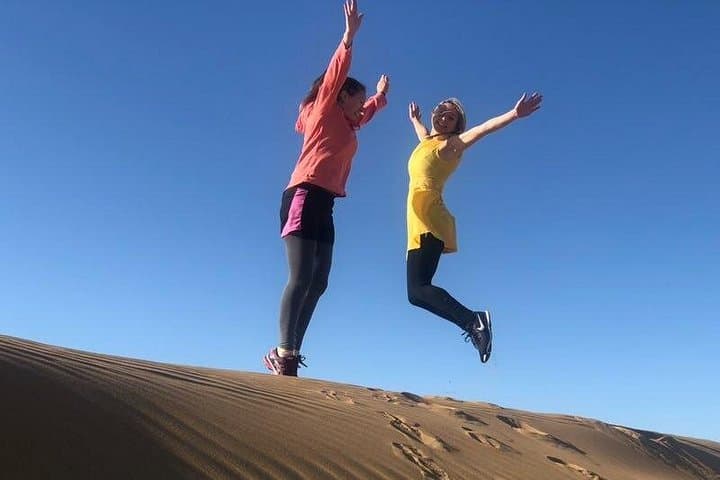
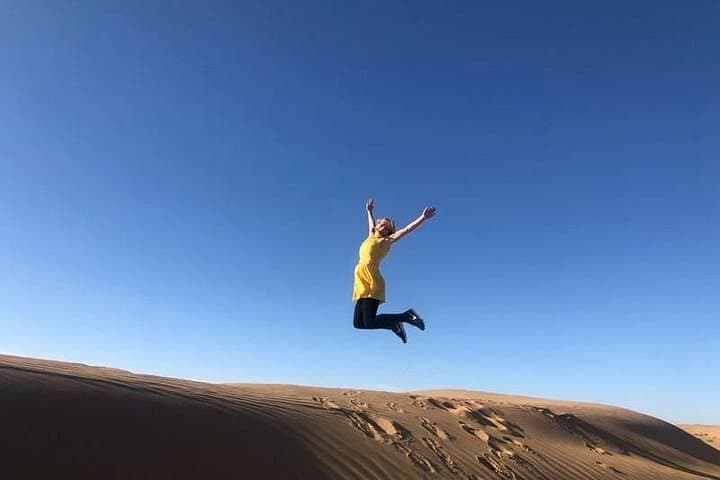
Practically: expect a 10–11 hour outing with roughly 3.5 hours each way by car from central Hohhot. Activities typically include walking on dunes, optional camel rides, and short photo stops. Bring sun protection, layered clothing for temperature swings, and plenty of water. Plan for long vehicle time; early departures avoid midday heat in summer. The tour is suitable for most fitness levels but involves walking on soft sand and prolonged sitting in a vehicle.
The tour includes roughly a 3.5-hour drive each way from central Hohhot, making it a full-day outing of about 10–11 hours total.
Camel rides are typically offered on arrival but may be optional or extra depending on the tour variant—confirm when booking.
The activity is suitable for most ages; infants must sit on an adult’s lap during transport, and desert conditions require extra care for young children.
Prepare for strong sun and heat in summer, windy conditions in spring, and cold, dry air in winter—bring water, sun protection, and layers accordingly.
SilkRoadTrips operates guided outdoor trips and adventures with an emphasis on safety, stewardship, and memorable experiences.
A ribbon of highway peels away from Hohhot at dawn and the city’s gray blocks give way to low scrub. After a long westward drive you arrive at the Night Singing Sand area of the Kubuqi Desert, where dunes roll like slow waves and the wind seems to speak as it scours the crest. Visitors find themselves trading city noise for a soft, persistent hiss of sand and the sudden kick of open sky.
A ribbon of highway peels away from Hohhot at dawn and the city’s gray blocks give way to low scrub. After a long westward drive you arrive at the Night Singing Sand area of the Kubuqi Desert, where dunes roll like slow waves and the wind seems to speak as it scours the crest. Visitors find themselves trading city noise for a soft, persistent hiss of sand and the sudden kick of open sky.
Kubuqi is the seventh-largest desert in China and sits on the edge of the Ordos Plateau. Its dunes are wind-sculpted Quaternary deposits; beneath the surface, layers of compacted sand and ancient loess hint at shifting climates and human attempts to reclaim land. In recent decades the region has been a focus of large-scale restoration projects that combine industry and reforestation to stabilize moving dunes.
Culturally, this landscape sits between Mongolian pastoral traditions and Han agricultural expansion—camp-style tea stops and camel handlers are common, and local guides often share stories about the seasonal lives of herders. Geology and culture meet in practical ways here: the dunes can heat quickly and the wind can change travel plans in an afternoon.
Practically: expect a 10–11 hour outing with roughly 3.5 hours each way by car from central Hohhot. Activities typically include walking on dunes, optional camel rides, and short photo stops. Bring sun protection, layered clothing for temperature swings, and plenty of water. Plan for long vehicle time; early departures avoid midday heat in summer. The tour is suitable for most fitness levels but involves walking on soft sand and prolonged sitting in a vehicle.